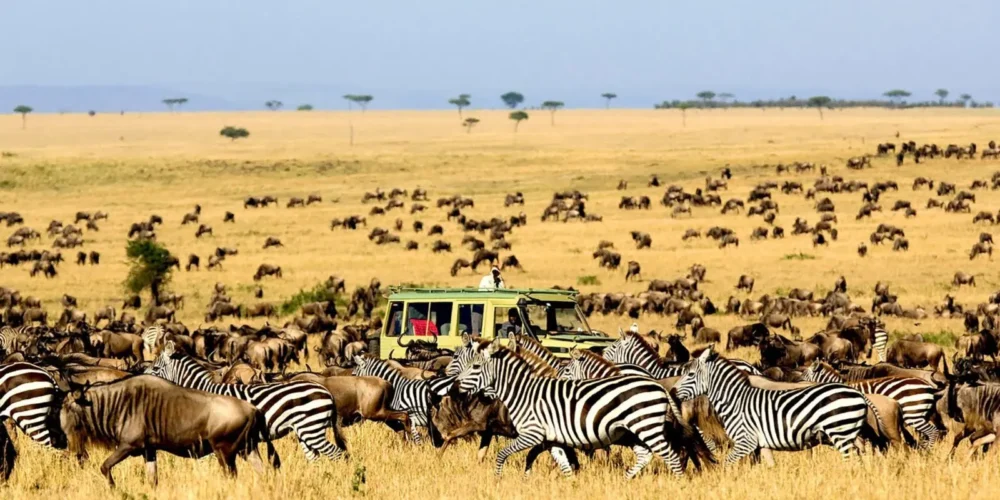

Zebra Migration Facts
Zebra Migration Facts: Amazing Facts About Africa’s Migrating Zebras
Zebra migration facts reveal how these remarkable animals survive across East Africa’s challenging landscapes. Zebras form a major part of the Great Migration ecosystem.
Large herds travel alongside wildebeest and gazelles. They move between grazing areas as rainfall changes the availability of food and water.
Their migration demonstrates how wildlife adapts to seasonal changes.
How Many Zebras Join the Migration?
Hundreds of thousands of zebras participate in the Great Migration. Their numbers add to the enormous scale of the annual movement.
They travel alongside approximately 1.5 million wildebeest and large numbers of gazelles.
The combined herds create one of the world’s greatest wildlife movements.
Why Do Zebras Migrate?
Zebras migrate mainly to find fresh grazing and water. Seasonal rainfall changes the location of nutritious grass.
Their movement follows changing environmental conditions rather than a simple fixed route.
The exact migration route can change each year.
Zebras and Wildebeest Travel Together
Zebras and wildebeest often migrate together. Their different feeding habits allow them to use the same grasslands efficiently.
Zebras tend to eat taller grasses first. Wildebeest can then feed on shorter vegetation.
This relationship helps explain why the two species frequently appear together during migration.
Zebra Foals During Migration
Zebras give birth at different times depending on location and conditions. Young foals must quickly learn to follow their mothers and the herd.
Staying within the group provides protection from predators. Lions, hyenas, cheetahs, and crocodiles can threaten migrating zebras.
How Do Zebras Navigate?
Scientists continue to study exactly how migrating zebras navigate. They appear to respond to rainfall, vegetation, terrain, and environmental cues.
Their ability to move across large landscapes remains impressive.
The herds can travel considerable distances during the migration cycle.
Zebra Migration and Predators
Predators follow migrating herds because they provide abundant prey. Lions and hyenas often target zebras.
Crocodiles can also prey on zebras during river crossings. These encounters create some of the most dramatic moments of the migration.
Where to See Migrating Zebras
The best-known locations include Tanzania’s Serengeti National Park and Kenya’s Maasai Mara National Reserve.
The western Serengeti and northern Serengeti can provide excellent opportunities at different stages of the year.
The best destination depends on the migration stage and current rainfall patterns.