
Wildlife
Mountain Gorilla
The world’s most sought-after primate encounter: a permitted hour with a habituated family on the Virunga volcanoes or in Bwindi’s forest.
The Iconic Mountain Gorilla
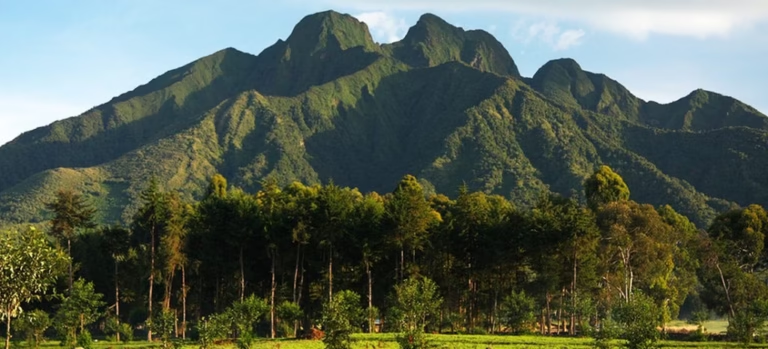
The mountain gorilla (Gorilla beringei beringei) lives only in the Virunga massif and Bwindi Impenetrable National Park. Rwanda’s Volcanoes National Park is the most straightforward place to trek: a dawn briefing at Kinigi, a hike into Hagenia and bamboo, and one hour with the family.
Fewer than 1,100 individuals remain. Permits are dated and limited, which is why they sit at the centre of most Rwanda itineraries. The hour itself is quiet, closely managed, and unlike any other wildlife experience in East Africa.
Physical Characteristics
Adult males — silverbacks — can weigh twice as much as females, with a saddle of grey hair across the back. Long arms, a broad chest, and a sagittal crest give them their unmistakable silhouette. Infants ride on their mothers; blackbacks are younger adult males still finding their place in the group.

Behaviour and Social Structure
A typical family is led by a dominant silverback who decides where the group feeds and rests. Females and young stay close; younger males may leave to form their own groups. Gorillas are largely peaceful, communicating with grunts, chest beats, and body language that trackers read throughout the hike.
Diet and Habitat
Mountain gorillas are herbivores. They feed on leaves, stems, shoots, pith, and seasonal fruit as they move through a home range. In Volcanoes National Park the trail often climbs through farmland into bamboo and Hagenia forest, where the family of the day was last seen.
Conservation Status
Mountain gorillas remain Endangered. Tourism revenue, veterinary intervention, and transboundary protection across Rwanda, Uganda, and the DRC have helped the population recover from a few hundred individuals. Dated permits, small groups, and the one-hour rule keep pressure on the families manageable.
Explore more