Tour Idea
Fly-in Cultural tour Holidays in Rwanda for Photographers
Photograph Rwanda's culture on a fly-in journey through Kigali, communities, coffee country and Lake Kivu with responsible photography guidance.
- Thoughtfully Paced Time to see the place, not only tick it
- Expert Planning Permits, lodges and transfers in one plan
- Wildlife & Culture Parks, communities and scenic rest days
Overview
A fly-in cultural tour holiday in Rwanda for photographers offers the opportunity to document a country through people, agriculture, urban life, landscapes and everyday activity rather than concentrating exclusively on wildlife. Rwanda's visual identity extends from Kigali's contemporary streets to cultivated hills, coffee-growing communities, Lake Kivu fishing activity and villages surrounding protected areas.
Cultural photography requires a different mindset from photographing landscapes or animals. Technical skill remains important, but communication, patience and respect often determine whether an image feels genuine.
Selected flights can reduce travel time between particular regions, while private ground transportation provides photographers with flexibility to stop at suitable locations. A thoughtfully designed Rwanda cultural photography tour therefore combines efficient logistics with enough time to observe rather than constantly moving.
Photographing Kigali
Kigali provides a strong starting point for visual storytelling.
The city contains modern architecture, neighbourhood streets, markets, cafés, motorcycles, art spaces and commercial activity.
Rather than trying to photograph everything in a single city tour, photographers should identify themes that interest them.
Someone interested in urban development may concentrate on architecture and public spaces. Another photographer may focus on markets, food or contemporary coffee culture.
Working with a knowledgeable guide can help visitors understand locations before photographing them.
This context is particularly important because a visually interesting scene may carry cultural or historical meaning that is not immediately obvious.
Respect and Permission in Cultural Photography
Photographing people requires judgment.
A long lens should not be used as a way to avoid interacting with subjects when a close personal photograph clearly calls for permission.
Photographers should ask before taking intimate portraits where appropriate.
A few minutes of conversation can completely change the relationship between photographer and subject. It can also lead to more natural photographs because the person understands why the visitor is interested.
Children require particular sensitivity. Photographers should follow local guidance and avoid intrusive images.
Respect remains more important than returning home with a particular photograph.
Markets as Visual Environments
Rwanda's markets can provide layers of colour, texture and activity.
Produce, fabrics, baskets and daily commerce create strong visual subjects.
However, markets are workplaces. Photographers should avoid obstructing vendors or treating normal business as a staged attraction.
Wide environmental images can often communicate the energy of a market without requiring close portraits of individuals.
Details such as hands arranging produce, repeating patterns and interactions between buyers and sellers can create a fuller visual narrative.
A guide can help explain appropriate behaviour and facilitate communication where necessary.
Coffee Country Photography
Coffee provides one of Rwanda's strongest cultural and agricultural stories.
A Rwanda coffee photography experience can follow the crop from plants through harvesting and processing to roasting.
The process provides diverse photographic subjects, including landscapes, portraits, close details and action.
Coffee-growing hills also demonstrate the relationship between people and Rwanda's terrain.
Photographers should avoid focusing only on poverty or physical labour. A balanced story can include skill, enterprise, community and the technical knowledge involved in producing quality coffee.
Photographing Lake Kivu Culture
Lake Kivu creates opportunities to document life connected with water.
Fishing activity, boats, shoreline communities and markets can all form part of the visual story.
Morning and evening light may provide particularly atmospheric conditions.
Photographers joining boat excursions should protect equipment from spray and keep camera straps secure.
Longer stays are useful because lake conditions vary. One evening may be cloudy while the following morning provides calm water and soft light.
The destination also gives photographers time to rest and organise images after more intensive cultural excursions.
Why Fly-in Travel Can Be Valuable
Photography requires time, and long transfers can consume the best parts of the day.
A fly-in Rwanda photography holiday can use suitable flights to reduce particular journeys.
This can create additional time for morning or late-afternoon photography.
Flights should nevertheless be balanced with road travel. Rwanda's countryside contains countless visual opportunities that cannot be appreciated from an aircraft.
A private vehicle provides the ability to stop safely when an appropriate landscape or cultural scene appears.
The itinerary should therefore be designed around photographic opportunity rather than simply choosing the fastest transportation everywhere.
Cultural Landscapes Around Volcanoes
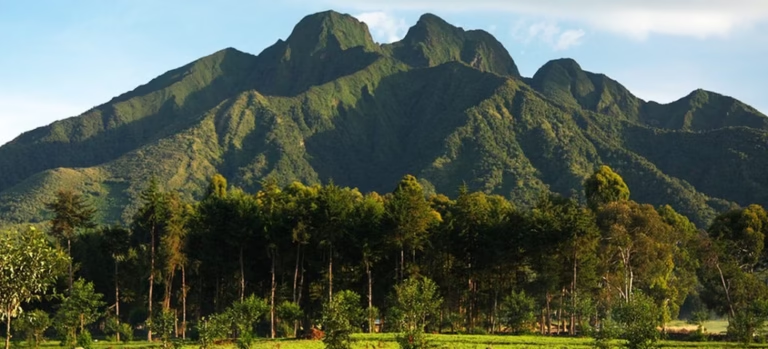
Northern Rwanda provides dramatic cultural landscapes beneath the Virunga volcanoes.
Farms and communities occupy hills and valleys surrounding the protected mountain environment.
Photographers can work with wide compositions that show people within this larger landscape.
Cultural experiences near Volcanoes National Park can also help explain how communities interact with tourism and conservation.
Those adding gorilla trekking gain another photographic subject, although wildlife rules remain completely separate from cultural photography considerations.
Nyungwe and Southwestern Communities
Nyungwe provides a forest contrast to Rwanda's cultivated landscapes.
The journey through southwestern Rwanda can introduce photographers to agricultural communities while the national park itself provides primates, birds and rainforest scenery.
Coffee experiences can fit naturally into this route.
Photographers interested in visual narratives may explore the relationship between protected forest and surrounding human landscapes rather than treating the two as unrelated subjects.
This creates a richer body of work from the journey.
Photographing Traditional and Contemporary Culture
Cultural photography should not assume that authentic Rwanda exists only in traditional activities.
Modern cafés, fashion, art, technology, architecture and urban lifestyles are equally valid aspects of contemporary Rwandan culture.
Photographers who concentrate only on traditional dress or rural scenes risk creating an incomplete visual representation.
A stronger photographic journey includes both continuity and change.
Kigali's modern environments can therefore be documented alongside rural agriculture and community traditions.
The contrast reveals a more nuanced picture of the country.
Choosing Lenses for Cultural Photography
A compact equipment setup often works best.
A moderate zoom lens can handle street scenes, landscapes and environmental portraits.
A small prime lens can be useful in low light and may feel less intimidating during personal interactions.
Wide-angle lenses help show subjects within their environment, while short telephoto lenses allow some working distance.
Carrying an extremely large wildlife lens through community experiences may attract unnecessary attention and create a barrier between photographer and subject.
Equipment should support interaction rather than dominate it.
Backing Up and Managing Images
A cultural photography holiday can generate thousands of images.
Photographers should establish a backup routine from the beginning.
Images can be copied to a laptop or dedicated storage device while remaining on memory cards until safely duplicated.
Batteries should be charged regularly.
Basic image organisation during quieter evenings can also help photographers recognise gaps in their story.
For example, a photographer may realise they have numerous portraits but few landscapes showing where those people live and work.
This awareness can guide subsequent days.
Ethical Storytelling
The responsibility of cultural photography continues after the shutter is pressed.
Images can shape how viewers understand Rwanda and its people.
Photographers should therefore consider whether individual photographs provide fair context or reinforce misleading stereotypes.
Difficult history and economic challenges can be documented, but they should not become the only narrative.
Rwanda also contains entrepreneurship, creativity, family life, agriculture, conservation and rapid urban development.
A thoughtful photographer looks for complexity rather than confirming expectations brought from home.
Combining Cultural and Wildlife Photography
Photographers with more time can add Rwanda's national parks.
Volcanoes National Park provides mountain gorillas and volcanic landscapes. Nyungwe introduces chimpanzees and rainforest, while Akagera provides savannah wildlife and wetlands.
This combination can create an exceptionally varied photographic portfolio.
The itinerary should still preserve its cultural focus.
Wildlife should complement the human story rather than turning the journey into a conventional safari after the first few days.
Allowing Time for Genuine Moments
Cultural photography improves when the schedule is not excessively rigid.
Meaningful moments cannot always be predicted.
A conversation may develop into an unexpected portrait opportunity. Changing weather may transform an ordinary agricultural landscape, or a market may become more active at a particular time.
Private guiding provides flexibility to respond to these opportunities within reasonable limits.
Photographers should also know when to put the camera away. Some experiences are better understood through direct participation before deciding whether photography is appropriate.
Plan Your Rwanda Cultural Photography Journey
A fly-in cultural tour holiday in Rwanda for photographers can create a visual record of the country that extends far beyond its famous wildlife.
Kigali introduces contemporary urban culture, coffee-growing regions reveal agricultural life, and Lake Kivu provides fishing communities and beautiful landscapes. Nyungwe and Volcanoes can add the relationship between conservation and surrounding communities.
Selected flights preserve time where appropriate, while private road transfers allow photographers to discover unexpected subjects between destinations.
Gecko Safaris Africa can tailor the journey around photographic interests, preferred pace and cultural priorities, creating enough flexibility for genuine observation while ensuring interactions remain respectful and responsible.