Tour Idea
Fly-in Chimpanzee trekking Holidays in Rwanda for Photographers
Plan a fly-in chimpanzee trekking holiday in Rwanda for photographers, with Nyungwe photography tips, transport, timing and equipment advice.
- Thoughtfully Paced Time to see the place, not only tick it
- Expert Planning Permits, lodges and transfers in one plan
- Wildlife & Culture Parks, communities and scenic rest days
Overview
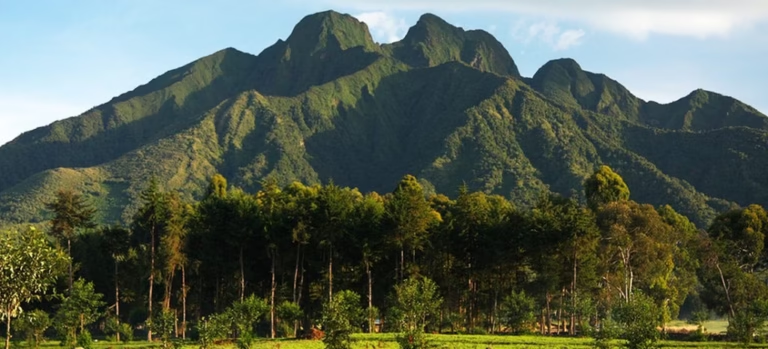
A fly-in chimpanzee trekking holiday in Rwanda for photographers combines the excitement of following wild primates through an ancient rainforest with an itinerary designed to protect valuable photography time. Nyungwe National Park in southwestern Rwanda is the country's principal chimpanzee trekking destination. Its dense montane forest provides a challenging but rewarding environment for photographers interested in wildlife, landscapes, birds and the wider story of rainforest conservation.
Chimpanzees are particularly fascinating photographic subjects because they are expressive, social and highly active. They may groom quietly on a branch one moment and move rapidly through dense vegetation the next. Unlike wildlife encountered on an open savannah, they often appear among leaves, branches and changing patches of forest light. This makes chimpanzee photography technically demanding, but it also produces images with a powerful sense of natural habitat.
A carefully planned Rwanda photography safari allows enough time for these unpredictable conditions. Selected flights can reduce lengthy transfers where suitable connections operate, while private ground transportation provides flexibility around the forest and other destinations.
Why Nyungwe Appeals to Wildlife Photographers
Nyungwe National Park offers much more than a single chimpanzee encounter. The forest covers an extensive mountainous landscape of ridges, valleys, streams and dense vegetation. Mist frequently moves through the hills, producing atmospheric scenes that can change within minutes.
For photographers, this variety means the journey can continue even when chimpanzees are difficult to photograph. Wide forest landscapes, moss-covered trees, ferns, birds, other primates and small details all provide subjects.
The forest is also home to several primate species. While sightings vary, photographers who remain attentive may have opportunities beyond the primary chimpanzee trek.
Nyungwe's canopy walkway adds another photographic dimension. Elevated above sections of the forest, it provides wide views over the treetops and creates strong compositions using the suspension bridge against the surrounding landscape.
Photographing Chimpanzees in Natural Forest
The central challenge of chimpanzee photography in Rwanda is movement. Chimpanzees are not stationary subjects, and their behaviour can change rapidly.
A chimpanzee feeding quietly may suddenly climb, disappear behind vegetation or move with other members of the community. Photographers therefore benefit from understanding their camera controls before the trek.
A moderately long or telephoto lens is useful for isolating animals through vegetation. Zoom lenses can be especially practical because the distance between photographer and subject may change.
Fast shutter speeds help when chimpanzees are moving, although the limited light beneath the forest canopy may require higher ISO settings. Modern cameras generally handle higher ISO values increasingly well, making it preferable to accept some image noise rather than lose a sharp behavioural moment.
Photographers should remain ready without becoming so focused on the camera that they stop observing the animals.
Working with Difficult Forest Light
Nyungwe's rainforest canopy filters much of the available sunlight. One chimpanzee may be in deep shade while another is illuminated by a narrow opening in the trees.
Automatic exposure can struggle with these conditions. Photographers should regularly check highlights and adjust exposure compensation when necessary.
Overcast conditions can be helpful because softer light reduces extreme contrast. Colours in leaves and fur can also appear richer without harsh direct sunlight.
Rain should not automatically end a photographic session. Wet vegetation reflects light differently, while mist can add depth to forest scenes.
Equipment protection must remain immediately accessible. A waterproof camera cover and rain-protected bag are far more useful when they can be deployed within seconds.
Choosing Camera Equipment
A photographer does not need to carry every lens into Nyungwe. In fact, excessive equipment can make steep forest trekking unnecessarily difficult.
A versatile telephoto zoom is useful for primates, while a wider lens can capture landscapes and environmental portraits. Photographers carrying two camera bodies may reduce the need to change lenses in damp conditions.
Spare batteries and memory cards should remain protected inside the camera bag. Humidity can affect equipment, so microfiber cloths and simple moisture protection are useful.
Heavy tripods are rarely practical for active chimpanzee trekking. Photographers should consider whether the equipment genuinely improves their intended images before carrying it through the forest.
The best equipment is ultimately the equipment that can be operated quickly while still allowing the photographer to move safely.
Respecting Chimpanzee Trekking Rules
Photography never takes priority over conservation regulations. Visitors must follow ranger instructions concerning distance, behaviour and time around the chimpanzees.
Flash photography should not be assumed acceptable. Photographers should follow the current rules communicated by guides before the encounter.
Branches and vegetation should not be damaged simply to create a cleaner composition. The forest habitat is part of the image and part of the reason chimpanzees survive here.
Visitors should also avoid positioning themselves independently when guides request the group to remain in a particular area.
A responsible chimpanzee photography safari in Rwanda produces images without interfering with the natural behaviour of the animals.
Why Fly-in Travel Can Help Photographers
Photographers often benefit more than conventional tourists from additional time at a destination. Light changes throughout the day, wildlife behaves unpredictably and weather can transform a landscape.
A fly-in Rwanda safari can reduce selected road-transfer times when suitable flight arrangements are available. The saved hours can sometimes be used for additional photography, rest or better positioning before the next activity.
However, flights should form part of a logical route rather than being included simply because the holiday is described as fly-in.
Road travel remains valuable for photographers. Rwanda's cultivated hills, villages, valleys and lake scenery provide excellent subjects between national parks.
Combining efficient flights with selected scenic road journeys can therefore provide the best balance.
Adding the Nyungwe Canopy Walk
The canopy walkway is particularly valuable for landscape photographers.
From the elevated bridges, photographers can capture layers of forest extending across surrounding hills. Mist and cloud frequently create atmospheric depth.
Wide-angle lenses can emphasise the suspension bridge and surrounding canopy, while telephoto lenses can isolate distant ridges.
Visitors should secure equipment carefully before stepping onto the walkway. Camera straps should remain attached, and loose accessories should be kept inside a bag.
Because other visitors may be using the bridge, photographers should work efficiently and avoid blocking movement unnecessarily.
Bird Photography in Nyungwe
Nyungwe's birdlife provides another reason to allocate several days to the forest.
Bird photography can be difficult because many species move quickly through dense vegetation. A long lens, patience and an experienced birding guide can improve opportunities.
Rather than constantly walking, photographers may occasionally benefit from remaining quietly in productive areas and waiting for activity.
Bird calls are particularly important in rainforest environments because subjects may be heard before they are seen.
Photographers whose main interest includes birds should communicate this during itinerary planning so the programme can allocate sufficient time rather than treating birding as an incidental activity.
Combining Nyungwe with Lake Kivu
Lake Kivu provides a completely different photographic environment after the dense forest.
Open water, islands, fishing communities and distant hills create uncluttered landscapes. Morning and evening light can be especially attractive.
A lakeside stay also provides valuable recovery time after demanding forest trekking.
Depending on the itinerary, photographers can take boat excursions, explore shoreline communities or simply work from scenic viewpoints near their accommodation.
Combining Nyungwe and Lake Kivu photography creates greater visual diversity without immediately moving into another physically demanding activity.
Adding Gorilla Photography
Photographers with sufficient time can extend the journey to Volcanoes National Park for mountain gorilla trekking.
Gorillas and chimpanzees require different photographic approaches. Gorillas may remain relatively settled for periods, while chimpanzees are often more mobile.
Forest light remains challenging in both environments, making fast lenses and confident camera handling useful.
Gorilla trekking requires a separate permit, and availability should be confirmed well in advance.
Combining both primates creates a powerful photographic story about Rwanda's forest ecosystems and conservation.
Photography in Akagera National Park
For an even broader portfolio, Akagera National Park introduces open savannah, wetlands and larger wildlife.
Photographers can search for elephants, giraffes, zebras, buffaloes, antelopes, lions and other species during game drives. Lake Ihema offers additional opportunities for photographing hippos, crocodiles and waterbirds.
Akagera's open landscapes provide a welcome technical contrast to Nyungwe. Longer sightlines and stronger natural light can make wildlife photography easier than in dense rainforest.
A comprehensive Rwanda wildlife photography safari can therefore combine Nyungwe, Volcanoes and Akagera.
Building Time into the Itinerary
Photography improves when the itinerary allows patience.
Staying several nights in Nyungwe provides more opportunities to experience different weather conditions and forest environments. It also reduces the pressure to obtain every desired photograph during a single excursion.
Rest matters as well. Carrying equipment through steep terrain is physically demanding, and exhausted photographers are more likely to make technical mistakes.
A well-designed programme balances early starts with quieter afternoons and adequate time for meals, equipment care and image backups.
Protecting and Backing Up Images
Photographers should establish a backup routine before arriving in Rwanda.
Memory cards should not be formatted until photographs have been safely copied to another device. Travellers may carry a laptop, portable storage device or another suitable backup solution.
Batteries should be charged whenever reliable power is available.
Humidity makes equipment care particularly important after forest activities. Cameras should be dried carefully and stored appropriately.
These simple habits protect the images that may ultimately become the most valuable souvenirs of the journey.
Plan Your Rwanda Chimpanzee Photography Safari
A fly-in chimpanzee trekking holiday in Rwanda for photographers is an opportunity to document far more than a famous primate. Nyungwe provides wildlife, dramatic rainforest landscapes, birds, changing weather and intimate details that reward patient observation.
Selected flights can improve efficiency, while private transfers preserve flexibility for scenic stops and additional photographic opportunities. Lake Kivu, Volcanoes National Park and Akagera can then expand the visual range of the journey.
Gecko Safaris Africa can tailor the route around photographic priorities, preferred accommodation, equipment considerations and available travel time, creating a safari where photography is integrated into the itinerary rather than treated as an afterthought.