Tour Idea
Budget Volcano hiking Holidays in Rwanda for Photographers
Discover affordable volcano hiking in Rwanda for photographers, including scenic locations, equipment advice, seasons, costs and itinerary planning.
- Thoughtfully Paced Time to see the place, not only tick it
- Expert Planning Permits, lodges and transfers in one plan
- Wildlife & Culture Parks, communities and scenic rest days
Overview
Rwanda's volcanic northwest provides photographers with a combination of towering peaks, mountain forests, cultivated hills and atmospheric weather. A budget volcano hiking holiday in Rwanda for photographers makes it possible to explore these landscapes without depending on luxury lodges or expensive specialist expeditions. Careful planning allows more of the travel budget to be directed toward the experiences and equipment support that matter most.
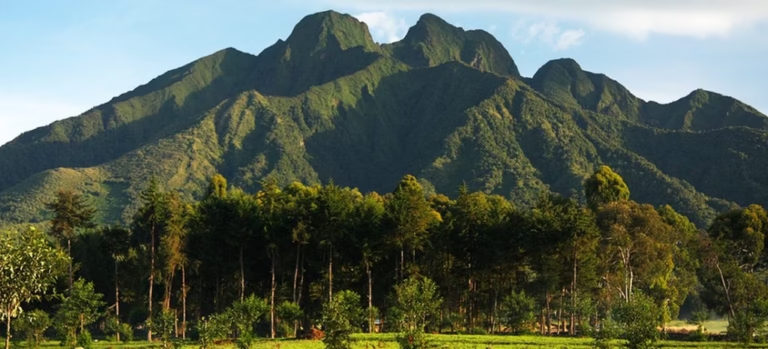
The Virunga volcanoes dominate the northern skyline and create photographic opportunities long before hikers enter Volcanoes National Park. Morning mist can partially conceal the summits, while changing light reveals layers of farmland and distant ridges. Inside the park, the perspective becomes more intimate as trails move through dense vegetation toward higher elevations.
Photography-focused travel requires a slightly different approach from an ordinary hiking holiday. The fastest route to the summit is not always the most rewarding. Photographers need time to observe light, protect equipment and compose images while still keeping pace with the guided group.
Why Photograph Rwanda's Volcanic Landscapes
The appeal of volcano photography in Rwanda comes partly from variety. A single day can include broad mountain panoramas, close studies of vegetation, atmospheric forest scenes and documentary images of the journey itself.
The Virunga chain creates strong shapes that work particularly well during early and late light. Depending on weather conditions, peaks may appear sharply defined against a clear sky or emerge gradually from cloud. Neither condition is inherently better. Clear weather provides detail and scale, while mist can produce more mysterious photographs.
Rwanda's cultivated highlands add another visual dimension. Farms rise across steep slopes beneath the volcanoes, showing the relationship between people and the surrounding terrain. Responsible landscape photography can communicate this connection without treating communities merely as background subjects.
The journey therefore becomes broader than summit photography. Roads, villages, forests, weather and hikers themselves can all contribute to a complete visual story.
Selecting a Hike for Photography
Photographers should choose routes according to both physical ability and photographic objectives. A demanding summit may provide impressive views, but exhaustion can reduce the patience needed for thoughtful photography.
Mount Bisoke is a popular hiking objective and offers an attractive combination of forest, elevation and volcanic features. The crater lake near the summit provides a distinctive subject when visibility allows. However, weather can change rapidly, and photographers should never assume that a completely unobstructed summit panorama is guaranteed.
Longer or more strenuous volcano routes can appeal to photographers with strong hiking experience. They demand careful consideration of equipment weight because carrying multiple lenses, a heavy tripod and other accessories becomes considerably more difficult at altitude.
Travellers whose main priority is landscape photography may achieve better results by combining one substantial hike with time photographing the volcanoes from lower elevations. This approach also provides more flexibility for sunrise and changing weather.
Protecting Camera Equipment
Moisture is one of the biggest concerns during a Rwanda photography safari in the volcanic highlands. Even during relatively dry travel periods, mountain weather can produce rain, mist and high humidity.
A proper rain cover or waterproof bag is essential. Individual lenses and accessories can also be placed inside protective pouches. Photographers should avoid relying solely on a backpack that is described as water resistant because prolonged rain may eventually penetrate seams and zippers.
Lens cloths should remain easily accessible. Condensation and water droplets can quickly affect image quality, especially when moving between different temperatures. Carrying several dry cloths is more practical than depending on one that may become wet early in the hike.
Spare batteries deserve protection as well. Cooler temperatures at elevation can reduce battery performance, and charging facilities may not always be convenient during active travel days.
Travelling Light on the Mountain
A common mistake is carrying every available lens. The result can be a heavy backpack that makes steep hiking unnecessarily difficult.
A versatile standard zoom can handle many landscape and documentary situations. A wider lens may be useful for dramatic forest compositions and broad volcanic scenery. Photographers interested in distant details can consider a moderate telephoto, although the additional weight should be justified.
A full-size tripod may be unnecessary during a guided summit hike unless there is a specific photographic objective. A lighter support system can reduce fatigue. Image stabilization in modern cameras and lenses also makes handheld photography practical in many situations.
Hiring a porter is particularly useful for photographers. Beyond carrying equipment, the assistance can help the photographer conserve energy and maintain stability on difficult sections. Supporting local porter services also directs tourism income into communities around the protected area.
Photographing Weather and Changing Light
The weather should be treated as part of the creative opportunity rather than simply an obstacle. Virunga volcano photography can be especially compelling when cloud moves across the slopes.
Mist simplifies landscapes and creates separation between foreground and background layers. Rain intensifies vegetation colours and can produce reflective surfaces. After a shower, temporary breaks in the clouds may create dramatic shafts of light across the mountains.
Photographers should remain ready rather than packing equipment away every time conditions deteriorate. Keeping one protected camera accessible makes it possible to respond quickly when the landscape changes.
Exposure can also be challenging when bright cloud sits above dark forest. Checking the histogram and protecting highlight detail can help preserve flexibility during post-processing. Bracketing may be useful for static landscapes when time permits.
Budget Accommodation for Photographers
A luxury lodge is not essential for productive photography. Musanze offers a range of accommodation options that can serve as practical bases for exploring the region.
Photographers should look beyond room appearance and consider operational details. Secure storage, reliable electricity and early breakfast arrangements may be more important than decorative extras. Charging several batteries overnight is particularly important before long hiking days.
Location also matters. Staying reasonably close to the park headquarters reduces early morning travel time. It can also make pre-hike preparation less stressful when carrying delicate equipment.
Travellers should ask whether packed meals can be arranged and whether the property can accommodate very early departures. These practical services can improve a photography trip without significantly increasing the accommodation budget.
Best Seasons for Photography and Hiking
June to September is popular because comparatively drier conditions generally make hiking more manageable. Clearer periods can provide expansive views of the volcanoes, although mountain cloud remains possible at any time.
December and January can also be attractive. Photographers should remember that the most popular periods may bring stronger demand for accommodation and other tourism services.
The wetter seasons offer their own visual advantages. Vegetation becomes lush, cloud formations can be dramatic and fewer visitors may create a quieter atmosphere. The main challenge is protecting equipment while moving on muddy trails.
There is therefore no single perfect month for every photographer. Those prioritising clear panoramas may favour drier periods, while photographers attracted to moody forests and dramatic weather may appreciate transitional or wetter conditions.
Adding Wildlife and Cultural Photography
A Rwanda photography holiday does not need to focus exclusively on volcanoes. The country offers a broad range of subjects within manageable travel distances.
Mountain gorilla trekking can become a major photographic experience for travellers whose budget allows it. Gorilla permits in Rwanda are a substantial investment, so this component should be planned carefully rather than treated as an inexpensive addition.
Lake Kivu offers different visual possibilities, including shoreline landscapes, fishing communities and sunsets. Kigali introduces architecture, street scenes, markets and historical locations. Akagera National Park provides savannah landscapes and wildlife photography, while Nyungwe offers rainforest environments.
Combining several environments can create a much stronger photographic portfolio than concentrating entirely on one type of landscape.
Responsible Photography
Photographers have an additional responsibility because images can influence how destinations and communities are represented. Permission should be requested before making close portraits of people, particularly in villages and markets.
Inside protected areas, instructions from guides and rangers take priority over obtaining a photograph. Leaving a trail or approaching wildlife improperly for a better composition is not acceptable.
Drones should never be assumed to be permitted. Rwanda regulates drone operations, and protected areas may have additional restrictions. Travellers interested in aerial photography should obtain accurate permissions before travel rather than arriving with equipment and expecting to fly.
Responsible photography protects both the environment and the reputation of visiting photographers.
Designing an Affordable Photography Itinerary
A practical trip might begin in Kigali before moving north to Musanze. Spending several nights in the region creates more opportunities than arriving for one hike and immediately leaving.
One day can focus on the principal volcano hike. Another can be used for lower-elevation landscapes, cultural experiences or scenic exploration. This arrangement also provides some protection against poor weather because the entire photographic objective is not dependent on a single morning.
Lake Kivu can be added afterward for a change of pace. Photographers with more time can continue toward other national parks according to their preferred subjects.
Keeping the route geographically logical reduces fuel costs and unnecessary driving. This is one of the simplest ways to maintain a budget Rwanda photography tour while still producing a diverse body of images.
Capturing Rwanda Without a Luxury Budget
Successful travel photography depends more on access, timing and observation than expensive accommodation. Rwanda's volcanoes provide extraordinary natural subjects that can be explored through a thoughtfully planned mid-range or budget itinerary.
Photographers should prioritise reliable transportation, suitable hiking equipment, weather protection for cameras and enough time in each location. These investments contribute more directly to successful images than luxury features that have little connection to the photographic objective.
A budget volcano hiking holiday in Rwanda for photographers can therefore be both practical and creatively rewarding. By travelling light, allowing time for changing weather and approaching landscapes and communities respectfully, photographers can return with images that communicate the depth of Rwanda's volcanic highlands rather than merely documenting a summit.