
21 Day Classic Safari
21-Day Fly-in Coffee Tour in Huye for Small Groups
Explore Rwanda in 21 days with Huye culture, coffee experiences, Nyungwe, Lake Kivu, Akagera and Volcanoes on a private group tour.
- Classic Experience Handpicked Lodges & Hotels
- Wildlife Safari An unforgettable encounter
- Kigali Experience Culture, dining & relaxation
- Tailor-Made Customised for you
Overview
Beginning the Journey in Kigali
Slug/Page URL: https://www.visitrwandagorilla.com/safaris/day-21-fly-in-coffee-tour-huye-small-groups/ Content Type: Safari
A 21-Day Fly-in Coffee Tour in Huye for Small Groups provides enough time to explore Rwanda's coffee culture while also experiencing wildlife, rainforest, lakes, history and volcanic landscapes. Huye gives the journey an important southern cultural base, while coffee-focused experiences can be incorporated across suitable agricultural areas, particularly within Rwanda's western highlands and Lake Kivu region.
Three weeks allow travellers to understand coffee as more than a product served at breakfast. Visitors can learn about cultivation, harvesting, washing, drying, roasting and tasting while meeting people involved in different stages of production. The journey can then connect these agricultural experiences with Rwanda's wider tourism highlights.
For small groups, private travel provides a useful balance between flexibility and value. Transport costs can be divided between participants, while the group remains small enough for meaningful interaction during farm and processing visits.
Most groups begin in Kigali after arriving at Kigali International Airport.
The first day should allow time to rest and recover from international travel.
A private transfer takes the group directly to accommodation.
There is little value in beginning a three-week journey with an exhausting schedule on arrival day.

Discovering Kigali
A guided city experience can introduce Rwanda's history and modern development.
The Kigali Genocide Memorial provides essential historical context.
Selected markets, art spaces and neighbourhoods can reveal contemporary urban life.
The group can also begin discussing Rwanda's agricultural economy before travelling into coffee-growing areas.
Rwanda and Coffee
Coffee has an important place within Rwanda's agricultural landscape.
Visitors often know the finished drink but have limited understanding of how much work occurs before beans reach a café.
A dedicated Rwanda coffee tour provides opportunities to connect flavour with geography, farming and processing.
The experience becomes more meaningful when spread across several days and regions.
Travelling to Akagera
The journey can initially move east towards Akagera National Park.
This may seem separate from the coffee theme, but it gives travellers a much broader understanding of Rwanda.
Akagera's savannah and wetlands contrast strongly with the highland agricultural landscapes visited later.
Several nights allow meaningful wildlife exploration.
Wildlife Safari in Akagera
Game drives may reveal elephants, giraffes, buffaloes, zebras, antelopes and predators.
Rhinos are also part of Akagera's restored wildlife system.
Sightings remain natural and cannot be guaranteed.
A private group vehicle allows travellers to spend more time at sightings that interest them.
Boat Safari
A boat excursion introduces the park's wetland environment.
Hippos, crocodiles and birds may be observed.
The slower activity provides a useful contrast with road-based game drives.
It also creates an early opportunity for group photography.
Fly-in Logistics
Strategic aviation can be incorporated where suitable flights or charter arrangements genuinely improve the itinerary.
However, not every section of Rwanda is better explored by air.
Road transfers remain valuable because they reveal changing landscapes and provide direct access to farms and communities.
The final routing should prioritize efficiency rather than flying simply for the sake of the fly-in label.
Returning Through Kigali
After Akagera, the group can pass through Kigali before continuing south.
A night in the capital can provide time for laundry and rest.
Long journeys benefit from practical pauses.
The group can also enjoy a restaurant or coffee-focused experience in the city.
Travelling South to Huye
The road towards Huye reveals densely cultivated hills.
Agriculture becomes an increasingly visible part of the landscape.
A guide can explain common crops and farming patterns along the route.
Photography stops can be made at safe locations.
Exploring Huye
Huye has a strong cultural and historical identity.
The group can visit appropriate museums and heritage attractions according to current opening arrangements.
These experiences provide context for Rwanda's traditions and development.
Several nights allow the destination to be explored without rushing.
Cultural Experiences
Responsible community activities can introduce crafts, food and local livelihoods.
Visitors should participate with curiosity rather than treating people as displays.
Photography should be respectful.
A small group is particularly suitable because interaction can remain conversational.
Agricultural Landscapes Around Southern Rwanda
The southern highlands provide excellent opportunities to discuss farming.
Coffee may be one element within a broader agricultural system.
The guide can explain how altitude, rainfall and soil influence what farmers grow.
Understanding these conditions prepares travellers for more detailed coffee experiences later.
Continuing Towards Nyungwe
The journey then moves towards Nyungwe Forest National Park.
Tea plantations become particularly prominent around the region.
The contrast between tea and coffee provides a useful agricultural comparison.
Natural rainforest adds another completely different landscape.
Tea as a Comparison With Coffee
A guided tea experience can deepen the group's understanding of Rwanda's agriculture.
Tea and coffee require different cultivation and processing systems.
Observing both helps visitors appreciate why agricultural products cannot be understood simply from their final packaged form.
Tea fields are also exceptionally photogenic.
Nyungwe Forest Experience
Several nights around Nyungwe allow the group to explore the rainforest.
Guided walks, birding and other appropriate activities can be incorporated.
The forest environment demonstrates the ecological diversity of Rwanda's southwest.
A coffee-focused journey becomes stronger when visitors understand the natural landscapes surrounding agricultural areas.
Chimpanzee Trekking
Interested travellers can add chimpanzee trekking in Nyungwe.
The activity may involve an early start and challenging natural terrain.
Chimpanzees are active primates whose movements influence trekking conditions.
Group members who prefer not to trek can follow a separate activity.
Canopy Walk
The Nyungwe canopy walkway provides another perspective.
Visitors walk through the forest before reaching suspended elevated sections.
Views can extend across forested hills.
Those uncomfortable with heights can choose an alternative nature experience.
Moving Towards Lake Kivu
After Nyungwe, the journey enters the wider Lake Kivu region.
Western Rwanda is particularly important to the coffee theme.
The lake and surrounding hills provide an attractive setting for several nights.
The itinerary can now slow down while becoming more focused on coffee.
Visiting Coffee Farms
A suitable coffee farm visit introduces the growing stage.
Travellers can see coffee plants and learn how farmers manage them.
The appearance of cherries depends on season.
A responsible tour should reflect real agricultural conditions rather than create artificial harvesting scenes.
Understanding Coffee Cherries
Coffee beans begin inside fruit commonly called coffee cherries.
Their development and ripening influence harvest timing.
Guides can explain how farmers identify suitable cherries.
Seeing the crop in the field creates a connection that cannot be gained from a café tasting alone.
Coffee Harvesting
When the journey coincides with harvest conditions, visitors may observe picking.
Careful selection can influence quality.
The work is labour-intensive.
Group members should respect farmers and follow instructions when entering working areas.
Coffee Washing Stations
A washing station can reveal important processing stages.
Visitors may learn about sorting, pulping, fermentation, washing and drying according to the process used.
The exact operations visible depend on season and facility.
Working environments should never be treated like staged tourist attractions.
Drying and Quality Control
Drying requires careful management.
Coffee needs to reach suitable moisture conditions before later processing and storage.
Visitors may see workers monitoring and sorting coffee.
This stage helps explain why quality depends on attention throughout the production chain.
Coffee Roasting
Roasting transforms green coffee into the aromatic beans familiar to consumers.
Where included, a roasting demonstration can explain how temperature and timing influence flavour.
Visitors often find this stage particularly engaging because the aroma becomes immediately recognizable.
It also prepares the group for tasting.
Guided Coffee Tasting
A Rwanda coffee tasting provides the natural conclusion to the production story.
Participants can compare aroma, acidity, body and flavour.
There is no need for prior professional knowledge.
A good guide makes tasting accessible and encourages travellers to describe what they notice.
Coffee and Group Conversation
Small groups are ideal for tasting.
Participants often identify different flavours and can compare impressions.
The activity becomes social without becoming crowded.
Questions can also be answered in greater detail than during a large commercial tour.
Lake Kivu Boat Excursion
A boat trip can provide a break from agricultural activities.
The excursion focuses on lake scenery, fishing activity and surrounding hills.
It is not a Big Five wildlife safari.
A private boat can be particularly economical when the cost is shared across the group.
Coffee Photography
Coffee production provides varied photographic subjects.
Cherries, leaves, processing equipment and drying areas work well for detail photography.
Wider images can show farms within the surrounding landscape.
Portraits should only be taken with appropriate permission.
Continuing Towards Rubavu
The group can gradually move north towards Rubavu.
Northern Lake Kivu provides additional scenery and a natural link with Volcanoes National Park.
A free afternoon beside the lake can provide valuable rest.
Not every day needs a scheduled coffee activity.
Volcanoes National Park Extension
The journey can continue to Ruhengeri and Volcanoes National Park.
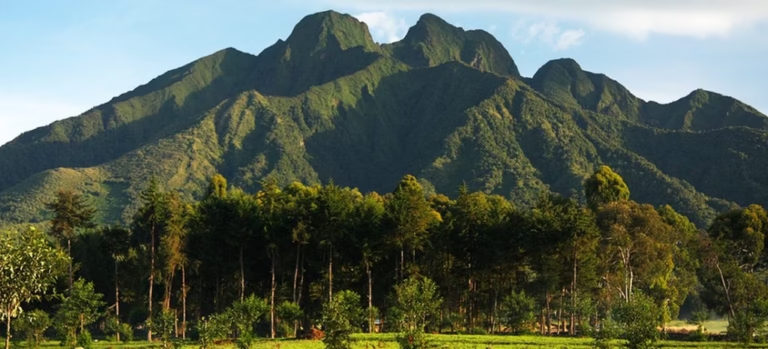
The Virunga mountains create another dramatic landscape.
Group members can choose between primate trekking, cultural experiences and scenic activities.
This gives the final section of the tour substantial variety.
Gorilla Trekking Option
Travellers who want to see mountain gorillas can add gorilla trekking in Rwanda.
The Rwanda gorilla permit costs USD 1,500 per person.
Because of the expense, not every group member needs to participate.
Alternative activities can be arranged for others.
Golden Monkey Trekking
Golden monkey trekking provides another primate option.
The active monkeys inhabit the volcanic forest environment.
Their behaviour differs considerably from chimpanzees and gorillas.
Travellers interested in primates can therefore experience several contrasting species during the three weeks.
Lake Ruhondo
A scenic excursion to Lake Ruhondo provides a gentler final activity.
Boat trips can reveal hills, agricultural landscapes and volcano views.
The experience works particularly well after trekking.
It also reconnects the journey with the relationship between people, agriculture and Rwanda's landscapes.
Accommodation Strategy
Small groups can mix mid-range and premium accommodation.
There is no need to use expensive lodges every night.
A few carefully chosen upgrades around Lake Kivu or another favourite destination can provide comfort without dramatically increasing the total cost.
Location should remain a priority.
Packing for the Journey
Travellers need clothing suitable for farms, forests, savannah and highlands.
Comfortable walking shoes are essential.
A waterproof jacket should remain accessible.
Those purchasing coffee during the journey should also consider international baggage limits.
Why 21 Days Matter
Coffee cannot be understood properly through a one-hour tasting alone.
Three weeks allow visitors to see the crop within the wider context of Rwanda.
They can compare agriculture across regions, meet people involved in production and still experience wildlife and conservation.
This creates a far richer journey.
Plan Your Rwanda Coffee Tour
A 21-Day Fly-in Coffee Tour in Huye for Small Groups combines agriculture with Rwanda's broader natural and cultural attractions.
Huye provides southern cultural context, Nyungwe introduces rainforest and tea country, Lake Kivu becomes the heart of the coffee experience, Akagera supplies savannah wildlife, and Volcanoes National Park completes the journey with dramatic mountain landscapes and optional primate trekking.
Strategic flights can be used where they genuinely save time, while private road travel keeps farms, communities and landscapes accessible. For small groups interested in the complete journey from crop to cup, three weeks provide enough time to understand Rwandan coffee without sacrificing the wider experience of travelling through the country.
Accommodation Options in Kigali


Ready to Experience This Classic Safari?
Let our expert team customise this 21-day itinerary to match your interests and travel dates.