
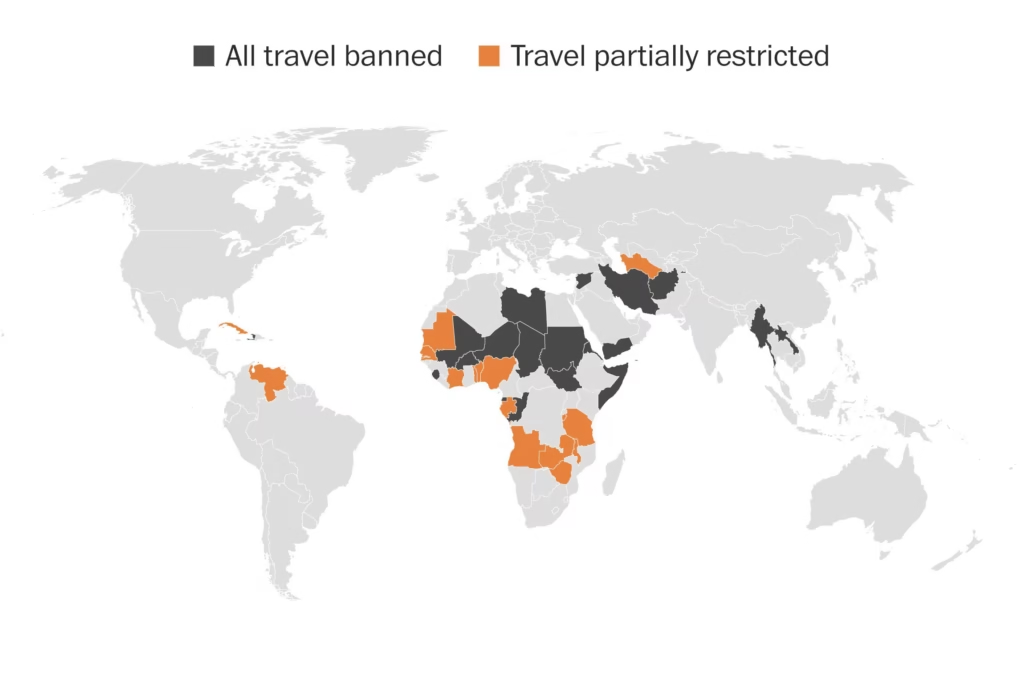
26 African Countries Under Full or Partial U.S. Travel Ban (Post-December Update)
26 African Countries Under Full or Partial U.S. Travel Ban (Post-December Update) Following the December update to U.S.…
Read article →
Travel Guide
Discover the best routes to Bwindi Impenetrable National Park, including road and air options from Entebbe, Kampala, and Kigali. Plan your gorilla trekking safari now.
Bwindi Impenetrable Forest National Park lies in southwestern Uganda near the borders with Rwanda and the Democratic Republic of Congo. The remote forest is internationally known for mountain gorilla trekking, but reaching it requires more planning than traveling to a conventional city destination.
Understanding the different options for Getting to Bwindi Forest National Park is important because Bwindi does not have a single entrance used by every gorilla trekker. The park has several trekking sectors, and the correct road, airstrip, transfer time, and lodge location depend on the sector assigned for your gorilla experience.
The source identifies four main trailheads: Buhoma in the north, Ruhija in the east, and Rushaga and Nkuringo in the south. Travelers can reach these areas by road from Kampala or Entebbe, by domestic flight followed by a road transfer, or by driving from Kigali in Rwanda.
Choosing the correct approach can reduce travel time and prevent logistical problems before an early-morning gorilla trek.
Before deciding how to reach Bwindi, travelers should know which trekking sector they need.
The four trailheads highlighted in the source are Buhoma, Ruhija, Rushaga, and Nkuringo. Although all provide access to the wider Bwindi forest ecosystem, they are not interchangeable when planning accommodation and transport.
Buhoma is in the northern part of Bwindi. Ruhija provides access from the eastern side, while Rushaga and Nkuringo are in the south.
Your gorilla permit and planned trekking sector should therefore guide your choice of lodge and transfer route.
Booking accommodation without considering the trekking sector can result in unnecessary driving. Gorilla trekking begins early, making proximity to the correct briefing point especially important.
A well-planned safari coordinates the permit, sector, accommodation, vehicle, and arrival route as parts of the same itinerary.
Traveling by road from Kampala or Entebbe is one of the classic ways to reach Bwindi.
The source estimates the journey at approximately 8 to 10 hours, depending on traffic, road conditions, stops, and the final trekking sector.
The long drive is also an opportunity to see more of Uganda. Instead of flying directly over the countryside, travelers experience changing landscapes as they move from central Uganda toward the southwest.
The route commonly passes through areas such as Masaka and Mbarara before continuing toward the Bwindi region.
Travelers heading toward different sectors may eventually separate onto different regional roads. The exact final approach should therefore be planned around the lodge and gorilla trekking sector.
For travelers approaching Buhoma or Ruhija, the source identifies a route through Masaka, Mbarara, and Kabale.
Road journeys allow flexibility that flights cannot always provide. Travelers can stop for meals, photographs, or planned attractions along the way.
However, a Bwindi road transfer should not be underestimated. Spending most of a day in a vehicle immediately before a demanding gorilla trek can be tiring.
It is generally sensible to depart early and allow enough time for stops rather than trying to race against sunset.
The final approach to forest accommodation can involve rougher roads than the main highways. This is one reason the source recommends using a 4×4 Land Cruiser.
A capable safari vehicle also becomes valuable if weather conditions deteriorate.
Travelers heading to the southern sectors of Rushaga or Nkuringo generally follow a route oriented toward the Kisoro area.
These sectors are especially relevant to travelers approaching Bwindi from Rwanda as well as those traveling through southwestern Uganda.
Southern Bwindi is surrounded by striking highland landscapes. The journey may be long, but it provides a strong sense of entering one of Uganda’s most scenic regions.
As with the northern and eastern sectors, the final lodge should be selected according to the confirmed trekking location.
Travelers should avoid assuming that any lodge described as being “near Bwindi” will be convenient for every trekking sector.
The source suggests combining the journey with destinations such as Lake Mburo National Park or Igongo Cultural Centre.
Breaking the journey can make the transfer significantly more enjoyable, particularly for travelers who do not want to spend eight to ten hours traveling in one day.
Lake Mburo can be incorporated into a wider Uganda safari, turning the journey toward Bwindi into part of the holiday rather than treating it only as transportation.
Travelers with more time can therefore design a gradual route through southwestern Uganda.
This approach is especially suitable for visitors who want a broader safari rather than traveling to Uganda solely for gorilla trekking.
Travelers who want to reduce road time can use a domestic flight from Entebbe followed by a road transfer to Bwindi.
The source identifies two important airstrips: Kihihi Airstrip and Kisoro Airstrip.
Kihihi is useful for travelers heading toward Buhoma and Ruhija, while Kisoro is associated with access to the southern sectors of Rushaga and Nkuringo.
The source places flight time at approximately one to one and a half hours.
Flying therefore reduces the amount of time spent on the main cross-country road journey. However, the flight does not eliminate ground transportation completely.
After landing, travelers still require a vehicle transfer from the airstrip to their lodge.
Kihihi is the air access point highlighted in the source for Buhoma and Ruhija.
For travelers with limited time, flying can make it easier to build a shorter gorilla safari. Instead of using most of a day to drive from Entebbe, visitors can fly closer to the forest and complete the remaining journey by vehicle.
The final transfer should be arranged before arrival. A safari operator or lodge can coordinate a suitable vehicle so that the guest is met at the airstrip.
Flight schedules should also be considered when building the itinerary. Domestic services operate according to specific timetables, so the international arrival into Entebbe needs to connect comfortably.
It is safer to leave adequate time than to design an itinerary around an unrealistically tight connection.
Kisoro Airstrip is the option identified for travelers heading toward Rushaga and Nkuringo.
The flight provides an alternative to the long drive from central Uganda and places visitors in southwestern Uganda relatively quickly.
From Kisoro, travelers continue by road toward their chosen lodge and trekking sector.
The surrounding region is mountainous, making the final transfer scenic as well as practical.
The source recommends booking flights in advance because seats can be limited. This is particularly important when the gorilla permit has already fixed the trekking date.
Another option is approaching Bwindi from Kigali.
The source describes Kigali as a popular arrival point and estimates the road journey to Bwindi at approximately 4 to 5 hours.
This can make Kigali particularly attractive to travelers trekking in the southern sectors of Rushaga or Nkuringo.
The route involves an international border crossing, so documentation needs to be arranged correctly.
The source identifies Gatuna or Chanika as border crossing options and notes that travelers should have the appropriate visa arrangements for Rwanda and Uganda.
Cross-border travel adds another logistical element, but it can significantly reduce road time compared with beginning the journey in Kampala.
The Kigali route is especially useful for the southern side of Bwindi.
After leaving Rwanda’s capital, travelers move toward the border and continue into southwestern Uganda before proceeding to their accommodation.
The shorter road distance can make this route appealing for travelers whose main objective is gorilla trekking rather than a longer Uganda safari.
It can also work for itineraries that combine Rwanda and Uganda.
A traveler might spend time in Kigali, cross into Uganda for Bwindi, and then continue deeper into Uganda. Alternatively, Bwindi can form part of a circuit that eventually returns to Rwanda.
The correct route should be designed around the full itinerary rather than simply choosing whichever airport appears closest on a map.
Crossing from Rwanda into Uganda requires valid travel documentation.
The source recommends ensuring that the appropriate visas are arranged for both countries and mentions the East African Tourist Visa as one possible option for eligible itineraries.
Travelers should check their documents before beginning the road journey. Passport validity and visa requirements should not be left until arrival at the border.
Enough transfer time should also be allowed for immigration procedures.
A professional driver-guide familiar with the route can make the process easier because the journey involves not only navigating the road but also coordinating the border crossing and onward transfer.
The source strongly recommends a 4×4 Land Cruiser for the journey into Bwindi.
Main roads may be straightforward, but the final approach to forest areas can be rougher. Rain can further change driving conditions.
A suitable vehicle improves comfort and reliability, particularly when carrying luggage or traveling during wetter periods.
The driver is equally important. Someone familiar with southwestern Uganda can anticipate road conditions, select appropriate routes, and coordinate arrival with the lodge.
For a gorilla trekking safari, transportation is part of the experience rather than a minor detail.
The source identifies Lake Bunyonyi as one of the possible stops that can complement a Bwindi journey.
The lake provides a contrasting atmosphere after time in the forest. Travelers can slow down, enjoy the scenery, and add a more relaxed component to an active gorilla itinerary.
Depending on the direction of travel and trekking sector, Lake Bunyonyi can be incorporated before or after Bwindi.
This type of combination is particularly useful for visitors who want to avoid rushing directly from one long transfer into another.
Queen Elizabeth National Park can also be incorporated into a broader western Uganda itinerary.
This creates an appealing contrast between forest primates and traditional safari landscapes.
Instead of visiting Uganda only for gorillas, travelers can build a journey that includes different ecosystems and wildlife experiences.
The route can be arranged according to whether visitors are traveling toward or away from Bwindi.
A longer safari might connect Entebbe, Lake Mburo, Bwindi, Queen Elizabeth National Park, and other destinations depending on available time.
There is no single transportation method that suits every traveler.
Driving is attractive for people who want to see more of Uganda and incorporate stops along the route. It can also be integrated naturally into a longer safari.
Flying is useful when time is limited or when travelers prefer to reduce the number of hours spent in a vehicle.
Approaching from Kigali can work particularly well for southern Bwindi and cross-border itineraries.
The most important consideration is not simply speed. Travelers should look at the entire route, including the trekking sector, accommodation, other destinations, available days, and international flights.
The central rule for Getting to Bwindi Forest National Park is simple: identify your trekking sector before finalizing transportation and accommodation.
Buhoma, Ruhija, Rushaga, and Nkuringo require different logistical approaches. Choosing a lodge in the wrong area can turn an otherwise straightforward safari into a difficult transfer.
Once the sector is confirmed, travelers can decide whether to drive from Entebbe or Kampala, fly to Kihihi or Kisoro, or approach southern Bwindi from Kigali.
With the right planning, Bwindi’s remote location becomes part of the adventure rather than an obstacle. The journey through Uganda’s countryside and highlands gradually leads toward one of Africa’s most extraordinary forest environments and the unforgettable experience of trekking mountain gorillas in the wild.

26 African Countries Under Full or Partial U.S. Travel Ban (Post-December Update) Following the December update to U.S.…
Read article →
3 Days Congo Gorilla Safari – Encounter the Gentle Giants of Virunga A 3 Days Congo Gorilla Safari…
Read article →
Children and Kids on Safari – Family-Friendly Adventures in Africa Taking children on an African safari is one…
Read article →
How to Plan a Safari in Uganda—Your Complete Travel Guide Planning a safari in Uganda is the start…
Read article →