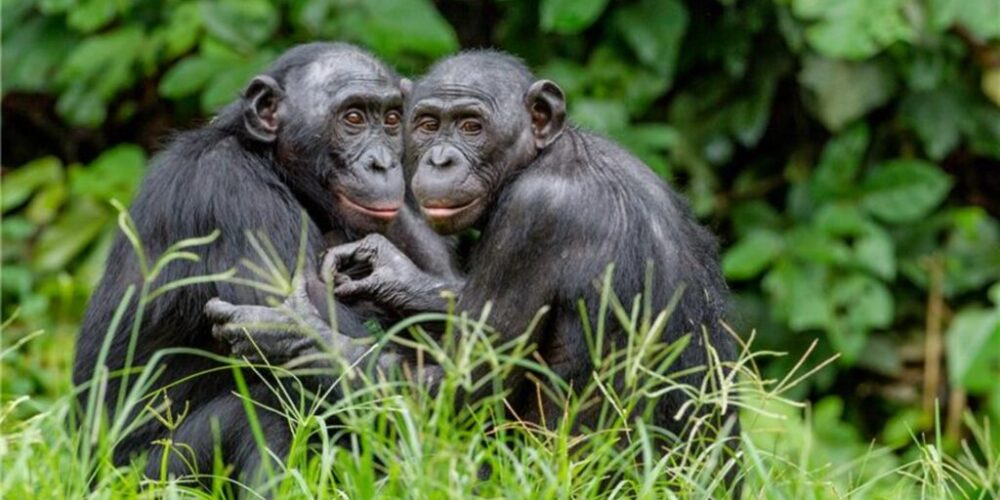

Bonobo Facts DRC
Bonobo Facts DRC: Discover the Peaceful Great Ape of Congo
Bonobo facts DRC reveal fascinating details about one of the world’s closest living relatives to humans. Bonobos live naturally only in the Democratic Republic of the Congo.
They inhabit forests south of the Congo River. Their restricted range makes the protection of their habitat extremely important.
Bonobos share many biological similarities with chimpanzees. However, they have distinctive social structures and behaviors.
What Is a Bonobo?
The bonobo is a great ape scientifically known as Pan paniscus. It shares a large proportion of its DNA with humans.
Bonobos have dark bodies, black faces, and long limbs. Their social behavior makes them particularly interesting to researchers.
Unlike chimpanzees, bonobos generally live south of the Congo River.
Where Do Bonobos Live?
Bonobos live only in the forests of the Democratic Republic of the Congo. Their habitat includes tropical rainforests and swamp forests.
The Salonga National Park protects an important bonobo habitat. UNESCO recognizes the park as a World Heritage Site.
Several other conservation areas and community forests also support bonobo populations.
What Do Bonobos Eat?
Bonobos eat mainly fruit and other plant foods. Their diet can also include seeds, flowers, leaves, and small animals.
Fruit availability influences their movements through the forest. They spend considerable time searching for food in the canopy and on the forest floor.
Bonobo Social Behavior
Bonobos live in complex social communities. Females often form strong relationships with one another.
They use grooming, vocalizations, body language, and physical contact to maintain social bonds.
Their social systems differ from those of chimpanzees. Researchers continue to study their communication and relationships.
Bonobos and Chimpanzees
Bonobos and chimpanzees are closely related. Both belong to the genus Pan.
However, they have different physical and social characteristics. Bonobos generally have slimmer bodies and longer limbs.
Their social behavior also differs significantly. Bonobo communities often show strong female relationships and relatively peaceful social interactions.
Why Are Bonobos Endangered?
Bonobos face serious conservation challenges. Habitat loss, hunting, illegal wildlife trade, and political instability can threaten populations.
Forest destruction reduces available habitat. Hunting can also remove individuals from already fragmented populations.
Protecting forests and working with local communities remain essential for bonobo conservation.
Bonobo Conservation in the DRC
The Democratic Republic of the Congo contains the only natural habitat of bonobos. Protecting this forest therefore has global importance.
Organizations and local communities work together to protect forests and reduce threats to bonobos.
Conservation programs also support research, environmental education, and sustainable livelihoods.
Can Tourists See Bonobos in the DRC?
Bonobo tourism remains less developed than gorilla tourism in countries such as Uganda and Rwanda. However, specialized conservation and research experiences can provide opportunities in certain areas.
Travelers should use experience local operators and follow conservation guidelines.