
Okapi Facts Congo
Okapi Facts Congo: Discover the Forest’s Hidden Mammal
Okapi facts Congo reveal the fascinating story of one of Africa’s most elusive mammals. The okapi lives deep within the forests of the Democratic Republic of the Congo.
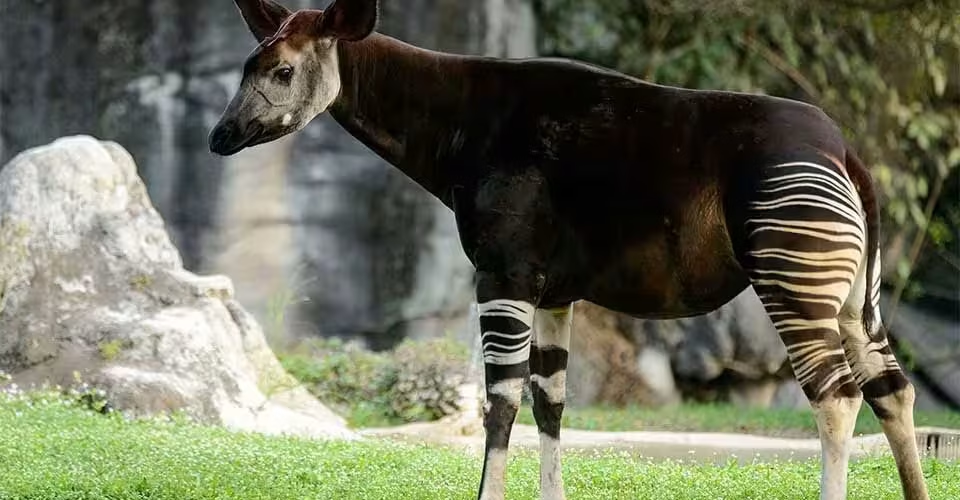
Its zebra-like legs and dark body can make it look unusual. However, the okapi is actually more closely related to the giraffe.
The species has become an important symbol of Congo’s unique forest biodiversity.
What Is an Okapi?
The okapi is a forest-dwelling mammal native to the Democratic Republic of the Congo. Scientists classify it as Okapia johnstoni.
Although its legs resemble those of a zebra, the okapi belongs to the giraffe family.
It has a long tongue that helps it reach leaves and clean its eyes and ears.
Where Do Okapis Live?
Okapis live in dense tropical forests. The Okapi Wildlife Reserve provides one of the most important protected habitats for the species.
The reserve lies within the northeastern Democratic Republic of the Congo. UNESCO recognizes it as a World Heritage Site.
Dense vegetation makes okapis extremely difficult to observe in the wild.
Why Do Okapis Have Striped Legs?
The stripes on an okapi’s legs create an impressive visual pattern. Scientists believe the markings can help calves follow their mothers through dense vegetation.
The patterns may also provide camouflage within the forest environment.
Each okapi has a unique stripe pattern, much like a fingerprint.
What Do Okapis Eat?
Okapis are herbivores. They feed on leaves, buds, grasses, ferns, fruits, and other vegetation.
Their long tongues help them reach food among dense forest plants.
An adult okapi can consume a significant amount of vegetation each day.
Are Okapis Social Animals?
Okapis usually live alone or in loose social arrangements. Mothers and calves remain together during the early stages of life.
Adults generally maintain separate territories. They communicate through sounds, scent marking, and other signals.
Their secretive behavior contributes to their reputation as one of Africa’s most mysterious mammals.
Okapi Conservation in Congo
The okapi faces several threats. Habitat destruction, illegal mining, hunting, and insecurity can affect populations.
The Okapi Wildlife Reserve provides important protection. Conservation teams work with local communities to protect forests and wildlife.
Protecting the okapi also protects many other species that share the Congo rainforest.
Why the Okapi Matters
The okapi represents the extraordinary biodiversity of the Congo Basin. Its survival depends on healthy forests and effective conservation.
Protecting its habitat also supports forest ecosystems that provide important resources for local communities.