
Buganda Kingdom History
Buganda Kingdom History: A Journey Through Uganda’s Royal Heritage
The Buganda Kingdom history remains an important part of Uganda’s cultural identity. The kingdom has shaped politics, traditions, language, and social life for centuries.
Buganda sits in central Uganda around Lake Victoria. Its people, known as the Baganda, form one of Uganda’s largest ethnic communities.
Today, the kingdom continues to preserve its cultural heritage. Visitors can explore royal sites, traditional institutions, historic buildings, and cultural traditions.
The Origins of the Buganda Kingdom
Buganda developed as a powerful kingdom in the Great Lakes region. Oral traditions describe a long line of kings who ruled the kingdom.
The king carries the title Kabaka. The institution of the Kabaka remains central to Buganda’s cultural identity.
Over time, Buganda expanded its influence across much of central Uganda. Its location near Lake Victoria also supported trade, agriculture, and interaction with neighboring communities.
Traditional institutions helped organize society. Chiefs governed different areas while maintaining loyalty to the Kabaka.
The Role of the Kabaka
The Kabaka serves as the cultural head of the Baganda people. His position carries deep historical and symbolic importance.
The kingdom traditionally organized society through clans and local leadership structures. Each clan had specific responsibilities and traditions.
The Kabaka also played an important role in ceremonies and cultural events. Today, these traditions continue through the kingdom’s cultural institutions.
The current Kabaka is Ronald Muwenda Mutebi II. He became the 36th Kabaka of Buganda in 1993.
Buganda Clans and Cultural Identity
Clans form an important part of Buganda society. Each clan has its own history, symbols, responsibilities, and traditional leadership.
Many Baganda identify strongly with their clan heritage. Clan traditions can influence ceremonies, marriage customs, and social relationships.
The kingdom has numerous clans with different totems. These totems help preserve connections between families and their ancestral histories.
Learning about the clan system offers visitors a deeper understanding of Buganda culture.
The Kasubi Royal Tombs
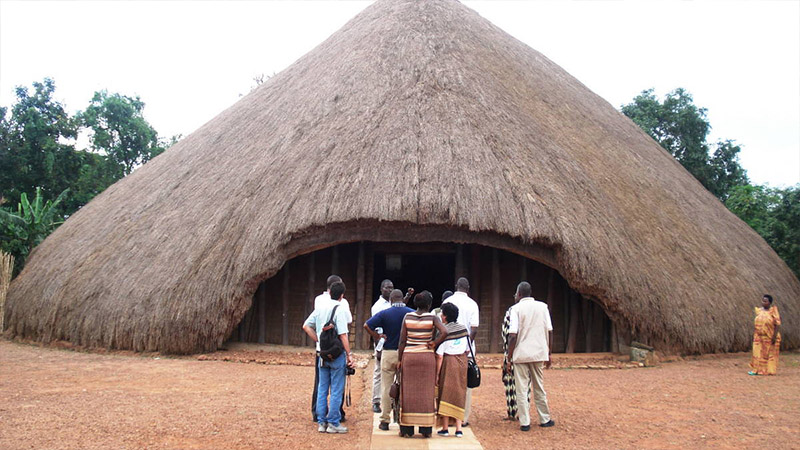
The Kasubi Royal Tombs rank among Buganda’s most important cultural sites. The site serves as the burial place of several former Kabakas.
The tombs occupy a historic hill in Kampala. Their traditional architecture reflects important aspects of Buganda building techniques.
The site became a UNESCO World Heritage Site in 2001. A fire damaged the main structure in 2010, but restoration efforts followed.
Visitors can learn about Buganda royal history during a guided visit. The site also provides insight into traditional beliefs and royal customs.
Buganda Culture and Traditional Ceremonies
Traditional ceremonies remain important within Buganda. Royal events, weddings, cultural gatherings, and community celebrations often include traditional music and dance.
These ceremonies bring families and communities together. They also help younger generations learn cultural practices.
Traditional clothing can also feature prominently during important occasions. Women may wear the gomesi, while men often wear the kanzu.
Music, drums, storytelling, and dance create a strong sense of cultural identity.
Buganda’s Influence on Kampala
Kampala grew within the historic Buganda Kingdom. Several hills and neighborhoods still carry names connected to Buganda’s history.
The kingdom continues to influence the city’s cultural landscape. Visitors can encounter Luganda language, traditional foods, music, and cultural institutions throughout Kampala.
Exploring Kampala therefore offers an opportunity to understand modern Uganda through its Buganda heritage.
Why Explore Buganda Kingdom History?
Understanding Buganda Kingdom history adds depth to a Uganda cultural journey. It reveals how traditional leadership and social structures developed over time.
Visitors can combine historical sites with cultural experiences in Kampala and surrounding areas. This creates a rewarding introduction to Uganda’s heritage.