
4 Day Budget Safari
4-Day Budget Tea plantation tour in Nyungwe Canopy Walk for Photographers
Photograph Rwanda's tea landscapes on a 4-day budget Nyungwe tour combining plantations, rainforest scenery and the famous canopy walkway.
- Budget Experience Comfortable Lodges & Camps
- Canopy Walk An unforgettable encounter
- Kigali Experience Culture, dining & relaxation
- Tailor-Made Customised for you
Overview
Why Southwestern Rwanda Appeals to Photographers
A 4-Day Budget Tea Plantation Tour in Nyungwe Canopy Walk for Photographers explores one of southwestern Rwanda's most visually distinctive combinations: cultivated tea hills and natural montane rainforest. Designed for photographers travelling on a controlled budget, the itinerary prioritises landscapes, changing light, local agricultural context and the dramatic perspective offered by the Nyungwe canopy walkway.
The title combines tea plantations with Nyungwe's canopy walk because both can form part of the same southwestern Rwanda journey. Tea is cultivated in landscapes surrounding parts of the forest region, while the Nyungwe canopy walk takes place within the protected rainforest.
For photographers, this contrast is especially valuable. Tea fields display human-created patterns across hillsides, whereas Nyungwe presents dense, irregular layers of natural vegetation. Moving between them creates a more complete visual story than concentrating on only one environment.
Budget accommodation and shared or efficiently organised transportation keep costs manageable while preserving access to the locations that matter.
Rwanda's southwest provides depth, texture and constantly changing weather.
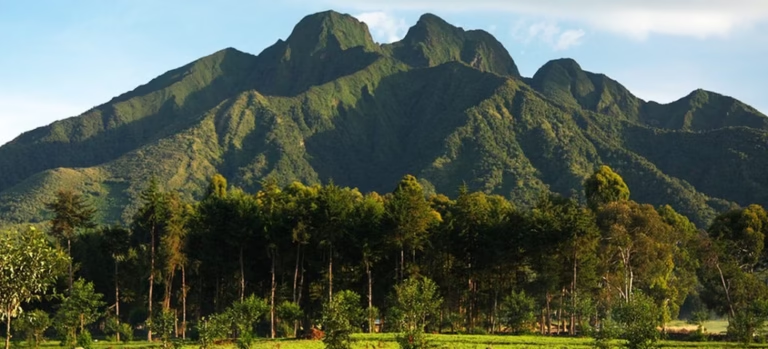
Tea plantations create geometric patterns across slopes. Mist can settle over forested ridges, while sunlight occasionally breaks through clouds and illuminates individual sections of the landscape.
Nyungwe adds a darker and more complex photographic environment.
Inside the forest, photographers work with filtered light, vegetation, moisture and limited sightlines.
The canopy walkway changes that perspective by lifting visitors above parts of the forest floor.
A Nyungwe photography safari therefore challenges photographers to work with both broad landscapes and intimate environmental details.

Detailed Itinerary
-
DAY
1
Kigali to the Nyungwe Region
The journey begins in Kigali and heads south toward Huye before continuing into southwestern Rwanda.
Photographers should keep cameras accessible during the drive rather than burying all equipment in luggage.
The countryside can produce interesting scenes, but stops should be made only where safe and appropriate.
The guide can identify suitable viewpoints and explain whether photography is permitted.
Travellers should remember that rural communities are living environments. People should not be photographed closely without permission simply because the scene appears visually interesting.
The group reaches its budget accommodation near Nyungwe later in the day and prepares equipment for the next morning.
Photographing Tea Plantations
The second day can begin around suitable tea-growing landscapes.
Tea fields are particularly attractive because rows of plants create rhythm and repetition.
Wide lenses can capture sweeping hillsides, while longer focal lengths compress distant slopes and emphasise patterns.
Weather has a major influence on the photographs.
Bright sunshine can produce strong contrast, whereas overcast conditions create softer tones across the leaves.
Mist adds atmosphere and can separate layers of hills.
Photographers should avoid assuming that only perfect sunshine produces good images. Southwestern Rwanda's cloudy conditions often create more distinctive photographs.
-
DAY
2
Understanding Tea Production
The experience should go beyond photographing green hills.
Where a legitimate tea visit is available, travellers can learn about cultivation and harvesting.
Understanding the work involved helps photographers tell a more accurate visual story.
Harvesting is carried out according to production requirements, and workers should not be interrupted for staged photographs.
If portrait photography is desired, permission should be obtained.
A guide can help with respectful communication.
Photographers interested in documentary work should spend time observing before taking pictures. Understanding the rhythm of an activity usually leads to stronger images than immediately pressing the shutter.
From Plantation to Processing
Depending on current access arrangements, visitors may learn how harvested leaves progress through processing stages.
Factory photography may be restricted for safety or operational reasons, so permission must never be assumed.
Even without extensive factory access, explanations about processing give context to the landscape photographs.
Tea is not simply decorative vegetation. It is an agricultural commodity connected to workers, transportation, processing and markets.
Photographers who understand this relationship can create images that communicate more than scenery.
Keeping a Photography Safari Affordable
Camera equipment is already expensive, so accommodation does not need to consume the remainder of the travel budget.
A simple guesthouse or budget lodge can provide everything necessary for a short photography journey.
Cleanliness, security and reliable electricity are especially important.
Photographers need to charge batteries and protect equipment overnight.
Location also matters. Staying reasonably close to planned shooting areas can reduce early morning travel.
Savings should not come from hiring an unreliable vehicle or inexperienced guide.
Access and timing often matter more to photographers than luxury rooms.
-
DAY
3
Nyungwe Forest and Canopy Walk
The third day shifts from cultivated landscapes to protected rainforest.
After breakfast, travellers join an authorised guide and follow the designated trail toward the Nyungwe canopy walkway.
The forest presents immediate photographic challenges.
Light can be low, and bright openings may create strong contrast.
Photographers should be comfortable increasing ISO when necessary rather than risking consistently blurred images.
A wide or standard zoom works well for forest structure.
Longer lenses can help with birds and wildlife, although dense vegetation may limit clear views.
Photography from the Canopy Walkway
The suspension walkway provides one of the itinerary's most distinctive viewpoints.
Wide lenses can emphasise the bridge and forest depth.
Longer focal lengths can isolate ridges, tree crowns and layers of vegetation.
Equipment must remain secure because the bridge can move as people cross.
Changing lenses on the walkway may be inconvenient and risky, so photographers should decide on a versatile lens beforehand.
Tripods are generally impractical for an active suspension structure and may be restricted according to activity rules.
Photographers should also respect other visitors and avoid occupying one position for excessive periods.
Photographing Forest Details
Some of Nyungwe's strongest images are found below eye level or immediately beside the trail.
Ferns, moss, leaves, bark and water droplets provide opportunities for detailed compositions.
Photographers can look for repeating forms, contrasting textures and layers.
The forest should never be damaged to improve a photograph.
Branches should not be broken or plants moved simply to clear a composition.
Ethical nature photography means working with the scene as it exists.
The same principle applies to wildlife. Animals should not be chased, called or disturbed to obtain a better angle.
Bird and Primate Photography
Nyungwe is known for its biodiversity, but photographers should maintain realistic expectations.
Forest wildlife can be difficult to photograph because vegetation is dense and light is limited.
Birds may be heard without becoming clearly visible.
Primates can move quickly through the canopy.
A fast telephoto lens can help, but heavy professional equipment can become tiring during forest hikes.
Travellers should choose equipment according to physical comfort as well as technical ambition.
A missed photograph should never be considered a failed forest experience.
-
DAY
4
Final Landscapes and Return to Kigali
The final morning can provide another opportunity for landscape photography before departure.
If conditions are different from the previous days, returning briefly to a suitable viewpoint can produce an entirely new set of images.
The journey then begins toward Kigali.
Photographers can make selected stops according to timing and road safety.
Huye may be incorporated if the group has sufficient time and cultural photography is of interest.
Travellers with an international flight should avoid planning the road journey too tightly.
An overnight in Kigali can provide a more comfortable finish.
Camera Equipment for the Journey
A versatile zoom is valuable because the itinerary includes landscapes, people, forest details and potential wildlife.
A wide-angle lens can be excellent for tea hills and the canopy walkway.
A telephoto zoom helps isolate landscape details and photograph birds.
Extra batteries are essential.
Memory cards should provide enough capacity for several days of shooting.
A rain cover or waterproof bag is particularly important around Nyungwe.
Microfibre cloths can help manage moisture on lenses.
Photographers should also back up images whenever practical.
Smartphones and Lightweight Photography
Travellers do not need professional cameras to benefit from this itinerary.
Modern smartphones can produce strong landscape photographs in good light.
Their wide lenses are useful on the canopy walkway and in tea fields.
Phones are also easier to manage in rain than a large multi-lens kit when suitable waterproof protection is available.
Budget travellers may prefer carrying a smartphone and one compact camera.
The most important skill remains composition and observation rather than equipment price.
Best Light for Tea Photography
Early morning and late afternoon often provide attractive directional light, but southwestern Rwanda's weather may alter these expectations.
Cloud cover can remain for long periods.
Instead of waiting for a conventional golden hour, photographers can work with mist, diffused light and changing clouds.
Rain can intensify the colour of vegetation.
After a shower, leaves may appear especially vibrant.
The key is to remain flexible rather than designing the entire trip around one imagined weather condition.
Responsible Photography of Local People
Tea workers and residents are people, not safari subjects.
Photographers should ask before creating identifiable close portraits.
If someone declines, the answer should be respected immediately.
Children require additional sensitivity.
Visitors should not hand out money or gifts simply to manufacture photographic situations.
Documentary photography is strongest when it respects the dignity and context of the people represented.
A local guide can help travellers understand appropriate behaviour.
Extending the Trip for Chimpanzees
Photographers interested in primates can extend the itinerary to include chimpanzee trekking in Nyungwe.
A separate permit and additional time are required.
Chimpanzees can be difficult photographic subjects because they move rapidly and may remain high in trees.
Low forest light creates further technical challenges.
Adding at least one extra day is preferable to forcing the trek into the four-day tea and canopy itinerary.
This also provides more time to recover and organise equipment.
Why Budget Travel Works for Photographers
Photographers often spend relatively little time inside their accommodation during active shooting days.
Paying premium lodge rates may therefore provide limited additional value.
A carefully selected budget property can release funds for longer guiding, private transportation or additional activities.
The important factors are security, electricity, cleanliness and location.
A budget photography safari in Rwanda should still be professionally planned.
Reducing accommodation cost is very different from compromising safety or access.
Plan Your Nyungwe Tea Photography Safari
A 4-Day Budget Tea Plantation Tour in Nyungwe Canopy Walk for Photographers combines cultivated landscapes, agricultural stories and one of Rwanda's most dramatic rainforest viewpoints.
Tea-covered hills provide patterns and colour, while Nyungwe challenges photographers with mist, forest layers and changing light.
Budget accommodation keeps the journey accessible, leaving resources available for guiding and transportation.
For photographers seeking a visually varied Nyungwe tea plantation tour, this four-day itinerary provides a strong introduction to the landscapes and stories of southwestern Rwanda.
Accommodation Options in Kigali

Ready to Experience This Budget Safari?
Let our expert team customise this 4-day itinerary to match your interests and travel dates.