
1 Day Mid-range Safari
1-Day Mid-Range Gorilla Trekking in Nyungwe Canopy Walk for Small Groups
Combine Volcanoes gorilla trekking with Nyungwe Canopy Walk on a mid-range small-group Rwanda primate safari.
- Mid-range Experience Mid-range Lodges & Hotels
- Gorilla Trekking An unforgettable encounter
- Kigali Experience Culture, dining & relaxation
- Tailor-Made Customised for you
Overview
Where Gorilla Trekking Takes Place
A 1-Day Mid-Range Gorilla Trekking in Nyungwe Canopy Walk for Small Groups brings together two of Rwanda's most recognizable forest experiences, but they occur in different national parks. Mountain gorilla trekking takes place in Volcanoes National Park in northern Rwanda. The Nyungwe Canopy Walk is located within Nyungwe National Park in the southwest.
Small groups interested in both experiences should therefore plan a multi-day Rwanda journey rather than attempting to trek gorillas and complete the canopy walkway within one day. The distance between the parks makes such a same-day combination impractical.
A properly organized gorilla trekking and Nyungwe safari allows travellers to experience two very different forests while sharing transport and guiding costs across a small group.
Rwanda's mountain gorillas are trekked in Volcanoes National Park near Musanze.
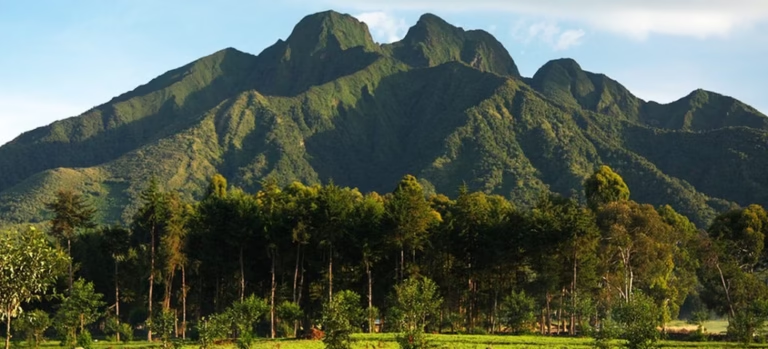
The park protects part of the Virunga landscape, where forested volcanic slopes provide habitat for habituated gorilla families.
Nyungwe does not offer mountain gorilla trekking.
This distinction should be clear before travellers purchase permits or arrange accommodation.
A small group can begin the journey in northern Rwanda before travelling southwest toward Nyungwe, or complete the route in the opposite direction depending on the wider safari plan.

Understanding the Gorilla Permit
The standard Rwanda gorilla permit costs USD 1,500 per person.
Choosing mid-range accommodation or travelling as a small group does not reduce the official permit price.
Savings come from sharing transportation, selecting comfortable but moderately priced accommodation, and avoiding unnecessary luxury upgrades.
Permits are limited and should be reserved well ahead for fixed travel dates.
During popular periods, planning four to six months in advance can be sensible.
Each traveller should ensure that the passport information used for booking is accurate.
Minimum Age and Group Size
The minimum age for gorilla trekking in Rwanda is 15.
A maximum of eight visitors are normally assigned to a habituated gorilla family.
This makes gorilla trekking naturally compatible with small-group travel.
Friends or relatives travelling together may still be combined with other permitted trekkers depending on official allocation procedures.
Travellers should not assume that booking as a small private group guarantees an exclusive gorilla family allocation.
Park procedures remain in control of trekking arrangements.
Preparing for the Gorilla Trek
Mountain gorilla trekking requires appropriate preparation.
Visitors should wear strong hiking footwear and long trousers.
Rain protection should remain accessible because conditions can change quickly.
The forest can be muddy and uneven.
Trekkers should carry water and essential personal medication while keeping the daypack reasonably light.
A moderate level of fitness is useful because the distance to the gorillas cannot be predicted in advance.
The animals move freely within their habitat.
Entering the Forest
After the required briefing and group allocation, trekkers enter the forest with guides and relevant park personnel.
The route may cross vegetation, mud, slopes, and uneven ground.
Group members should maintain a comfortable pace and listen carefully to instructions.
A small group can support one another during difficult sections without turning the trek into a competition.
The objective is to reach the gorillas safely and with enough energy remaining to appreciate the encounter.
Meeting the Mountain Gorillas
Once the assigned gorilla family is located, visitors normally receive one hour with the mountain gorillas.
The encounter is carefully controlled.
Travellers must follow instructions concerning distance, movement, photography, and behaviour.
Visitors should avoid spending the entire hour looking through a camera.
Watching the gorillas directly can reveal expressions, interactions, feeding behaviour, and family relationships that are easy to miss while concentrating only on photographs.
Photography During Gorilla Trekking
Forest light can be difficult.
Photographers should understand their cameras before the trek.
Flash should not be used where prohibited, and visitors should never move closer to improve an angle.
A moderate camera setup is generally easier to carry than several heavy lenses.
Small groups should also be considerate of one another when positioning for photographs.
Everyone has paid for the experience and should have reasonable opportunities to observe the gorillas.
Moving From Volcanoes to Nyungwe
After completing the northern Rwanda stage, travellers can continue toward Nyungwe.
This transfer requires substantial road travel and should receive its own realistic schedule.
A stop around Lake Kivu may provide a useful break depending on the chosen route.
Trying to reach Nyungwe immediately after a demanding gorilla trek and then complete another forest activity would create unnecessary fatigue.
A slower journey provides more time to enjoy Rwanda's changing landscapes.
Understanding Nyungwe
Nyungwe National Park protects montane rainforest rather than volcanic gorilla habitat.
Its wildlife includes chimpanzees, several other primates, birds, and diverse forest species.
The park also offers extensive hiking opportunities.
For travellers who have just experienced Volcanoes National Park, Nyungwe demonstrates how dramatically Rwanda's forest ecosystems can differ.
The contrast makes the journey worthwhile rather than repetitive.
Experiencing the Canopy Walk
The Nyungwe Canopy Walk is reached through a guided forest walk.
Trails can be uneven and muddy, so the same strong footwear used for gorilla trekking can remain useful.
The suspended walkway provides elevated views over sections of the forest.
Travellers uncomfortable with heights should understand the nature of the experience beforehand.
Small groups should move carefully and avoid overcrowding particular sections while taking photographs.
Adding Chimpanzee Trekking
Small groups with additional time can include chimpanzee trekking in Nyungwe.
Chimpanzees provide a very different primate encounter from mountain gorillas.
They can move rapidly and may travel through dense forest.
The activity deserves its own morning rather than being treated as a short addition to the canopy walk.
Combining gorillas, chimpanzees, and the canopy walkway creates a strong primate-focused Rwanda itinerary when enough days are available.
Advantages of Small-Group Travel
Travelling with a small group can reduce per-person transport costs.
It also creates a social safari atmosphere without the complexity of a large coach group.
Friends can share the excitement of wildlife encounters and discuss the experience afterward.
The group should still respect individual differences in walking speed and interests.
A good itinerary allows enough flexibility for photographers, keen hikers, and travellers who prefer a more relaxed pace.
Mid-Range Accommodation
Mid-range accommodation can provide comfortable rooms, meals, and practical locations without the cost of premium luxury properties.
Location should remain a major consideration.
A cheaper lodge that creates hours of additional morning driving may not provide genuine value.
Around Volcanoes National Park and Nyungwe, travellers should consider proximity to activity starting areas.
The group can then direct more of its budget toward permits and meaningful experiences.
What to Pack for Both Parks
A combined forest safari requires strong walking footwear, long trousers, rain protection, and comfortable layers.
Visitors should carry a small daypack, water, personal medication, and protection for electronic equipment.
A second pair of comfortable shoes is useful for evenings and travel days.
Travellers should avoid excessive luggage because frequent transfers become easier when bags remain manageable.
Health and Responsible Primate Tourism
Primates are vulnerable to human diseases.
Visitors should follow current park health procedures and communicate honestly if they are unwell.
Masks may be required according to applicable rules.
Trekkers should maintain instructed distances and never touch or feed wildlife.
The same responsible behaviour applies in both national parks.
Tourism can support conservation only when visitor conduct respects the animals being protected.
Adding Lake Kivu
Lake Kivu can provide a welcome break between forest destinations.
Small groups may spend a night beside the lake to rest after trekking.
Scenic views and suitable locally available activities can provide contrast with demanding forest walks.
The stop also helps break a longer road transfer.
A balanced itinerary often becomes more enjoyable when rest is treated as part of the safari rather than wasted time.
How Long Should the Journey Be?
A genuine Volcanoes and Nyungwe combination needs several days.
Travellers should allow time for gorilla trekking, transfers, the canopy walk, and any chimpanzee activities.
Adding Kigali or Lake Kivu requires additional time.
The exact duration depends on the group's priorities.
A rushed itinerary may technically reach several destinations while providing little opportunity to experience them properly.
Plan Your Small-Group Primate Safari
A 1-Day Mid-Range Gorilla Trekking in Nyungwe Canopy Walk for Small Groups should be planned as a multi-destination Rwanda forest journey rather than a literal one-day combination.
Mountain gorillas are trekked in Volcanoes National Park, while the canopy walkway belongs to Nyungwe National Park.
Small groups can share transportation costs and choose comfortable mid-range accommodation while keeping the USD 1,500 gorilla permit as the principal fixed expense.
With realistic travel times and separate days for major activities, the journey provides an exceptional introduction to Rwanda's volcanic and montane rainforest ecosystems.
Accommodation Options in Kigali

Ready to Experience This Mid-range Safari?
Let our expert team customise this 1-day itinerary to match your interests and travel dates.