
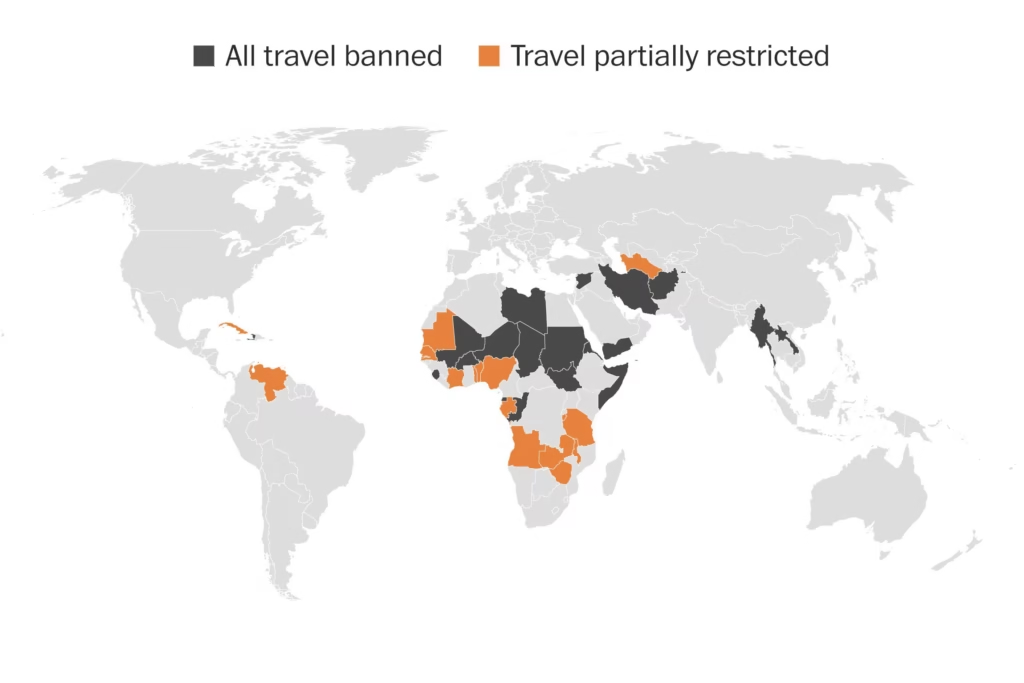
26 African Countries Under Full or Partial U.S. Travel Ban (Post-December Update)
26 African Countries Under Full or Partial U.S. Travel Ban (Post-December Update) Following the December update to U.S.…
Read article →
Travel Guide
Discover the origin of the word “gorilla” and learn how gorillas are named in conservation and tourism—from ancient explorers to Rwanda’s Kwita Izina ceremony.
The subject of gorilla naming has two fascinating sides. The first concerns the origin of the word “gorilla” itself and how it eventually became the internationally recognized name for one of Africa’s great apes. The second involves the names given to individual gorillas by researchers, conservationists and communities working around their habitats.
For travelers visiting Rwanda or Uganda, individual gorilla names can quickly become part of the trekking experience. Guides may introduce a family by name, explain the identity of its dominant silverback and point out females, juveniles and infants that researchers recognize individually. These names make it easier to follow the history of a gorilla family and understand how its social structure changes over time.
Rwanda has taken this connection even further through Kwita Izina, its well-known gorilla naming ceremony.
The history of the word “gorilla” stretches back much further than modern wildlife tourism.
The term is generally traced to an ancient account associated with the Carthaginian explorer Hanno and a voyage along the western coast of Africa. The ancient text contains a term translated as “gorillai” in connection with hairy beings encountered during the expedition.
Exactly what animals or people the ancient account described has been debated, and it should not simply be assumed that the expedition encountered the gorillas recognized by modern science.
Centuries later, however, the historical term influenced the scientific naming of gorillas.
This linguistic history shows that the familiar word has roots reaching far beyond modern conservation.
Modern science uses standardized taxonomy to classify gorillas.
Scientific classification allows researchers working in different countries and languages to refer to the same animals consistently.
Gorillas belong to the genus Gorilla, within which scientists recognize different species and subspecies.
For ordinary safari travelers, scientific names may initially seem less memorable than the personal names of habituated gorillas. Yet taxonomy is extremely important for research and conservation because different gorilla populations occupy different habitats and face different pressures.
Scientific gorilla naming therefore provides a framework for understanding relationships between populations.
Mountain gorillas are the gorillas encountered during trekking experiences in Rwanda’s Volcanoes National Park and Uganda’s Bwindi Impenetrable and Mgahinga Gorilla national parks.
They live in highland forest environments within this part of East and Central Africa.
Mountain gorillas are intensely monitored.
Researchers and trackers can recognize individuals using physical characteristics, family relationships and long-term observation.
This familiarity means conservation teams can follow births, deaths, transfers between groups and changes in leadership.
For visitors, a named gorilla consequently represents much more than an animal encountered for an hour. Its life may have been followed for years.
Individual names make long-term monitoring easier.
Researchers need to know which female gave birth, which juvenile moved between groups, which silverback became dominant and which animals were involved in a particular social interaction.
Using only descriptions such as “large male” or “young female” would quickly become confusing.
Names create consistent identities within monitoring records.
They also help trackers communicate efficiently in the field.
From a tourism perspective, names make the gorillas’ stories easier for visitors to understand.
A guide can explain the history of one individual and its relationships with other family members rather than discussing the group only in abstract biological terms.
Naming an animal is only useful if researchers can reliably identify it.
Experienced trackers become familiar with physical differences among individuals.
Body size, facial features, scars and other distinguishing characteristics can contribute to identification.
Long-term observation also allows field teams to recognize behavior and relationships.
Researchers can therefore build detailed histories of habituated families.
Visitors should remember that this knowledge comes from continuous conservation work, not simply from the tourism encounter.
The one hour a tourist may spend observing a family is supported by teams whose relationship with those gorillas extends much further.
Trekking visitors are usually assigned to a habituated gorilla family.
The group itself generally has a recognized name, while individual members have their own names.
Guides explain the family composition during the trek or briefing.
Knowing the group’s background can make the encounter considerably more meaningful.
A visitor who understands which silverback leads the family and which infants belong to particular females can interpret interactions more clearly.
Instead of seeing a collection of gorillas, travelers begin to understand a functioning social group.
Adult male gorillas develop the distinctive silver coloring across their backs that gives rise to the term silverback.
A mature silverback may play a major leadership and protective role within a family.
Because of this, individual silverbacks frequently become particularly well known to researchers, trackers and visitors.
Their life histories can include changes in dominance, family formation and interactions with rival males.
When a prominent silverback dies or leadership changes, the social consequences may be closely monitored.
Individual gorilla naming makes these long-term stories easier to record and communicate.
The birth of a mountain gorilla is an important event for conservation teams.
Infants depend heavily on their mothers and gradually develop within the protection of the family.
Monitoring births helps researchers understand population changes and reproductive success.
Giving young gorillas names also creates a clear identity for future records.
As an infant grows into a juvenile and eventually an adult, its history can be followed continuously.
For people who return to the same gorilla destination years later, this creates an unusual connection. A gorilla first known as an infant may later become a mature member of its family.
Rwanda’s Kwita Izina is one of the best-known examples of gorilla naming becoming part of a wider conservation event.
The ceremony is inspired by Rwanda’s cultural tradition of naming children.
Through Kwita Izina, newly named gorillas become part of a public celebration that draws attention to mountain gorilla conservation.
The event has helped connect individual gorilla identities with the broader story of protecting Volcanoes National Park.
It also gives conservation communication a humanly understandable focus.
Population statistics can feel abstract. A named infant and its family story are often easier for the public to remember.
Kwita Izina has become closely associated with Rwanda’s tourism identity.
Mountain gorillas are one of the country’s flagship attractions, and the naming ceremony creates an opportunity to discuss conservation beyond the trekking experience.
It can draw attention to researchers, trackers, veterinarians, park personnel and communities involved in protecting gorilla habitat.
The ceremony also reminds travelers that gorilla tourism depends on long-term conservation.
Without protected habitat and careful monitoring, the trekking experiences visitors value would not be sustainable.
Names are powerful communication tools.
A conservation organization explaining the life of a specific gorilla can often create a clearer emotional connection than one presenting statistics alone.
That does not mean conservation should become purely sentimental.
Gorillas remain wild animals rather than human characters.
However, individual identities can help the public understand real events affecting gorilla families.
Births, leadership changes and movements between groups become easier to follow when the animals involved are consistently identified.
Uganda’s mountain gorillas are also individually monitored and identified.
Visitors trekking in Bwindi or Mgahinga hear the names of gorilla families and individual animals from guides.
These names are part of the conservation knowledge surrounding habituated groups.
Bwindi has multiple trekking sectors, and different gorilla families are associated with different areas.
A traveler’s permit and trekking allocation determine where the experience takes place.
The names encountered during a Uganda trek therefore depend on the family assigned on that particular day.
Before a gorilla family can be visited regularly by tourists, it undergoes a carefully managed habituation process.
Habituation gradually allows wild gorillas to become accustomed to the controlled presence of researchers and eventually visitors without removing their wild character.
This process requires substantial time and specialist work.
Researchers learn the identities and relationships of family members throughout this period.
Individual naming and recognition become essential parts of maintaining detailed records.
Tourists later benefit from this knowledge when guides explain the group during a trek.
The use of personal names can sometimes create the impression that habituated gorillas are domesticated.
They are not.
Mountain gorillas encountered during trekking remain wild animals living within their natural habitat.
Visitors must follow strict instructions concerning distance, movement and behavior.
No one should attempt to touch a gorilla simply because guides know its name.
Names help humans monitor and understand individual animals; they do not change the gorillas’ wild status.
Visitors do not need to memorize every individual before trekking.
Guides provide explanations during the experience.
Learning about the dominant silverback, mothers and infants can make observation more interesting.
Photography can also become more meaningful when visitors understand which animals they are documenting.
After the trek, travelers may want to record the name of the family they visited and some of the individuals encountered.
These details often become some of the most memorable parts of the safari.
The history of gorilla naming moves from an ancient word to modern taxonomy and finally to individual identification in conservation programs.
Each form of naming serves a different purpose.
The word “gorilla” gives the animal a common identity in human language. Scientific names allow accurate biological classification. Individual names help researchers monitor specific animals and communicate their histories.
Rwanda’s Kwita Izina adds another dimension by turning the naming of gorillas into a public celebration of conservation.
For travelers, understanding these layers can make a gorilla trek richer.
The silverback resting in the vegetation is not simply an anonymous animal encountered for a photograph. Researchers may know his history, relationships and role within the family.
That continuity is one of the remarkable features of modern gorilla conservation and one reason individual names have become such an important part of the story.

26 African Countries Under Full or Partial U.S. Travel Ban (Post-December Update) Following the December update to U.S.…
Read article →
3 Days Congo Gorilla Safari – Encounter the Gentle Giants of Virunga A 3 Days Congo Gorilla Safari…
Read article →
Children and Kids on Safari – Family-Friendly Adventures in Africa Taking children on an African safari is one…
Read article →
How to Plan a Safari in Uganda—Your Complete Travel Guide Planning a safari in Uganda is the start…
Read article →