
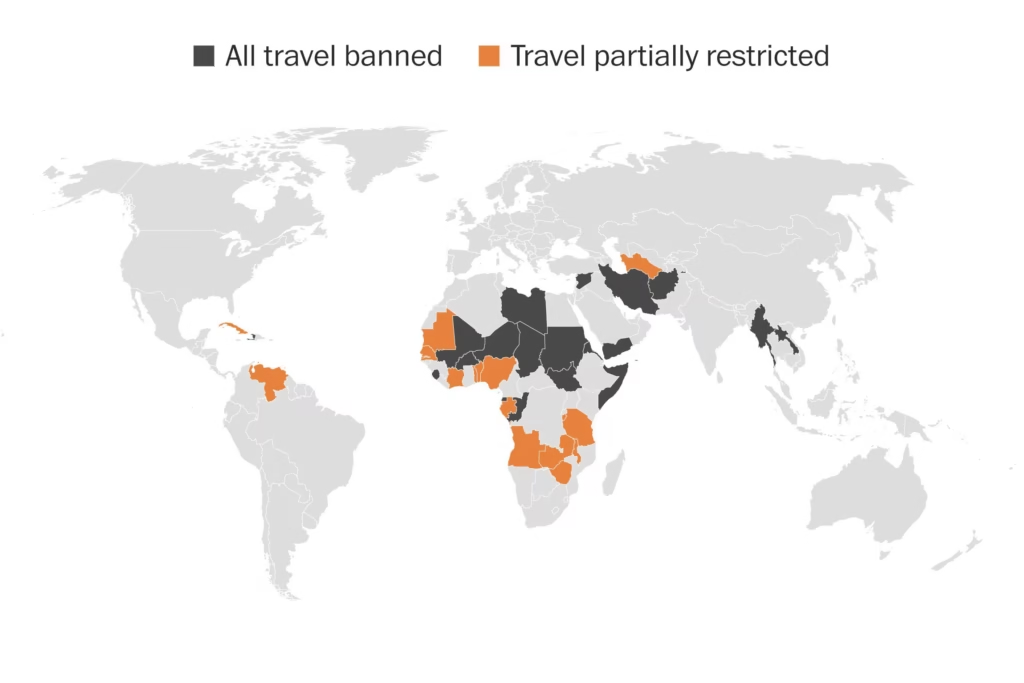
26 African Countries Under Full or Partial U.S. Travel Ban (Post-December Update)
26 African Countries Under Full or Partial U.S. Travel Ban (Post-December Update) Following the December update to U.S.…
Read article →
Travel Guide
Wondering when to visit Kenya? Discover the best time to travel to Kenya for wildlife safaris, beach holidays, and cultural experiences based on weather, wildlife, and events.
The Best Time to Travel to Kenya depends on what a visitor wants to experience. The source specifically frames the decision around wildlife safaris, beach holidays, cultural experiences, weather, wildlife patterns, and events. These factors mean there is no single travel period that is automatically ideal for every visitor.
A traveler planning primarily around safari activities may prioritize different conditions from someone whose main goal is a beach holiday. Another visitor may want to combine wildlife, coast, and cultural experiences in one journey.
The most useful approach is therefore to begin with travel priorities and then select dates that suit them.
Wildlife is one of the major considerations identified by the source when deciding the Best Time to Travel to Kenya.
Safari conditions change throughout the year.
Weather can influence vegetation, roads, animal distribution, photography, and the overall character of the landscape.
Travelers should understand that wildlife remains wild regardless of season.
No month can guarantee that a particular animal will appear in a particular place at a particular moment.
Historical wildlife patterns can guide planning, but current conditions and professional local knowledge remain important.
Visitors who travel specifically for a seasonal wildlife event should verify current information before booking.
A longer safari can provide more flexibility than a very short one.
Spending several nights in a wildlife area gives travelers multiple opportunities for game drives and allows guides to respond to current conditions.
Photographers may particularly appreciate additional time because light, weather, and wildlife behavior vary from one drive to another.
Travelers should also consider crowd levels.
Periods associated with famous wildlife events or popular holiday seasons can attract strong demand.
Accommodation and transport may need to be reserved well in advance.
Other travel periods may provide a different atmosphere and should not automatically be dismissed simply because they are not the most heavily promoted.
Beach holidays form the second major experience identified in the source.
Visitors interested in Kenya’s coast should consider weather conditions alongside their preferred activities.
A beach-focused traveler may care about sunshine, sea conditions, heat, humidity, and the suitability of particular activities.
The supplied source does not provide month-by-month weather statistics, so precise claims should be verified for the travel dates.
Weather is also variable.
A historical pattern does not guarantee the conditions on one particular day.
Travelers combining safari and beach destinations should pack for both environments.
Light clothing may be comfortable at the coast, while safari mornings or other parts of the itinerary can require different layers.
Sun protection is important.
Travelers should use appropriate sunscreen, protective clothing, and hydration practices.
A beach holiday can also be combined with cultural experiences rather than being treated only as time beside a swimming pool.
Visitors should follow local expectations around dress and behavior when leaving resort environments and entering communities or cultural sites.
Responsible travel requires awareness that holiday destinations are also places where people live and work.
The source also identifies cultural experiences and events as factors when choosing the Best Time to Travel to Kenya.
Events can add a special dimension to a trip, but travelers should verify current dates before planning around them.
Festival schedules and other events may change.
A cultural experience does not necessarily need to be tied to a large event.
Markets, food, art, heritage sites, community experiences, and local guiding can all contribute to a broader understanding of Kenya.
Visitors should approach cultural tourism respectfully.
People should not be photographed closely without permission.
Travelers should avoid treating communities as attractions that exist only for tourists.
A meaningful encounter involves listening and learning rather than simply collecting images.
If a particular event is essential to the journey, accommodation and transport should be arranged with the event schedule in mind.
Popular periods can increase demand.
Travelers should also understand cancellation and ticket conditions before making non-refundable arrangements.
The most practical way to decide when to travel is to rank the experiences that matter most.
If wildlife is the main priority, select dates according to the safari areas and experiences being considered.
If the beach is central, evaluate coastal conditions.
If an event is essential, build the itinerary around confirmed dates.
Travelers trying to combine all three should accept that compromises may be necessary.
The Best Time to Travel to Kenya for one part of the journey may not produce theoretically perfect conditions everywhere else.
That does not make the trip unsuccessful.
Kenya’s diversity is one of the reasons combined itineraries can be rewarding.
Safari landscapes and coastal environments create very different experiences within one holiday.
Travelers should also consider personal preferences.
Some people prefer busier periods because they enjoy an energetic atmosphere.
Others prioritize quieter travel.
Families may need to plan around school calendars.
Honeymooners may place greater emphasis on privacy and accommodation style.
Photographers may prioritize light and wildlife behavior.
Budget can also influence timing because travel demand may affect prices and availability.
The source does not provide specific seasonal rates, so these should be checked when comparing dates.
Booking early can be particularly useful when travel dates are fixed.
The central lesson is that there is no universally correct answer to the question of the Best Time to Travel to Kenya.
The source identifies weather, wildlife, events, safari experiences, beaches, and culture as the relevant factors.
Travelers should use those factors to define their own ideal period.
A wildlife-focused safari, a coastal holiday, and a culturally oriented trip can each have different timing priorities.
Rather than searching for one perfect month, visitors can decide what matters most and build the itinerary accordingly.
With realistic expectations and current destination information, Kenya can be planned around the type of experience the traveler genuinely wants rather than a generic definition of the “best” season.

26 African Countries Under Full or Partial U.S. Travel Ban (Post-December Update) Following the December update to U.S.…
Read article →
3 Days Congo Gorilla Safari – Encounter the Gentle Giants of Virunga A 3 Days Congo Gorilla Safari…
Read article →
Children and Kids on Safari – Family-Friendly Adventures in Africa Taking children on an African safari is one…
Read article →
How to Plan a Safari in Uganda—Your Complete Travel Guide Planning a safari in Uganda is the start…
Read article →