

26 African Countries Under Full or Partial U.S. Travel Ban (Post-December Update)
26 African Countries Under Full or Partial U.S. Travel Ban (Post-December Update) Following the December update to U.S.…
Read article →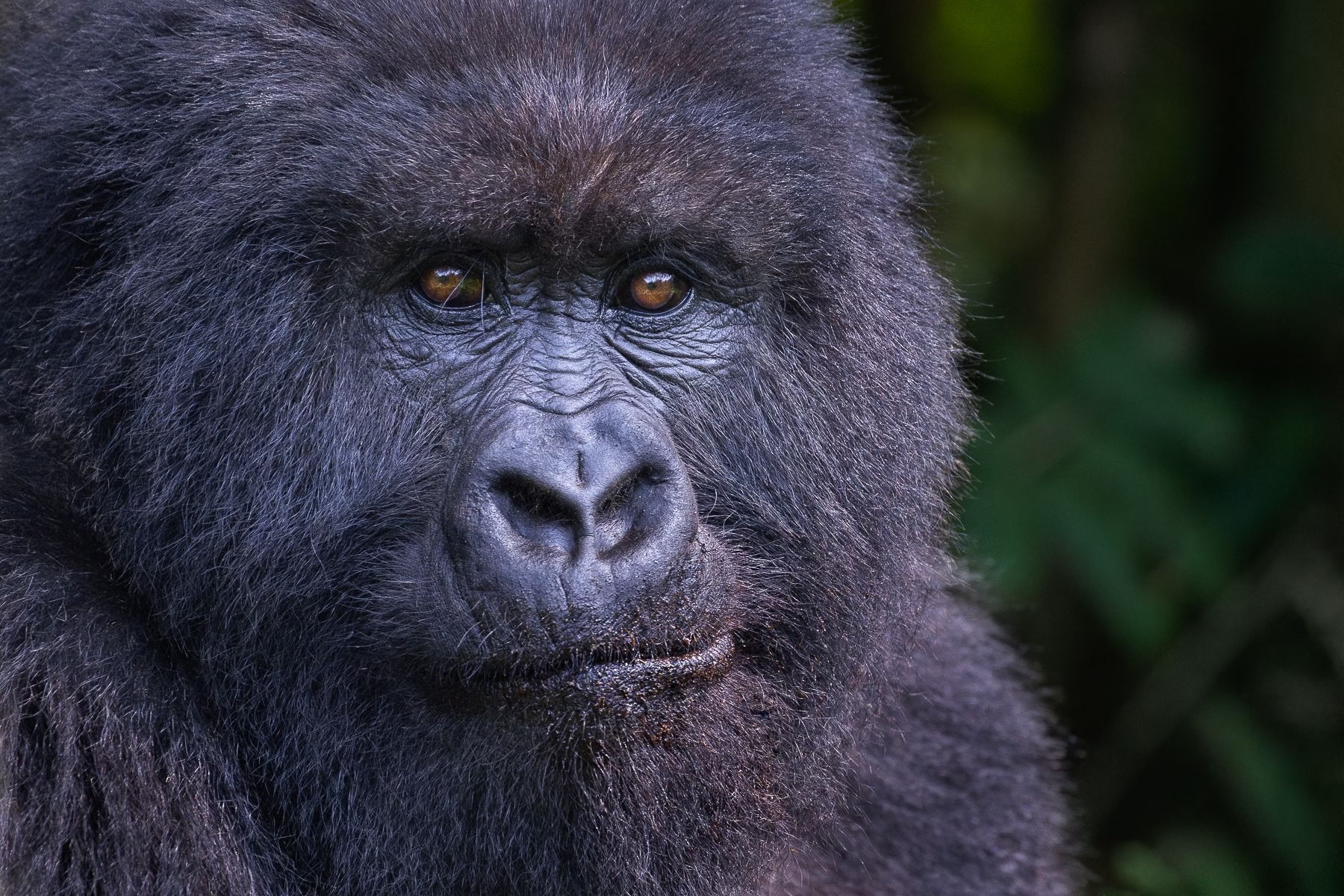
Travel Guide
A mountain gorilla’s nose is unique, just like a fingerprint. Learn how their distinctive nose prints help researchers identify and monitor these incredible primates.
A Mountain Gorilla’s Nose is much more than a physical feature visible in a close-up photograph. According to the source, the nose is distinctive enough to help researchers identify and monitor individual mountain gorillas, functioning in a way that can be compared with the uniqueness of a human fingerprint.
For travelers preparing for gorilla trekking, this detail can completely change the way they look at the animals. At first glance, members of a gorilla group may appear similar. Experienced researchers and field teams, however, need reliable ways to distinguish one individual from another.
Distinctive nose prints can contribute to this process, helping turn observations into records about known animals rather than anonymous sightings.
The source describes a Mountain Gorilla’s Nose as unique. The patterns and characteristics visible around the nose can therefore assist researchers who need to identify individuals.
Individual identification is essential for long-term monitoring. If researchers cannot reliably distinguish one gorilla from another, it becomes much harder to follow changes in groups over time.
Knowing individual animals allows field teams to record observations consistently. Researchers can understand which gorilla is being observed rather than simply recording that “a gorilla” was present.
This becomes especially important when following social groups.
Gorillas live within structured social environments. Individuals differ in age, sex, relationships, and roles within a group. Recognizing them allows observations to be connected with specific animals.
For a first-time visitor, identifying individuals may seem extremely difficult. A professional guide may recognize characteristics that a traveler overlooks completely.
The nose is particularly interesting because it provides a visible feature that can help distinguish animals whose overall body shape and dark hair may initially appear similar to an inexperienced observer.
Monitoring mountain gorillas is a long-term conservation activity.
Researchers and field teams may follow known groups over extended periods. Being able to recognize individual animals makes it possible to build histories around them.
The source specifically connects distinctive nose prints with identification and monitoring.
This means the nose has practical value beyond scientific curiosity.
When an individual can be recognized, observations can be connected across time. Researchers can know that today’s animal is the same individual observed previously.
This can contribute to understanding group composition and other aspects of gorilla life.
For travelers, this long-term perspective is important. A gorilla trek provides only a short encounter. The animals continue their lives before visitors arrive and after the tourists leave.
Researchers and conservation teams, by contrast, are interested in what happens across months and years.
Identification helps create that continuity.
Understanding the importance of a Mountain Gorilla’s Nose can make a trek more educational.
Visitors can listen carefully when guides explain which gorillas are present. Instead of viewing the group as a collection of similar animals, travelers begin to see individuals.
A mature gorilla may have a known history. A mother may be recognized along with her offspring. Younger animals may have distinctive behavior.
The nose is only one aspect of the broader identification process, but the source highlights it because of its distinctive nature.
Visitors should not attempt to move closer to inspect a gorilla’s nose. Identification is carried out by trained people and does not require tourists to interfere with the animals.
The official viewing rules remain more important than satisfying curiosity.
A long camera lens can sometimes reveal facial details in photographs while allowing the visitor to remain at the required position. However, photography should always follow current trekking rules.
If vegetation blocks a gorilla’s face, travelers should accept the natural setting rather than moving independently.
The forest is the gorilla’s home, not a photography studio.
Individual identification supports a larger conservation picture.
Mountain gorilla conservation requires knowledge about populations and social groups. Monitoring known animals can help researchers recognize changes.
The source focuses specifically on the role of nose prints, but travelers can use this information to understand why long-term field observation matters.
Conservation is not simply about guarding a forest boundary. It also involves learning about the animals being protected.
Research helps build the knowledge required to understand wildlife populations.
Tourism can contribute to the wider conservation environment when managed carefully, but visitors must follow strict behavior.
Gorillas should never be touched. Travelers should follow current health requirements, listen to guides, control noise, and respect the regulated nature of the encounter.
The fact that an individual gorilla can be recognized through features such as its nose reinforces an important point: every animal encountered is an individual rather than an interchangeable representative of the species.
That perspective can encourage more respectful wildlife viewing.
Gorilla trekking often creates an intense first impression. Travelers may initially focus on the size of a mature gorilla or the playful behavior of younger animals.
Once the excitement settles, smaller details become fascinating.
Facial expressions, hands, movement, social interactions, and individual physical characteristics can all reveal differences.
The Mountain Gorilla’s Nose is one of those details.
Knowing that researchers use distinctive nose prints for identification encourages visitors to look more carefully while still maintaining the required distance.
It can also improve photography. Instead of trying only to create dramatic full-body images, photographers may become interested in portraits that show facial features and expression.
Again, the animal’s welfare and official rules remain the priority.
No photograph justifies moving closer than permitted, using prohibited techniques, or disrupting natural behavior.
Travelers can also ask guides about individual gorillas. Guides may provide context that turns a photograph into a story about a known animal.
This educational element can become one of the most memorable parts of the trek.
The answer lies in individuality.
According to the source, a Mountain Gorilla’s Nose has a distinctive print that can help researchers identify and monitor the animal, much like the way a fingerprint distinguishes one human from another.
This apparently small physical feature therefore has considerable value.
It helps researchers and field teams distinguish individuals, connect observations over time, and understand the animals as members of known social groups.
For visitors, learning about nose prints can make gorilla trekking more meaningful. The animals are no longer simply “the gorillas” encountered during a holiday. They are recognizable individuals with histories that researchers and conservation teams may follow for years.
Looking carefully at a mountain gorilla’s face can therefore reveal more than an interesting physical detail. It can provide a glimpse into the patient identification and monitoring work that supports the long-term understanding of these remarkable primates.

26 African Countries Under Full or Partial U.S. Travel Ban (Post-December Update) Following the December update to U.S.…
Read article →
3 Days Congo Gorilla Safari – Encounter the Gentle Giants of Virunga A 3 Days Congo Gorilla Safari…
Read article →
Children and Kids on Safari – Family-Friendly Adventures in Africa Taking children on an African safari is one…
Read article →
How to Plan a Safari in Uganda—Your Complete Travel Guide Planning a safari in Uganda is the start…
Read article →