

26 African Countries Under Full or Partial U.S. Travel Ban (Post-December Update)
26 African Countries Under Full or Partial U.S. Travel Ban (Post-December Update) Following the December update to U.S.…
Read article →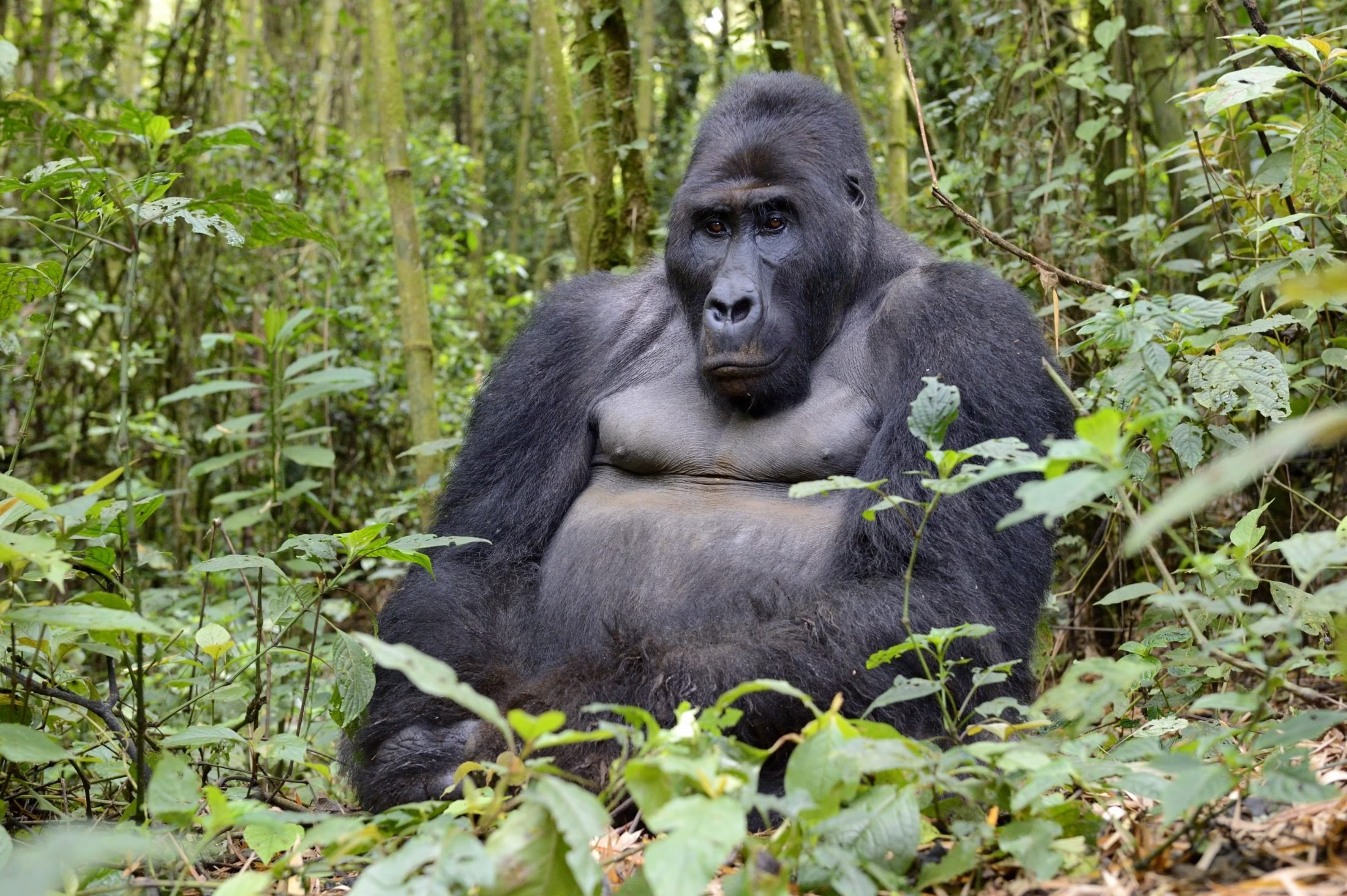
Travel Guide
A group of gorillas is called a troop. Learn how gorilla troops function, their social structure, and the role of the silverback in protecting and leading the group.
A group of gorillas is commonly called a gorilla troop, and the supplied source also uses the term band. The simple name opens the door to a much more interesting subject because gorillas live within organized social units containing strong relationships, leadership, family bonds, communication, play, and cooperation.
A troop is not merely several gorillas occupying the same forest area.
Its members travel, feed, rest, and respond to threats within a social structure. A mature silverback generally plays the central leadership role, while adult females, infants, juveniles, and sometimes younger males form the wider group.
Understanding these relationships can make a gorilla trekking experience far more meaningful.
The supplied source describes a gorilla troop as typically consisting of a dominant silverback, several adult females, and their offspring.
Some groups may also contain younger males known as blackbacks.
Group composition can change as gorillas mature, leave, join other groups, or as leadership circumstances change.
The source gives a broad group-size range from approximately five to more than twenty gorillas, illustrating that troops are not all identical.
The most recognizable member of a gorilla troop is usually the silverback.
The name refers to the silver-grey hair that develops across the back of a mature male.
His importance extends well beyond appearance.
According to the supplied source, the dominant silverback helps lead the troop, influences movement, and plays a major role in protection.
His decisions affect the daily rhythm of the entire group.
A silverback’s leadership can include deciding when the group moves and helping guide it toward suitable feeding areas.
The forest environment changes constantly, so the troop must continue finding sufficient food and appropriate places to rest.
Other members respond to the leader’s movements and behavior.
The result is an organized social unit rather than a collection of independent animals traveling randomly.
Protection is another important responsibility.
The supplied source emphasizes that the silverback defends troop members when threats arise.
A mature male’s size and strength make him a formidable presence.
Displays such as chest beating and vocalizations can communicate strength without every confrontation becoming a physical fight.
These displays are therefore an important part of gorilla communication and conflict.
Younger males may remain with the troop before reaching full maturity.
The supplied source refers to these males as blackbacks.
They have not yet developed the characteristic silver coloration of a mature silverback.
As they age, their position may change.
Some eventually leave the group and spend time alone before forming a new social unit or attempting to attract females.
Adult females form an important part of the troop’s social structure.
They care for infants and maintain relationships with other members.
A female may not necessarily remain in her birth troop throughout life.
The source notes that females can transfer between groups.
This movement contributes to genetic diversity and changes the composition of gorilla troops over time.
Young gorillas introduce some of the most visibly playful behavior within a troop.
The supplied source describes wrestling and chasing among younger animals.
Play is entertaining for visitors to watch, but it also has developmental importance.
Through physical interaction, young gorillas build coordination and social experience.
They also learn how to behave around other members of the group.
Gorilla society depends on relationships.
The supplied source highlights grooming, play, and communication as behaviors that help maintain social bonds.
Members spend substantial time near one another as they move through the forest.
These repeated interactions allow individuals to recognize relationships and respond appropriately to different troop members.
A visitor watching quietly may notice that particular gorillas repeatedly remain close together.
Grooming helps maintain fur while also supporting social relationships.
The activity may appear simple, but physical contact between individuals can reinforce familiarity and trust.
Gorillas do not spend every moment feeding or traveling.
Periods of rest and social interaction are important parts of troop life.
For trekkers, these quieter moments can reveal more about relationships than dramatic movement does.
The supplied source describes communication through grunts, hoots, vocalizations, and body language.
Different signals can communicate contentment, warning, distress, or other information.
Gorillas therefore maintain social coordination without relying on constant physical contact.
A trekker may hear sounds before understanding what they mean, which is where ranger interpretation becomes valuable.
Chest beating is perhaps the most famous gorilla display.
Popular culture sometimes portrays it simply as aggression.
Within gorilla behavior, displays can communicate presence, strength, or excitement depending on context.
Observers should avoid assigning a human emotion automatically to every movement.
Guides familiar with the gorillas can help visitors understand what is happening within the group.
The source describes gorillas as primarily herbivorous and feeding on leaves, fruits, and stems.
Food availability influences how the troop moves through its habitat.
Rather than remaining in one permanent location, the gorillas travel as they forage.
Watching a group feed can reveal individual preferences and interactions.
Young gorillas may remain near their mothers while adults move methodically through vegetation.
Travel within the forest occurs under the broader leadership of the silverback.
The group may spread out while feeding but still functions as a social unit.
The supplied source refers to troops covering distance during the day in search of food.
The exact movement naturally depends on habitat and food availability.
This mobility is one reason gorilla trekking duration can vary: trackers need to locate animals that are free to move through their environment.
At the end of the day, gorillas construct nests from vegetation.
The source describes nests being made on the ground or in trees using leaves and branches.
A fresh nest is generally built for resting.
Infants remain closely associated with their mothers, particularly when very young.
Nest-building is another example of everyday gorilla behavior that may be less famous than chest beating but is essential to their daily life.
The relationship between a mother and infant is one of the strongest bonds visible within a troop.
Young infants depend heavily on their mothers for warmth, transport, food, and protection.
As they grow, they become increasingly adventurous and begin interacting more with other young gorillas.
Observing these developmental stages can be particularly rewarding for visitors who encounter a family repeatedly over time.
Not every male remains in his birth troop permanently.
The supplied source states that males may leave as they mature, giving an approximate age range of ten to fifteen years.
A departing male may live alone for a period.
Eventually, he may attempt to attract females and establish his own troop or challenge another male.
These movements contribute to changing group structures across the population.
A solitary gorilla is not necessarily socially unsuccessful.
For a maturing male, living alone can be part of the transition toward establishing a group.
During this period, the male continues developing physically and navigating the social landscape around neighboring gorillas.
The eventual goal may be to form a troop in which he becomes the dominant silverback.
The supplied source notes that leadership can change when another male successfully challenges the dominant silverback.
Such changes can have significant consequences for the group.
The source also mentions the possibility of infant killing following some takeovers.
This is a difficult but documented aspect of primate social dynamics as presented in the supplied material.
It demonstrates that troop structure involves competition as well as cooperation.
Females can also leave one group and join another.
The source connects this movement with genetic diversity.
Transfer between groups reduces the likelihood that every generation remains within the same close family line.
It also means that troop composition is dynamic rather than fixed permanently.
Long-term researchers may therefore observe significant changes in the same gorilla group over many years.
A gorilla trek offers a brief window into this complex social system.
Visitors may see the silverback resting while juveniles play, females feed with infants nearby, or several members groom and move together.
The behavior encountered on any particular day cannot be guaranteed.
That unpredictability is part of observing wild animals.
Knowing the basic troop structure helps visitors interpret what they see.
Trekkers should follow ranger instructions carefully.
A gorilla troop is a functioning social group rather than an attraction arranged for visitors.
People should avoid interfering with interactions or attempting to attract attention.
Maintaining the required behavior allows the gorillas to continue feeding, resting, and communicating naturally.
The strongest encounters are those in which visitors observe rather than influence the group.
So, What Is a Group of Gorillas Called? The common answer is a gorilla troop, with the supplied source also recognizing the term band. Yet the name is only the beginning of understanding how gorillas live.
A troop usually centers on a dominant silverback and includes females, offspring, and sometimes younger males. Its members maintain relationships through grooming, play, vocal communication, feeding, movement, and protection.
Males and females may leave groups as circumstances change, while leadership can shift over time.
Recognizing this social complexity transforms gorilla trekking. Instead of simply seeing several gorillas together, visitors begin to see a family-based community in which every individual occupies a place within a larger social story.

26 African Countries Under Full or Partial U.S. Travel Ban (Post-December Update) Following the December update to U.S.…
Read article →
3 Days Congo Gorilla Safari – Encounter the Gentle Giants of Virunga A 3 Days Congo Gorilla Safari…
Read article →
Children and Kids on Safari – Family-Friendly Adventures in Africa Taking children on an African safari is one…
Read article →
How to Plan a Safari in Uganda—Your Complete Travel Guide Planning a safari in Uganda is the start…
Read article →