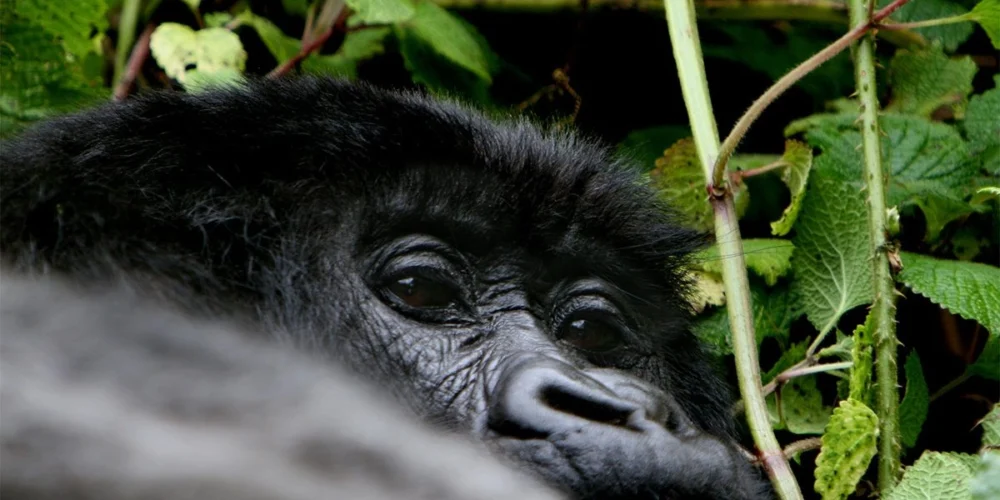

What Do Gorillas Think of Humans?
What Do Gorillas Think of Humans? Understanding Perception, Behavior, and Wildlife Encounters
Gorillas do not form human-like opinions about people, yet they do respond to humans in consistent and meaningful ways. Their reactions depend on experience, environment, and level of habituation. In protected forests where tourism or research takes place, gorillas learn that humans follow certain predictable patterns. In remote or unhabituated areas, they treat humans as unfamiliar and potentially risky elements in their environment.
Understanding how gorillas perceive humans helps explain gorilla trekking behavior, conservation practices, and why strict rules exist during wildlife encounters in Uganda, Rwanda, and the Democratic Republic of Congo. It also reveals how intelligent and socially aware these great apes truly are, even without abstract human reasoning.
Gorillas and the Limits of Human Interpretation
Gorillas do not think about humans in symbolic or emotional terms such as “friend,” “enemy,” or “tourist.” Their cognition focuses on immediate survival, group safety, food availability, and social stability within their troop.
Their intelligence operates strongly in social and environmental awareness. They understand relationships within their own groups with great depth. They recognize individuals, remember past interactions, and respond to emotional cues from other gorillas. Humans, however, fall outside their natural social framework.
Instead of forming opinions, gorillas build responses based on experience. A human becomes either predictable or unpredictable, safe or uncertain, familiar or unfamiliar.
First Encounters: Fear, Curiosity, or Caution
When gorillas encounter humans for the first time, their reaction depends heavily on context. In dense forest areas where they have no prior exposure, they often react with caution. They may stop feeding, vocalize softly, or move deeper into vegetation.
Silverbacks play a critical role in assessing the situation. They observe human behavior closely, interpret movement patterns, and decide whether the group should remain, retreat, or display warning behavior. If they feel threatened, they may perform bluff charges, chest beating, or loud vocalizations to create distance.
Curiosity also appears, especially among younger gorillas. Juveniles may watch humans from a distance, mirror movements, or approach briefly before returning to the group. This curiosity does not indicate friendship but reflects natural exploratory behavior.
Habituation: Learning to Coexist with Humans
In major gorilla trekking destinations such as Bwindi Impenetrable National Park, Volcanoes National Park, and Kahuzi-Biega National Park, gorillas undergo a gradual process called habituation. This process introduces gorillas to controlled, non-threatening human presence over time.
Rangers and researchers spend months or even years visiting the same gorilla groups. They maintain distance, avoid direct interaction, and follow strict behavioral rules. Over time, gorillas learn that these humans do not pose a threat.
This does not mean gorillas become tame or domesticated. Instead, they develop tolerance. They continue their natural behavior—feeding, grooming, resting, and moving—while ignoring or minimally reacting to human observers nearby.
Habituation makes gorilla trekking possible, but it requires careful management to avoid stress or disruption to natural social structures.
How Gorillas Read Human Behavior
Gorillas rely heavily on observation. They pay attention to movement speed, posture, sound, and proximity. Sudden movements or loud voices can trigger alert responses, while calm and still behavior often results in indifference.
Silverbacks especially evaluate humans based on consistency. A group that behaves predictably is less likely to provoke defensive reactions. This is why trekking rules emphasize quiet movement, limited group sizes, and strict time controls.
Gorillas also respond strongly to eye contact. Direct staring can be interpreted as a challenge, particularly in wild or less-habituated groups. Avoiding aggressive or prolonged eye contact helps reduce tension during encounters.
Social Intelligence and Emotional Awareness
Gorillas demonstrate strong emotional intelligence within their own groups. They form deep bonds, especially between mothers and infants, and show empathy-like behavior such as comforting distressed individuals.
However, this emotional awareness does not extend to humans in the same way. While they may recognize familiar human presence, especially in habituated groups, they do not form emotional attachments or friendships with people in the wild.
Their responses remain grounded in survival logic rather than emotional bonding. Even in long-term research settings, gorillas maintain clear social boundaries between themselves and humans.
Behavior in Gorilla Trekking Areas
In regulated tourism zones, gorillas often show neutral behavior toward humans. They may continue feeding, resting, or grooming without interruption. Juveniles sometimes display playful curiosity, briefly acknowledging human presence before returning to group activities.
Silverbacks usually monitor humans from a distance or position themselves between the group and observers. This protective behavior reflects leadership responsibility rather than aggression.
In most cases, habituated gorilla groups do not actively engage with humans. They treat observers as part of the environment, similar to rocks, trees, or distant sounds.
Differences Between Habituated and Wild Groups
Wild, unhabituated gorillas behave very differently from those in tourism areas. In these groups, humans trigger stronger caution responses. Gorillas may flee immediately or become highly alert.
Habituated groups, on the other hand, show reduced fear due to repeated exposure under controlled conditions. This difference highlights how flexible gorilla behavior can be when influenced by long-term environmental learning.
Conservation programs carefully manage this balance to ensure gorillas remain wild while still allowing controlled human access for research and tourism.
Do Gorillas Like Humans?
Gorillas do not “like” humans in a human emotional sense. They do not form attachments based on affection or social preference outside their species. However, they can become comfortable with predictable human presence.
Comfort in this context means reduced stress, not emotional bonding. A gorilla that continues feeding or resting near humans without agitation demonstrates tolerance, not friendship.
Their focus always remains on their group, their safety, and their environment.
The Role of Conservation in Human-Gorilla Relationships
Conservation programs play a major role in shaping how gorillas experience humans. Anti-poaching patrols, controlled tourism, and habitat protection reduce negative encounters and support long-term coexistence.
Tourism revenue also funds park management and local communities, creating incentives to protect gorillas. This system ensures that human presence contributes positively rather than disruptively to gorilla survival.
Without conservation management, gorilla responses to humans would likely remain purely defensive due to increased threats from hunting and habitat loss.
Conclusion
Gorillas do not think about humans in abstract or emotional ways. Instead, they respond based on experience, behavior patterns, and environmental context. In protected areas, they learn to tolerate humans through careful habituation. In wild or unprotected settings, they treat humans as potential threats and react accordingly.
Their behavior reflects intelligence rooted in social awareness and survival, not human-like interpretation. Understanding this helps improve conservation practices and ensures safer, more respectful wildlife encounters in Africa’s gorilla habitats.