

26 African Countries Under Full or Partial U.S. Travel Ban (Post-December Update)
26 African Countries Under Full or Partial U.S. Travel Ban (Post-December Update) Following the December update to U.S.…
Read article →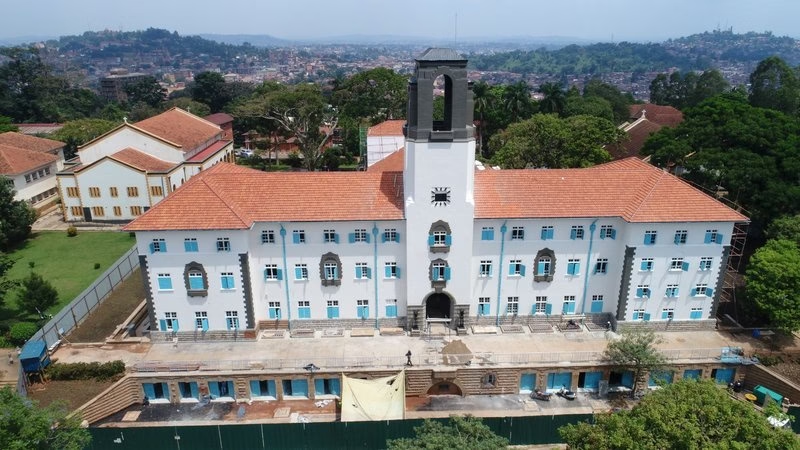
Travel Guide
Discover Kampala’s colonial architecture. Explore historic churches, government buildings, and cultural landmarks that tell Uganda’s colonial-era story.
Exploring colonial buildings in Kampala can help travelers understand how Uganda’s capital developed through a period of profound political, religious and social change. Kampala today is a busy modern city, and historical buildings exist alongside office towers, commercial streets, religious institutions and expanding residential neighborhoods.
Architecture provides a useful way to read this history.
Buildings reveal the materials, styles and institutions that shaped different stages of the city’s development. Yet a heritage tour should not romanticize colonialism. Uganda’s colonial period involved unequal power, foreign rule and major changes to political and social structures.
Understanding the architecture therefore requires looking at both the buildings and the historical systems surrounding them.
Kampala’s history did not begin with European administration.
The area was closely connected with the Kingdom of Buganda, whose political and cultural institutions existed before formal British colonial rule.
This context matters because descriptions of colonial Kampala can otherwise imply that Europeans created an urban landscape where no political organization previously existed.
A thoughtful heritage tour should therefore connect colonial architecture with Buganda’s older royal history.
Sites associated with the Kabaka and Buganda institutions help establish that broader context.
As colonial administration expanded, new government and institutional buildings became part of Kampala’s landscape.
Roads, administrative areas, schools, churches and commercial districts developed according to changing political and economic priorities.
The city grew through interaction among colonial authorities, Buganda institutions, missionaries, Asian communities and African residents.
This produced an urban environment more complex than a simple collection of British buildings.
Architecture can reveal what institutions considered important.
Large administrative buildings communicate authority.
Churches demonstrate the influence of missionary activity and religious competition.
Schools reveal changing approaches to education.
Commercial buildings reflect trade and urban economic development.
A guide who understands this history can help visitors move beyond architectural appearance and interpret why particular buildings were constructed where they were.
Namirembe Cathedral occupies an important place in Kampala’s religious and architectural landscape.
Its prominent position on Namirembe Hill makes it visually significant.
The cathedral’s history is connected with the spread of Christianity and the development of Anglican institutions in Buganda.
A visit can therefore introduce travelers to both architecture and religious history.
Visitors should remember that it remains a place of worship rather than merely a tourist monument.
Dress and behave respectfully.
Rubaga Cathedral provides another important landmark within Kampala’s religious history.
Its location on a hill contributes to its strong presence in the cityscape.
Exploring both Rubaga and Namirembe can help visitors understand how different Christian missions became established in Buganda.
Architecture becomes a starting point for discussing wider political and religious changes.
As with any active religious site, tourism should not disrupt worship.
The nineteenth and early twentieth centuries brought major religious changes to Buganda.
Christian missionary activity and the spread of Islam influenced politics and society.
Buildings associated with these faith traditions therefore cannot be understood purely as architectural objects.
They are connected with periods of competition, conversion and political change.
A good Kampala heritage tour explains these relationships instead of simply pointing out attractive structures.
Government buildings from colonial and later periods also contribute to Kampala’s architectural story.
Some remain in official use and may not be freely accessible.
Travelers should respect security restrictions and avoid photographing sensitive government locations when prohibited.
A heritage tour does not require entering every building.
Viewing exterior architecture while learning about its historical function can still provide useful context.
Old Kampala is an important area for understanding the city’s historical development.
Its name itself points toward earlier stages in the growth of modern Kampala.
Exploring the area with a knowledgeable guide can help visitors identify historical layers that are difficult to recognize amid contemporary traffic and development.
The city has changed substantially, so historical interpretation is essential.
A tour of colonial buildings in Kampala becomes much more meaningful when combined with Buganda royal heritage.
The Kabaka’s palace and other Buganda-related sites show that colonial administration existed alongside an established kingdom.
This prevents the tour from presenting Kampala’s history exclusively through European institutions.
The relationship between Buganda and British colonial rule was complex and changed over time.
Understanding that relationship is essential to understanding modern Kampala.
The Royal Mile connects important Buganda institutions and provides another perspective on urban heritage.
Its significance is different from that of colonial administrative architecture.
Exploring both allows visitors to compare forms of authority represented within the city.
Architecture becomes a way of asking who held power, how institutions interacted and how Kampala developed around several important hills.
Missionary organizations played important roles in the development of formal education.
Schools established during earlier periods contributed to the growth of educated elites and influenced Uganda’s later political and professional life.
Some educational institutions retain historic buildings or long institutional histories.
Access may be limited because these remain functioning schools.
Travelers should respect privacy and institutional rules rather than treating active campuses as open museums.
Kampala’s historical architecture is not limited to government and religion.
Commercial development also shaped the city.
Uganda’s colonial economy involved communities from different parts of the British Empire, including a significant Asian presence.
Trade and business contributed to urban growth.
Looking at commercial districts can therefore introduce another layer of Kampala’s history that a tour focused exclusively on churches and government buildings might miss.
Asian communities played major roles in commerce and urban development in Uganda.
Their history includes migration, entrepreneurship, displacement and later return.
This history forms part of Kampala’s architectural and economic landscape.
A comprehensive heritage tour should recognize these contributions.
Colonial Kampala was not simply a relationship between Europeans and Africans; it involved multiple communities operating within an unequal imperial system.
Uganda became independent in 1962.
Colonial-era buildings did not suddenly disappear.
Many continued serving government, religious, educational or commercial purposes.
Others changed function.
This continuity makes Kampala particularly interesting because buildings can move through several political periods while remaining physically present.
A structure created under colonial rule may now serve institutions within an independent African state.
Its meaning therefore changes over time.
Historic buildings face pressure from rapid urban development.
Land values, infrastructure needs and changing commercial priorities can make preservation difficult.
Maintenance is also expensive.
Not every old structure can necessarily be preserved unchanged.
The challenge is deciding which buildings have sufficient historical or architectural significance to justify protection and how they can remain useful within a growing city.
Heritage tourism can increase public interest in preservation.
Historic architecture can provide excellent photographic subjects.
Wide-angle lenses are useful when buildings are large or streets are narrow.
Early or late light can emphasize textures and architectural details.
However, visitors must pay attention to security restrictions.
Government and military-sensitive areas may have photography rules.
When uncertain, ask a guide or relevant authority rather than assuming that every exterior can be photographed freely.
Kampala’s traffic and hilly terrain influence heritage touring.
Some areas can be explored on foot, while others require vehicle transfers.
Trying to walk between every landmark may be impractical.
A combination of driving and shorter guided walks usually works better.
Comfortable shoes remain important.
Travelers should also prepare for warm conditions and occasional rain.
A knowledgeable guide adds considerable value because many buildings do not have extensive visitor interpretation.
Without context, travelers may simply see an old church or government structure.
A guide can connect the building with colonial policy, Buganda history, religion and post-independence change.
The best guides distinguish documented history from local stories and explain where interpretations differ.
Architecture should be part of a broader historical itinerary.
Museums, monuments and Buganda cultural sites can provide information that buildings alone cannot communicate.
A full day focused on Kampala’s history can therefore combine several types of attraction.
Allow enough time for traffic.
Trying to fit too many sites into a single morning can result in spending more time moving between them than actually learning.
Visiting colonial buildings in Kampala should encourage historical understanding rather than nostalgia for colonial rule.
Architecture can be visually impressive while the political system that produced it remains open to critical examination.
Both ideas can exist together.
Travelers can appreciate craftsmanship and design while learning about unequal colonial power structures and their consequences.
That balanced approach makes architectural tourism more meaningful.
Kampala’s historic architecture provides a physical record of change.
Religious buildings tell stories about missionary influence and faith. Government structures reflect administration and authority. Educational and commercial buildings reveal changing institutions and economies. Buganda’s royal sites provide the essential pre-colonial and indigenous political context.
Together, these places show that Kampala was shaped by many overlapping histories.
A heritage tour of colonial buildings in Kampala is therefore most rewarding when visitors look beyond façades.
The real subject is not simply architecture. It is the story of how institutions, communities and political systems shaped the city—and how modern Kampala continues to reinterpret that inherited landscape.

26 African Countries Under Full or Partial U.S. Travel Ban (Post-December Update) Following the December update to U.S.…
Read article →
3 Days Congo Gorilla Safari – Encounter the Gentle Giants of Virunga A 3 Days Congo Gorilla Safari…
Read article →
Children and Kids on Safari – Family-Friendly Adventures in Africa Taking children on an African safari is one…
Read article →
How to Plan a Safari in Uganda—Your Complete Travel Guide Planning a safari in Uganda is the start…
Read article →