
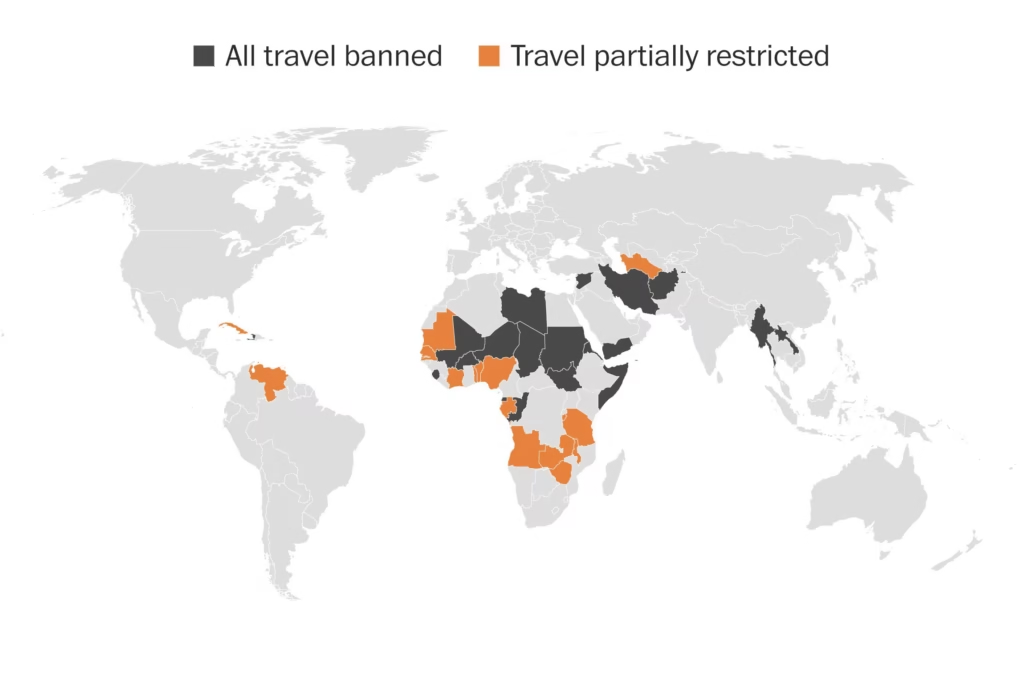
26 African Countries Under Full or Partial U.S. Travel Ban (Post-December Update)
26 African Countries Under Full or Partial U.S. Travel Ban (Post-December Update) Following the December update to U.S.…
Read article →
Travel Guide
Discover Murchison Falls National Park, Uganda’s largest safari park, with Nile cruises, wildlife game drives, chimpanzee tracking, birdwatching, and the mighty falls.
Uganda’s Largest Safari Park, Murchison Falls National Park, combines savannah wildlife, the Nile River, dramatic waterfalls, birdlife, and forest experiences within one destination. The supplied source describes the park as Uganda’s largest and oldest safari park, covering approximately 3,893 square kilometers.
Its scale is only one reason to visit.
The park’s defining feature is the Nile, which flows through the landscape and creates the spectacular Murchison Falls. Wildlife can be explored on game drives, while boat cruises provide a completely different perspective from the river.
The supplied material also highlights chimpanzee tracking in Budongo Forest and an extensive range of birdlife.
Together, these attractions allow visitors to experience several different styles of safari without leaving the wider Murchison Falls region.
The park takes its name from Murchison Falls, where the Nile is forced through a narrow gorge before plunging dramatically.
The supplied source describes the gorge as approximately seven meters wide and the drop as around 43 meters.
These dimensions help explain the intensity of the falls.
A major river is compressed into a narrow passage, producing powerful movement, spray, and sound.
The falls are therefore not simply a scenic waterfall. They demonstrate the force of the Nile as it moves through the landscape.
One way to appreciate Murchison Falls is from the top.
The source highlights hiking to the top for impressive views.
From this perspective, visitors can observe how the river narrows before dropping through the gorge.
The sound and spray create a very different experience from viewing the Nile farther downstream.
Photography opportunities are also distinctive because the viewpoint reveals the geological structure responsible for the falls.
Visitors should allow time to experience the scene rather than treating it only as a brief photo stop.
The Nile boat cruise provides another perspective.
Instead of looking down toward the falls, travelers approach along the river.
The journey combines scenery with wildlife viewing.
Hippos and crocodiles are among the animals highlighted in the source, while waterbirds occupy the banks and surrounding vegetation.
This makes the cruise both a waterfall experience and a river safari.
The gradual approach also builds anticipation as the landscape changes closer to the falls.
Murchison Falls is not only about the Nile.
The supplied source states that the park supports more than 76 mammal species.
Game drives can reveal elephants, giraffes, lions, leopards, buffaloes, and antelopes.
Open savannah habitats allow visitors to search for animals from safari vehicles.
Each game drive differs because wildlife moves naturally.
Guides use knowledge of habitat, recent sightings, tracks, and animal behavior to improve the chances of productive encounters.
Large mammals are among the most memorable animals to observe in Murchison Falls.
Elephants may be seen moving through the landscape or feeding, while giraffes create striking silhouettes across the savannah.
These animals reward patient observation.
Instead of photographing them quickly and moving on, travelers can watch feeding patterns, movement, and interactions.
A safari becomes richer when wildlife is treated as behavior to observe rather than simply species to collect on a checklist.
The source also identifies lions and leopards among Murchison Falls’ predators.
Finding big cats can require patience.
Lions may rest for long periods, while leopards can be difficult to detect because of their more secretive behavior.
Predator sightings are therefore never something visitors should assume will occur on demand.
The search itself forms part of the safari.
Experienced guides understand likely habitats and signs of predator activity.
Even when a particular species remains hidden, the broader game drive can still provide rewarding wildlife experiences.
Buffaloes and different antelope species contribute to the wider herbivore community.
These animals are important components of the ecosystem even if they receive less attention than lions or elephants.
Herds influence the landscape through grazing and movement.
They also form part of predator-prey relationships.
Watching them can reveal vigilance, social organization, and responses to environmental conditions.
Taking time to understand common species often gives travelers a more complete picture of how the park functions.
The river changes the character of a Murchison safari.
Wildlife uses the Nile and surrounding vegetation for water, feeding, and habitat.
A boat cruise therefore reveals animals from a perspective that cannot be reproduced on a game drive.
The source specifically highlights hippos and crocodiles.
Both are strongly associated with aquatic environments.
Seeing them from a properly operated boat allows visitors to observe their behavior while maintaining appropriate distance.
Hippos spend substantial time in water and may be seen in groups along the river.
Their presence can make the Nile feel particularly alive.
Although they may appear relaxed, hippos are powerful wild animals.
Visitors should remain within the boat and follow the instructions of the crew or guide.
A professional river safari allows travelers to enjoy the sighting without approaching wildlife irresponsibly.
The boat also provides opportunities to observe interactions between hippos and their surroundings over a longer period.
Crocodiles are another major river species identified in the source.
They may be seen resting along banks or partly submerged.
Their stillness can make them difficult to notice until a guide points them out.
Watching crocodiles in the Nile provides a strong contrast to the mammals encountered on land.
This variety is one reason Murchison Falls works well as a multi-day safari destination.
Different activities reveal different parts of the ecosystem.
The supplied source highlights Budongo Forest as a destination for chimpanzee tracking within the wider Murchison Falls experience.
This adds a forest primate activity to a safari otherwise associated with savannah and river environments.
Chimpanzee tracking involves walking through forest with experienced guides.
Visitors learn about chimpanzee behavior and habitat while searching for the primates.
The experience contrasts strongly with game drives.
Instead of remaining in a vehicle, travelers enter a dense forest environment where sound and movement in the canopy become important.
Combining chimpanzee tracking with Murchison’s game drives creates ecological variety.
One day may involve elephants, giraffes, lions, and antelopes across open landscapes.
Another can focus on primates inside forest.
The boat cruise adds a third environment along the Nile.
This means visitors can experience savannah, river, and forest without building an itinerary around multiple distant national parks.
For travelers with limited time, that diversity can be particularly attractive.
Birdlife is another major attraction.
The source states that the park contains approximately 450 bird species and highlights the shoebill, Goliath heron, African fish eagle, and saddle-billed stork.
Different habitats create opportunities for different species.
Riverbanks, wetlands, woodland, savannah, and forest all contribute to the park’s bird diversity.
Dedicated birders can make birdwatching a central activity, while general safari travelers will encounter numerous species during ordinary game drives and cruises.
The source identifies the shoebill as one of the notable birds associated with the area.
Its unusual appearance makes it particularly sought after by birdwatchers and photographers.
As with all wildlife, sightings should not be treated as guaranteed.
Habitat, timing, and local conditions affect what visitors encounter.
Experienced bird guides can improve the quality of the search by identifying suitable environments and recognizing calls or movement.
The supplied source identifies December to February and June to September as favorable dry-season periods.
During drier conditions, wildlife may concentrate more strongly around available water.
Road conditions can also be easier in some areas.
However, the park remains a natural environment, and conditions vary.
Travelers interested in particular activities should consider more than one factor when selecting dates.
Wildlife viewing, birding, vegetation, weather, and visitor numbers can all influence the character of a trip.
The source states that Murchison Falls National Park can be reached by road from Kampala in approximately five to six hours.
Road travel allows visitors to see more of Uganda between the capital and the park.
Travel time depends on the route, stops, and road conditions.
For travelers wanting to reduce road time, the source identifies Pakuba Airstrip as a domestic flight option.
Flying can make sense for shorter itineraries or travelers combining Murchison with other distant destinations.
The diversity of activities means Murchison Falls deserves more than a rushed visit.
A multi-day stay allows time for game drives, a Nile boat cruise, the falls, and possibly chimpanzee tracking or birding.
Trying to complete everything in one day would significantly reduce the quality of the experience.
A slower itinerary also creates additional wildlife opportunities.
No game drive produces exactly the same sightings.
Spending more time in the park allows visitors to experience different areas and times of day.
The appeal of Uganda’s Largest Safari Park comes from the way several experiences meet in one landscape.
Visitors can watch elephants and giraffes on the savannah, search for lions and leopards, cruise the Nile among hippos and crocodiles, explore Budongo Forest for chimpanzees, look for hundreds of bird species, and experience the force of Murchison Falls.
The supplied source presents a park where wildlife and scenery are closely connected to the Nile.
For travelers wanting a varied Uganda safari, Murchison Falls National Park provides far more than a conventional game drive. Its combination of river, waterfall, savannah, forest, mammals, primates, and birds makes it one of the country’s most diverse safari experiences.

26 African Countries Under Full or Partial U.S. Travel Ban (Post-December Update) Following the December update to U.S.…
Read article →
3 Days Congo Gorilla Safari – Encounter the Gentle Giants of Virunga A 3 Days Congo Gorilla Safari…
Read article →
Children and Kids on Safari – Family-Friendly Adventures in Africa Taking children on an African safari is one…
Read article →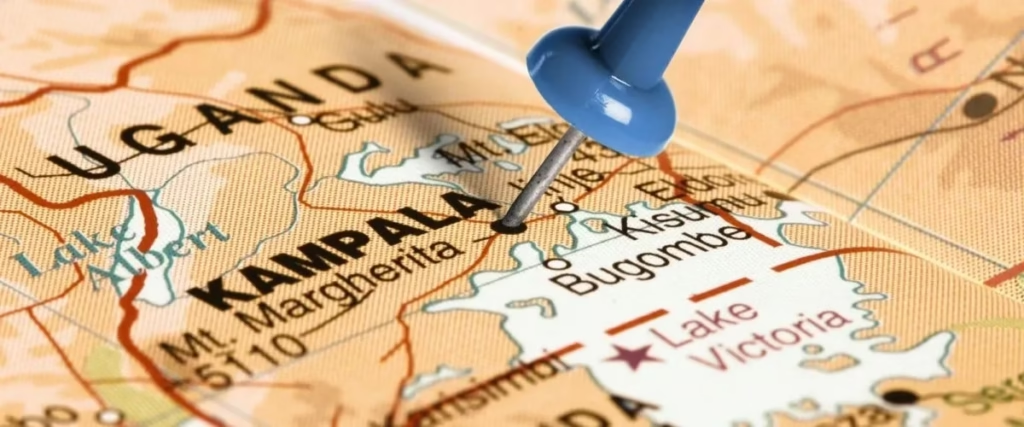
How to Plan a Safari in Uganda—Your Complete Travel Guide Planning a safari in Uganda is the start…
Read article →