

26 African Countries Under Full or Partial U.S. Travel Ban (Post-December Update)
26 African Countries Under Full or Partial U.S. Travel Ban (Post-December Update) Following the December update to U.S.…
Read article →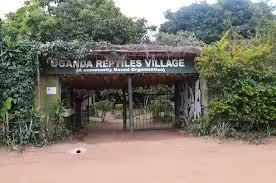
Travel Guide
Reptiles Village is one of the best places for safari travelers to experience the sights of many African reptiles that are protected in Uganda.
The reptile village experience provides travelers with an opportunity to learn about some of Uganda’s most misunderstood wildlife. While gorillas, chimpanzees, elephants and lions dominate most safari itineraries, reptiles form an equally fascinating part of the country’s biodiversity. Snakes, tortoises, lizards and crocodilians all occupy important ecological roles, yet many visitors know relatively little about them.
A visit to the Ugandan reptile village can therefore complement a traditional safari by focusing attention on animals that are often difficult to observe safely in the wild.
The experience is particularly valuable when interpretation explains why reptiles matter, how they behave and why fear should be balanced with knowledge and responsible caution.
Uganda’s varied habitats support numerous reptile species.
Forests, wetlands, savannahs, rivers and lakes provide different environmental conditions, allowing reptiles with very different adaptations to survive.
Some spend much of their time around water. Others are associated with trees, grassland or rocky environments.
Their ecological importance is often underestimated.
Reptiles can function as both predators and prey, connecting different levels of food webs.
Wild reptiles can be difficult to observe.
Many species avoid people, hide effectively or become active at times when ordinary tourists are unlikely to encounter them.
A reptile village can provide a more controlled educational environment.
Visitors have time to examine physical characteristics and learn identification features that would be difficult to notice during a brief wild encounter.
The objective should be education rather than encouraging unnecessary handling.
Snakes are among the animals most likely to produce fear.
Some species can indeed be dangerous, making caution appropriate.
However, assuming every snake is an immediate threat creates misunderstanding and can lead to unnecessary killing.
Educational experiences can help visitors distinguish between sensible safety precautions and indiscriminate fear.
Learning about snake behavior also helps people understand why many snakes prefer avoiding confrontation.
Not every snake uses venom.
Different species have evolved different hunting and defensive strategies.
Visitors should never attempt to identify or handle an unfamiliar wild snake based only on information learned during a short tour.
Identification can be complicated.
If a snake is encountered around accommodation or a residential area, trained personnel should deal with it rather than an inexperienced visitor.
Pythons are among Africa’s most recognizable large snakes.
Unlike venomous snakes, they subdue prey through constriction.
Their muscular bodies and considerable size make them impressive animals to observe.
A knowledgeable guide can explain feeding behavior, movement and habitat.
Seeing a python in a controlled environment may also help travelers appreciate the animal without the anxiety that could accompany an unexpected encounter in the wild.
Tortoises provide a very different reptile experience.
Their slow movement and protective shells make them particularly interesting to children.
A guide can explain shell structure, diet and longevity without reducing the animal to something visitors simply touch for entertainment.
Even slow-moving reptiles deserve space.
Handling should occur only when specifically appropriate and supervised.
Uganda supports a variety of lizards, ranging from small species to much larger reptiles.
Their adaptations can include climbing ability, camouflage and strong swimming.
Lizards provide an excellent introduction to reptile diversity because species may occupy dramatically different ecological niches.
Visitors can compare body shapes and movement to understand how reptiles adapt to different habitats.
Crocodiles are among Uganda’s most powerful reptiles.
Wild crocodiles can be encountered in major water systems and should always be treated with considerable respect.
A reptile-focused educational visit can help travelers understand their biology without approaching wild individuals dangerously.
Crocodiles are highly adapted aquatic predators.
Their body shape, eyes, nostrils and powerful tails reflect an evolutionary relationship with water.
One of the most useful lessons from the reptile village is that reptiles are not ecological villains.
Predatory reptiles can help regulate populations of other animals.
They also become food for larger predators at different life stages.
Removing species from an ecosystem can therefore have consequences beyond the disappearance of one animal.
Healthy biodiversity depends on interactions among many organisms.
Reptiles often receive less conservation attention than charismatic mammals.
This can make education especially important.
People are more likely to support protection when they understand why an animal matters.
A reptile center can provide information about habitat loss, human-wildlife conflict and misconceptions surrounding different species.
Education should encourage respect rather than turning reptiles into novelty attractions.
Some reptile facilities may become involved with animals rescued from conflict situations or other circumstances.
Visitors should ask how animals arrive at the facility and what conservation purpose is served.
Responsible wildlife tourism requires transparency.
The welfare of the animal should remain more important than providing close contact for tourists.
Conflict frequently develops when reptiles appear around homes, farms or other human environments.
Fear can lead people to kill animals immediately.
Professional rescue or relocation initiatives can provide alternatives where appropriate and lawful.
Education can also help communities recognize situations that genuinely require caution.
Wildlife conservation is more effective when it considers both animal protection and human safety.
Families can use the experience to teach children about biodiversity.
Young visitors are often fascinated by snakes and tortoises once they can observe them safely.
Parents should reinforce instructions from guides.
Children should never assume that seeing a reptile at a facility means wild reptiles can be touched.
The most important lesson is respectful observation.
Reptiles provide interesting photography opportunities because of their scales, patterns and textures.
Avoid using techniques that stress animals.
Flash photography should be avoided whenever prohibited or potentially disruptive.
Do not knock on enclosures to make an animal move.
A photograph of natural resting behavior is preferable to one produced by disturbing the subject.
A reptile-focused attraction can fit conveniently into an itinerary that includes time around Entebbe.
Many international visitors pass through the wider area at the beginning or end of a Uganda safari.
Instead of spending an unused afternoon at a hotel, travelers can include a nature-focused excursion where practical.
The visit can also be combined with other nearby experiences depending on available time.
Reptile education becomes even more interesting before or after visiting national parks.
Once travelers understand what to look for, they may notice reptiles during boat trips, game drives and forest walks.
A monitor lizard beside a river or a crocodile resting on a bank becomes more meaningful when the visitor understands its adaptations.
Knowledge changes the quality of wildlife observation.
Visitors should avoid demanding direct physical contact with animals.
Holding a snake may produce an exciting photograph, but tourism should prioritize welfare and appropriate management.
Follow instructions from trained staff.
Do not feed animals unless specifically authorized.
Never remove wildlife or natural objects.
A responsible reptile village should encourage appreciation rather than treating animals as props.
Comfortable clothing is usually sufficient for a short visit.
Closed shoes can be practical.
Sun protection and drinking water may be useful depending on weather and the length of the excursion.
A camera or phone can document the experience, but visitors should spend time listening to guides rather than viewing everything through a screen.
The Ugandan reptile village introduces travelers to animals that conventional safari marketing often ignores.
Snakes, tortoises, lizards and other reptiles demonstrate extraordinary adaptations and perform important ecological functions.
The greatest value of the reptile village is therefore educational.
Visitors can replace unnecessary fear with informed respect while still recognizing that some wild reptiles require considerable caution.
Adding a reptile experience to a Uganda safari creates a more complete understanding of biodiversity. Wildlife is not limited to gorillas, lions and elephants. Some of the country’s most fascinating creatures move quietly through grass, climb trees or disappear beneath the surface of its rivers.

26 African Countries Under Full or Partial U.S. Travel Ban (Post-December Update) Following the December update to U.S.…
Read article →
3 Days Congo Gorilla Safari – Encounter the Gentle Giants of Virunga A 3 Days Congo Gorilla Safari…
Read article →
Children and Kids on Safari – Family-Friendly Adventures in Africa Taking children on an African safari is one…
Read article →
How to Plan a Safari in Uganda—Your Complete Travel Guide Planning a safari in Uganda is the start…
Read article →