
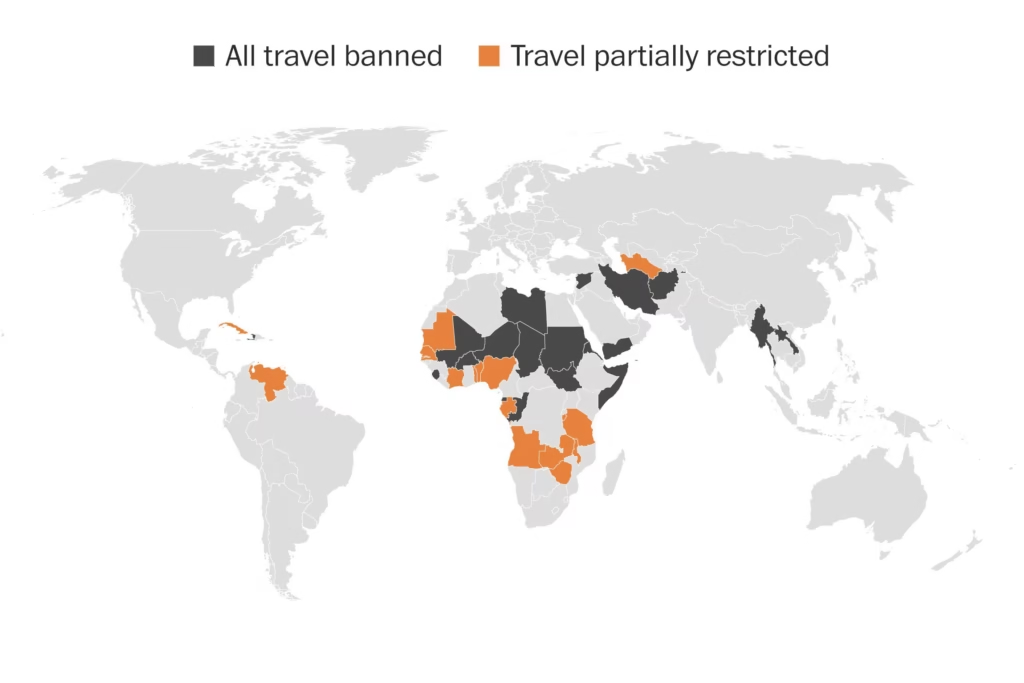
26 African Countries Under Full or Partial U.S. Travel Ban (Post-December Update)
26 African Countries Under Full or Partial U.S. Travel Ban (Post-December Update) Following the December update to U.S.…
Read article →
Travel Guide
Learn how the Uganda Wildlife Authority protects mountain gorillas through conservation, anti-poaching, community programs, and responsible tourism management.
The Uganda Wildlife Authority plays an important role in the conservation of Uganda’s mountain gorillas and the protected forests where they live. As the government agency responsible for managing national parks and wildlife reserves, the authority carries out practical conservation work ranging from ranger patrols and wildlife monitoring to tourism regulation and community engagement.
For mountain gorillas, this work is particularly important in Bwindi Impenetrable National Park and Mgahinga Gorilla National Park.
Gorilla conservation does not depend on a single activity. Effective Bwindi protection requires habitat management, anti-poaching work, research, community participation, responsible tourism, law enforcement, and long-term monitoring.
The source emphasizes how the Uganda Wildlife Authority brings these different responsibilities together.
Mountain gorillas depend on healthy forest habitat.
Protecting individual gorillas would have little value if the forests surrounding them were steadily degraded.
The Uganda Wildlife Authority therefore manages the national parks containing Uganda’s mountain gorilla populations.
Park protection includes maintaining boundaries, monitoring activities within protected areas, and responding to illegal use of forest resources.
The objective is to preserve functioning ecosystems in which gorillas and other wildlife can continue feeding, moving, and reproducing naturally.
Bwindi is Uganda’s best-known mountain gorilla destination.
The dense forest supports gorillas alongside numerous other species.
The Uganda Wildlife Authority manages tourism and wildlife protection within the national park.
For visitors, the most visible part of this management is the organized gorilla trekking system.
Behind the tourism experience, however, rangers and monitoring teams carry out year-round work.
This includes patrols, tracking gorilla movements, enforcing park regulations, and observing potential threats.
Tourism is therefore only one component of a much larger conservation operation.
Mgahinga Gorilla National Park is another important component of Uganda’s gorilla conservation landscape.
The park protects part of the wider Virunga ecosystem.
Its mountain environment and forests provide habitat for gorillas and other wildlife.
Management requires cooperation between conservation personnel and communities living around the park.
The transboundary nature of the broader ecosystem also demonstrates why gorilla conservation cannot be viewed solely within individual administrative boundaries.
Wildlife moves according to habitat rather than political borders.
The source identifies ranger patrols as one of the Uganda Wildlife Authority’s central conservation activities.
Rangers move through protected forests looking for evidence of illegal activity.
Patrols can identify snares, unauthorized access, habitat disturbance, and other threats.
Regular ranger presence also acts as a deterrent.
This work can be physically demanding because protected forests contain steep terrain, thick vegetation, and remote areas.
Visitors who meet rangers during gorilla trekking are seeing only one part of a profession that also includes wildlife protection and law enforcement.
Although gorillas themselves may not always be the intended targets of hunters, illegal hunting can still threaten them.
Snares placed for other wildlife can injure gorillas.
Poaching can also disrupt the wider forest ecosystem.
The source explains that the Uganda Wildlife Authority employs trained rangers to patrol protected areas and respond to illegal activity.
Equipment such as radios and GPS technology can support patrol teams.
Intelligence from surrounding communities can also help identify potential threats before they cause serious damage.
Conservation regulations require enforcement to be effective.
The source highlights arrests and prosecution as tools used to deter illegal hunting and other wildlife crimes.
Law enforcement protects both individual animals and the integrity of protected areas.
However, enforcement alone cannot address every conservation challenge.
People living near national parks may face economic pressures and resource needs.
This is why the source presents law enforcement alongside community engagement, tourism benefits, education, and research.
Effective Bwindi protection requires all these approaches to support one another.
The Uganda Wildlife Authority also oversees monitoring of gorilla groups.
Teams can track the location, behavior, and health of habituated gorillas.
Long-term observation makes it possible to identify important changes.
If an individual disappears, becomes injured, or begins behaving unusually, monitoring teams can record the situation.
This information contributes to conservation management.
Gorilla monitoring also supports tourism because trackers need knowledge of family movements to help locate habituated groups during trekking.
Repeated monitoring builds detailed knowledge of individual gorilla families.
Researchers and conservation personnel can observe changes in group composition, births, deaths, interactions, and movement.
Such information is valuable because mountain gorillas live for many years and have complex social relationships.
Short-term observation cannot reveal these patterns.
Long-term monitoring provides the continuity needed to understand how populations respond to environmental conditions and conservation pressures.
The source emphasizes collaboration between the Uganda Wildlife Authority and research organizations as part of this process.
The source identifies organizations such as the Dian Fossey Gorilla Fund, Wildlife Conservation Society, and universities among groups associated with conservation collaboration.
Research partnerships can strengthen understanding of gorilla ecology and the threats facing protected populations.
Scientific information can then inform management decisions.
Research may contribute to habitat management, monitoring methods, anti-poaching strategies, and other conservation activities.
The important point is that wildlife management benefits from evidence rather than assumptions.
The Uganda Wildlife Authority manages the regulated system that allows visitors to participate in gorilla trekking.
Permits control access to habituated gorilla families.
Without limits, too many visitors could increase disturbance and place unnecessary pressure on the animals.
A permit system therefore serves both tourism and conservation purposes.
It restricts daily visitation while generating revenue associated with protected wildlife.
For travelers, this means gorilla trekking needs to be arranged in advance rather than treated as an unrestricted park activity.
The source stresses that only a limited number of permits are available each day.
Controlled visitor numbers reduce the amount of human contact experienced by individual gorilla families.
They also make it easier for rangers to manage tourist behavior.
A small group can receive clear instructions and remain together while observing gorillas.
Limiting numbers also reinforces the idea that gorilla trekking is a conservation-managed activity rather than mass tourism.
The restricted system is part of what allows tourism to operate within a sensitive wildlife environment.
The Uganda Wildlife Authority sets rules designed to reduce disturbance.
The source specifically mentions maintaining distance, avoiding loud noises, and following ranger instructions.
Visitors should not feed or touch gorillas.
Tourists also need to behave calmly when a gorilla moves nearby.
These regulations protect both visitors and animals.
A gorilla may appear relaxed around humans because of habituation, but it remains a powerful wild animal.
Rangers understand gorilla behavior and should always direct the encounter.
The source presents responsible tourism as an important part of gorilla conservation.
Tourism provides financial value to protected wildlife, but it must be managed carefully.
A visitor who ignores regulations can undermine conservation goals.
Responsible travelers therefore have their own role in Bwindi protection.
They should follow briefing instructions, respect park staff, avoid littering, and accept restrictions intended to protect gorillas.
The quality of a gorilla trek should not be measured by how close someone can get to the animals.
The source emphasizes the Uganda Wildlife Authority’s work with communities surrounding protected areas.
This is essential because conservation boundaries exist beside places where people live, farm, and raise families.
If neighboring communities experience only restrictions and receive no benefits, conservation can become difficult to sustain.
Community engagement seeks to create stronger relationships between protected areas and local residents.
Tourism can contribute through employment, local businesses, and development initiatives.
According to the source, revenue-sharing programs allocate part of tourism income to communities near protected areas.
Projects can support areas such as education, healthcare, clean water, and infrastructure.
The principle is important.
Wildlife conservation becomes more meaningful to neighboring communities when protected areas generate visible local benefits.
Revenue sharing is not a complete solution to every challenge around national parks, but it can form part of a broader approach that links tourism with community development.
The source also highlights employment opportunities.
Community members may work as porters, guides, scouts, lodge employees, drivers, craftspeople, or in other tourism-related roles.
A gorilla trek therefore supports an economic network extending beyond the permit itself.
Hiring a porter, for example, can provide a visitor with practical assistance while creating direct local income.
Employment can strengthen the connection between conservation and livelihoods.
Education is another element of the Uganda Wildlife Authority’s work identified by the source.
Programs in schools and communities can explain why gorillas and forest ecosystems matter.
Awareness activities help people understand conservation regulations and the long-term value of protected areas.
The source also mentions workshops and conservation events such as World Gorilla Day.
Education is particularly important for younger generations who will eventually become the future residents, leaders, tourism professionals, and conservation workers around protected landscapes.
Community relationships can also support law enforcement.
The source notes that rangers may work with local communities to gather information about illegal hunting.
People living around protected areas often have knowledge of local movements and activities that conservation teams cannot obtain through patrols alone.
Strong relationships can therefore improve intelligence and prevention.
This approach demonstrates why conservation works best when neighboring communities are treated as partners rather than automatically regarded as threats.
Although gorillas receive international attention, Bwindi protection benefits an entire ecosystem.
Ranger patrols protecting gorilla habitat also help protect birds, smaller mammals, plants, and other forest species.
Preventing illegal activities preserves ecological processes beyond the needs of a single animal.
This broader benefit is important.
Mountain gorillas can act as a flagship species whose visibility attracts conservation funding and tourism attention to forests containing much greater biodiversity.
When travelers purchase permits and visit Uganda’s gorilla parks, their spending becomes connected with protected landscapes.
The source emphasizes this relationship between tourism and conservation.
Tourism revenue can support park management and other conservation activities.
Visitors also spend money on accommodation, transport, guides, meals, and local services.
The economic impact therefore extends beyond park administration.
The challenge is ensuring tourism remains sustainable enough that financial benefits do not come at the cost of excessive wildlife disturbance.
Gorilla conservation requires constant work.
Protected forests face pressures from illegal hunting, resource demand, human population growth, and interactions between wildlife and neighboring communities.
Tourism itself must also be managed to prevent disturbance.
The Uganda Wildlife Authority therefore needs to balance conservation, tourism, law enforcement, research, and community relationships.
The source presents these activities as interconnected parts of one protection system.
No single ranger patrol or tourism rule can secure gorilla populations on its own.
Travelers contribute most effectively by using the official trekking system and following regulations.
Book legitimate permits.
Listen carefully during the briefing.
Follow ranger instructions throughout the trek.
Respect required viewing behavior.
Do not pressure guides to break rules for photographs.
Visitors can also use local services and engage respectfully with communities around the parks.
Responsible tourism works when travelers understand that conservation requirements take priority over personal convenience.
The Uganda Wildlife Authority occupies a central position in Uganda’s mountain gorilla conservation system.
Its responsibilities include habitat management, ranger patrols, anti-poaching work, gorilla monitoring, tourism regulation, community programs, conservation education, and research collaboration.
These activities support Bwindi protection and conservation in Mgahinga Gorilla National Park.
The visible success of a gorilla trek depends on a much larger system operating behind the scenes.
Every ranger patrol, monitoring record, community project, permit restriction, and conservation partnership contributes to keeping gorilla habitats protected.
Visitors who respect this system do more than experience mountain gorillas. They participate in a tourism model designed to support the long-term survival of Uganda’s natural heritage.

26 African Countries Under Full or Partial U.S. Travel Ban (Post-December Update) Following the December update to U.S.…
Read article →
3 Days Congo Gorilla Safari – Encounter the Gentle Giants of Virunga A 3 Days Congo Gorilla Safari…
Read article →
Children and Kids on Safari – Family-Friendly Adventures in Africa Taking children on an African safari is one…
Read article →
How to Plan a Safari in Uganda—Your Complete Travel Guide Planning a safari in Uganda is the start…
Read article →