

26 African Countries Under Full or Partial U.S. Travel Ban (Post-December Update)
26 African Countries Under Full or Partial U.S. Travel Ban (Post-December Update) Following the December update to U.S.…
Read article →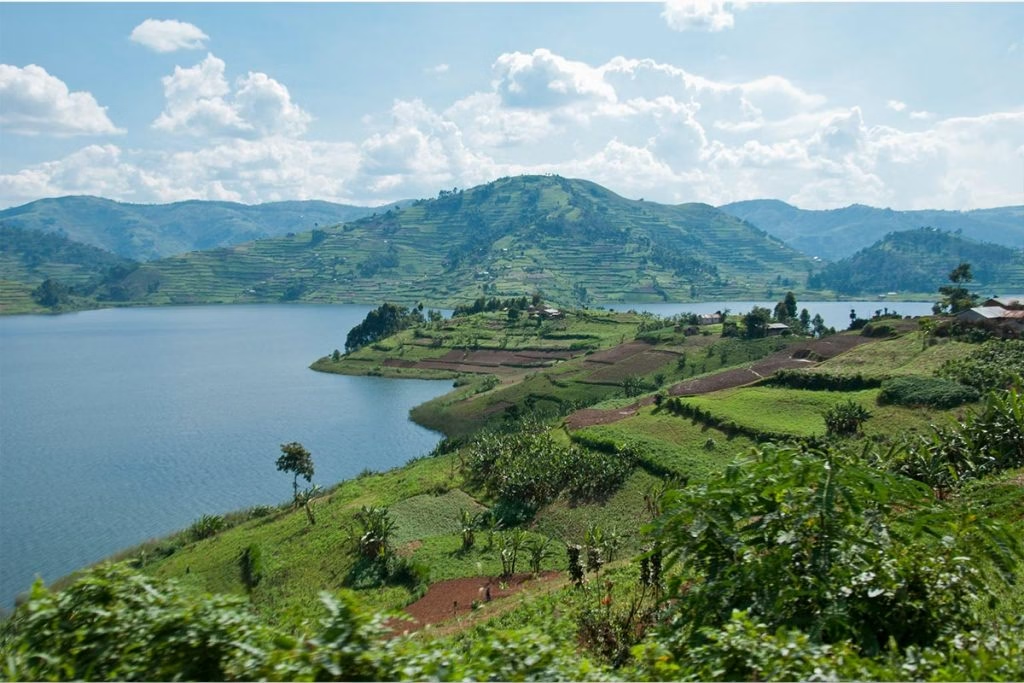
Travel Guide
Explore Uganda’s weather and climate patterns by season. Learn the best time to visit for gorilla trekking, safaris, and scenic adventures.
Understanding Uganda Weather and Climate can make it much easier to plan a safari, gorilla trek, hiking journey, or cultural trip. Uganda lies along the equator, yet its climate is moderated by elevation, large lakes, forests, and varied landscapes. This means visitors should not automatically expect extreme equatorial heat everywhere they travel.
The supplied source describes Uganda as having a tropical climate with relatively moderate temperatures in many areas and rainfall occurring throughout the year.
Rather than four sharply defined seasons, the country is generally discussed in terms of two drier periods and two wetter periods.
The source identifies December to February and June to August as the main dry seasons, while March to May and September to November are described as wetter periods.
Regional variation remains important. Conditions in Kidepo can differ substantially from those around Bwindi, Lake Victoria, or Mount Elgon.
Uganda’s elevation has an important influence on temperatures.
The supplied material gives an average elevation of approximately 1,200 meters or 3,937 feet above sea level.
This helps moderate temperatures despite the country’s equatorial position.
The source describes typical daytime temperatures as approximately 24°C to 30°C, or 75°F to 86°F.
Nights can become cooler, with temperatures around 16°C mentioned particularly in higher areas.
Travelers should therefore pack for both warm daytime conditions and cooler mornings or evenings.
Many first-time visitors associate the equator exclusively with intense heat.
Uganda’s highlands demonstrate why that assumption can be misleading.
Places such as Kabale, Fort Portal, and Bwindi are specifically identified in the source as cooler areas.
Altitude changes temperature.
A traveler may therefore experience warm savannah conditions during one part of the itinerary and considerably cooler forest or highland weather during another.
Packing should reflect the complete route rather than conditions at the international arrival point alone.
The source identifies December to February and June to August as the principal dry periods.
These months are often attractive for wildlife travel because conditions can be easier for road journeys and walking activities.
“Dry season” should not be interpreted as meaning rain is impossible.
Uganda’s tropical environment can still produce showers.
The distinction is about broader seasonal patterns rather than a guarantee of uninterrupted sunshine.
Travelers should therefore carry basic rain protection even when visiting during a traditionally drier month.
The supplied source identifies the dry seasons as favorable for gorilla trekking in Bwindi Impenetrable and Mgahinga.
Forest trails can be easier to negotiate when rainfall is reduced.
Mud is one of the practical challenges of trekking in a tropical mountain environment.
Drier conditions do not make a gorilla trek effortless, however.
Routes may still involve steep slopes, uneven ground, vegetation, and substantial walking.
The main advantage is that trail surfaces may be more manageable than during prolonged wet weather.
The source also highlights dry-season game drives in Murchison Falls, Kidepo Valley, and Queen Elizabeth National Parks.
During drier periods, wildlife may concentrate around dependable water sources, potentially making animals easier to locate.
Vegetation conditions can also improve visibility in some landscapes.
Safari quality still depends on natural wildlife movement.
A dry-season visit does not guarantee particular sightings.
It simply creates seasonal conditions that can be favorable for conventional game viewing.
The supplied material identifies the Rwenzori Mountains and Mount Elgon among hiking destinations that can benefit from drier conditions.
Reduced rain can make trails more manageable.
Mountain environments, however, can experience localized and rapidly changing weather.
Travelers should not assume that a national dry season removes the need for waterproof equipment.
Proper clothing and footwear remain essential.
The weather experienced at higher elevation may be very different from conditions in nearby lowlands.
The source describes March to May and September to November as the main wet seasons.
Rainfall supports Uganda’s forests, farmland, wetlands, and savannah vegetation.
Landscapes can become particularly green during these periods.
For photographers, the combination of lush vegetation and changing skies can be visually attractive.
The source notes that rain often arrives in heavy bursts rather than necessarily continuing throughout the entire day.
This means a rainy-season safari is not automatically a trip spent continuously indoors.
Wet-season travel can provide quieter tourism conditions.
The supplied source notes that fewer visitors may travel during these months and that some accommodation may offer possible discounts.
For travelers who value quieter lodges and are willing to accept less predictable weather, this can be appealing.
The green scenery can also create attractive photographic backgrounds.
The trade-off is that roads and walking trails may become more difficult.
The source confirms that gorilla trekking continues during wetter periods.
The principal difference is trail condition.
Mud can make slopes slippery, and rain can increase the physical challenge.
Waterproof boots and rain protection become especially important.
Travelers should also protect cameras and other electronic equipment.
Those comfortable with these conditions may appreciate the greener forest and potentially quieter tourism period.
The key is realistic preparation rather than assuming rain makes trekking impossible.
The supplied source notes that transportation can become slower on rural roads during wet periods.
This should be considered when building an itinerary.
A transfer time that appears straightforward on paper may take longer after heavy rainfall.
Allowing reasonable flexibility reduces pressure on drivers and guests.
Travelers should avoid designing an itinerary in which every day depends on exact road timings with no allowance for conditions.
A well-paced safari is more resilient to weather changes.
Regional differences are an important part of Uganda Weather and Climate.
The source describes southwestern Uganda, including Bwindi and Kabale, as cooler and wetter because of elevation.
This region contains mountainous and forested landscapes.
Travelers should therefore bring warmer layers for mornings and evenings in addition to rain protection.
Someone arriving from a warmer savannah park may notice the temperature difference immediately.
The source describes northern Uganda, particularly Kidepo, as hotter and drier.
It specifically highlights December to March in relation to these warmer and drier conditions.
Visitors traveling to Kidepo should prepare for sun and heat, particularly during daytime activities.
Lightweight clothing, sun protection, and sufficient water become important.
Even within one Uganda itinerary, travelers may therefore move between cool highland forests and much hotter northern landscapes.
The source describes the Lake Victoria Basin, including Entebbe and Kampala, as humid with frequent rainfall throughout the year.
Large bodies of water influence local conditions.
Travelers arriving through Entebbe should therefore not assume that weather there represents the entire country.
The capital region may experience rain while another safari destination is comparatively dry.
This regional variation is one reason generalized national forecasts should be interpreted carefully.
Eastern Uganda, particularly the Mount Elgon region, is described in the source as cooler with consistent showers in forested areas.
Hikers should prepare for wet ground and changing mountain conditions.
Good footwear becomes especially important.
A light rain jacket can be useful even when the day begins with clear skies.
Layered clothing allows travelers to adapt as temperature and rainfall change with altitude.
The supplied source recommends carrying a light rain jacket and waterproof boots even during the dry season.
This is practical because rain remains possible throughout the year.
Clothing should generally be comfortable for warm days while allowing additional layers for cooler mornings and highland areas.
Travelers visiting multiple regions should pack for variation.
The correct clothing for Kidepo may not be sufficient for an early morning in Bwindi.
Waterproof footwear is particularly valuable for forest activities.
Trails can remain damp even when rain has not fallen recently.
Good grip helps on uneven or muddy slopes.
Travelers should choose footwear they have already worn rather than arriving with completely new boots.
Comfort becomes increasingly important during several hours of walking.
The objective is to remain focused on the forest experience rather than painful feet.
Different seasons create different photographic conditions.
The wet periods described in the source bring greener landscapes and dramatic skies.
Dry periods may provide clearer wildlife visibility in some savannah areas.
Neither is universally better.
A photographer interested in lush scenery may appreciate wet-season conditions, while someone prioritizing easier wildlife observation may prefer drier months.
The best timing therefore depends partly on what the traveler wants to photograph.
The source mentions birdwatching among activities influenced by trip planning.
Uganda’s varied habitats make weather an important consideration for outdoor observation.
Rain may interrupt individual sessions, but greener landscapes can also be rewarding.
Birdwatchers should protect binoculars and cameras against moisture and carry clothing that allows them to remain outdoors comfortably.
As with other activities, flexibility is more useful than expecting perfectly predictable conditions.
The supplied source describes the dry periods as particularly suitable for movement and wildlife spotting, while rainy seasons offer greener scenery and potentially quieter travel.
This creates a straightforward planning choice.
Travelers who prioritize easier roads and trekking conditions may prefer December to February or June to August.
Those who value lush landscapes and lower visitor numbers may consider March to May or September to November.
Neither option removes the need for weather preparation.
Weather is only one part of safari planning.
The destinations, activities, travel time, accommodation availability, and personal interests should also shape the itinerary.
A traveler whose only available holiday falls during a wetter month can still experience Uganda.
The source specifically notes that gorilla trekking continues during rainy periods.
Rather than postponing automatically, travelers can prepare for mud, rain, and slower roads.
The supplied information describes Uganda Weather and Climate as tropical but moderated by elevation and influenced by regional geography.
Typical daytime temperatures are presented as approximately 24°C to 30°C, while cooler nights occur in highland areas.
The main dry periods fall between December and February and again from June to August. Wetter seasons generally extend from March to May and September to November.
Southwestern highlands can be cooler and wetter, northern Kidepo is hotter and drier, the Lake Victoria Basin is humid with frequent rain, and eastern highlands experience their own cooler and wetter conditions.
For travelers, the most practical lesson is simple: prepare for variation.
Carry rain protection even during a dry-season safari, pack layers for cooler highlands, and allow realistic travel time during wetter periods. Uganda remains a year-round destination in the supplied source, with each season offering a different balance of trail conditions, wildlife visibility, visitor numbers, and landscape character.

26 African Countries Under Full or Partial U.S. Travel Ban (Post-December Update) Following the December update to U.S.…
Read article →
3 Days Congo Gorilla Safari – Encounter the Gentle Giants of Virunga A 3 Days Congo Gorilla Safari…
Read article →
Children and Kids on Safari – Family-Friendly Adventures in Africa Taking children on an African safari is one…
Read article →
How to Plan a Safari in Uganda—Your Complete Travel Guide Planning a safari in Uganda is the start…
Read article →