
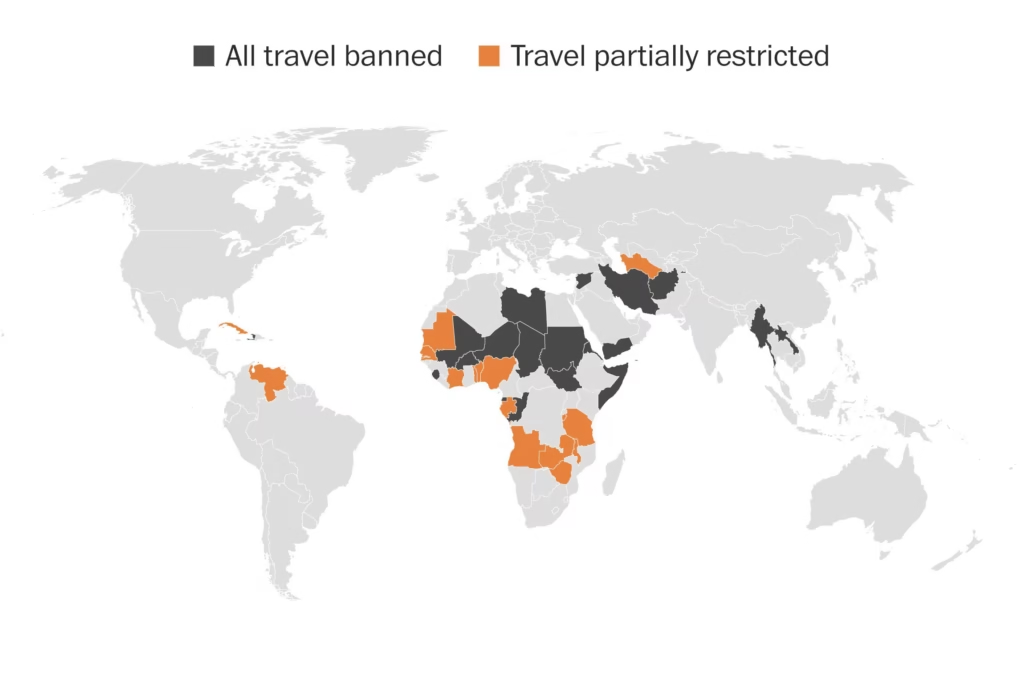
26 African Countries Under Full or Partial U.S. Travel Ban (Post-December Update)
26 African Countries Under Full or Partial U.S. Travel Ban (Post-December Update) Following the December update to U.S.…
Read article →
Travel Guide
Explore Uganda's second-smallest national park. Learn about its unique wildlife, attractions, and why it's a must-visit for nature enthusiasts.
The Second Smallest National Park in Uganda is Mgahinga Gorilla National Park, according to the supplied source. Covering approximately 33.7 square kilometers in southwestern Uganda, the park demonstrates that the value of a protected area cannot be judged by size alone. Within its relatively compact boundaries are mountain gorillas, golden monkeys, bamboo forests, montane vegetation, volcanic peaks, birdlife, cultural experiences, and dramatic views across the wider Virunga landscape.
Mgahinga lies in the far southwestern corner of Uganda and forms part of the larger Virunga Conservation Area, a transboundary landscape extending into Rwanda and the Democratic Republic of Congo.
For travelers, this setting creates a distinctive combination of primate trekking and mountain adventure. A visitor can enter the forest in search of mountain gorillas, follow golden monkeys through bamboo, or tackle one of the volcanic hikes that dominate the skyline.
The supplied source identifies Mgahinga Gorilla National Park as Uganda’s second-smallest national park.
Its limited geographical size contrasts with the variety of experiences available within it.
The park’s terrain ranges from bamboo and montane forest to high volcanic environments. This variation allows different plant and animal communities to exist within a relatively small area.
Mgahinga’s position within the Virunga landscape is equally important. Wildlife and ecosystems do not necessarily follow international borders, and the wider conservation area demonstrates why cooperation across neighboring countries matters.
One of the primary reasons travelers visit Mgahinga is mountain gorilla trekking.
The supplied source identifies Mgahinga as one of two parks in Uganda where travelers can trek mountain gorillas.
The activity takes visitors into forest habitat accompanied by trained guides and trackers.
Rather than seeing gorillas in a controlled environment, trekkers search for a habituated family moving naturally through the forest.
The duration and physical demands of the search can vary because the gorillas are wild and their position changes.
The source specifically identifies the Nyakagezi gorilla group as the principal family associated with trekking in Mgahinga.
It describes the group as including impressive silverbacks and playful younger gorillas.
Visitors should approach any gorilla encounter without expecting specific behavior. A family may be feeding, resting, grooming, moving, or interacting when trekkers arrive.
This unpredictability is part of what makes observing wild gorillas so compelling.
Mgahinga’s mountain environment requires sensible preparation.
Travelers should use sturdy walking footwear and wear clothing suitable for forest vegetation and changing weather. Rain protection is valuable because mountain conditions can shift quickly.
Visitors should also listen carefully to the official briefing before entering the forest.
The aim is not only to protect trekkers but also to minimize disturbance to the gorillas.
Gorillas are not Mgahinga’s only famous primates.
The supplied source highlights golden monkey tracking as another major activity.
Golden monkeys occupy the Virunga region and are particularly associated with bamboo environments.
Their behavior creates an experience quite different from gorilla trekking.
They are smaller, quicker, and often more active as they move through vegetation.
Tracking golden monkeys encourages visitors to pay close attention to movement within the bamboo.
Because the monkeys can move quickly, photography may require patience.
The experience also introduces travelers to a different part of Mgahinga’s ecosystem.
A safari combining gorillas and golden monkeys therefore offers two distinct primate encounters without leaving the park.
Another defining feature of the Second Smallest National Park in Uganda is its volcanic scenery.
The supplied source identifies three major volcanoes associated with Mgahinga: Mount Muhabura, Mount Gahinga, and Mount Sabyinyo.
Each provides a different hiking experience.
These mountains give the park a dramatic physical identity that distinguishes it from many other Ugandan wildlife destinations.
The supplied source lists Mount Muhabura at approximately 4,127 meters.
It describes the mountain as providing a challenging hike and extensive views.
A high-altitude volcanic hike requires significantly more preparation than an ordinary nature walk.
Travelers considering the climb should assess their fitness realistically and follow local guide instructions.
Weather can also influence conditions at higher elevations.
Mount Gahinga, listed in the source at approximately 3,474 meters, offers another hiking option.
The source associates the mountain with giant lobelia vegetation and a swamp-filled crater around the summit area.
The vegetation changes encountered during an ascent can be as interesting as reaching the upper sections.
This makes the hike valuable for travelers interested in mountain ecology as well as scenery.
The supplied source gives Mount Sabyinyo an elevation of approximately 3,669 meters and refers to its nickname, “Old Man’s Teeth.”
Its rugged profile creates one of the most recognizable mountain shapes in the region.
The source also associates the summit area with the meeting point of Uganda, Rwanda, and the Democratic Republic of Congo.
Because border and mountain access arrangements are subject to regulation, travelers should follow current official guidance for any hike.
Mgahinga also has a human history connected with forest communities.
The supplied source highlights Batwa cultural experiences in which visitors can learn about traditional forest knowledge, hunting techniques, and spiritual beliefs.
Such visits should be approached as cultural learning opportunities rather than entertainment alone.
Community members should have meaningful control over what they choose to explain and demonstrate.
Traditional knowledge can help visitors see the forest differently.
Plants may have medicinal or practical uses, while particular locations can carry cultural and spiritual significance.
Learning about these relationships demonstrates that protected landscapes have human histories as well as ecological importance.
Respectful tourism can create opportunities for communities to share selected aspects of this heritage while earning income.
The supplied source emphasizes the diversity of Mgahinga’s vegetation.
Habitats include bamboo forest and Afro-montane vegetation, among other ecological zones.
Changes in altitude influence the type of plants found across the park.
This diversity supports the primates and other animals for which Mgahinga is known.
Visitors hiking through the park should therefore pay attention to the vegetation rather than treating it merely as a background to wildlife sightings.
According to the source, Mgahinga supports more than 180 bird species.
It specifically mentions the Rwenzori turaco and crowned hornbill.
Birdwatching can complement primate trekking because visitors are already moving through varied forest habitats.
Travelers with a strong birding interest should carry binoculars and consider using a guide familiar with local species and calls.
The source also mentions buffaloes, bushbucks, and elusive leopards among mammals associated with the park.
These species remind visitors that Mgahinga is an ecosystem rather than simply a gorilla sanctuary.
However, the presence of a species should never be interpreted as a guaranteed sighting.
Some animals are difficult to observe because of vegetation, behavior, population density, or the routes used by visitors.
The supplied source identifies June to August and December to February as preferred periods for visiting, describing them as relatively dry seasons.
Drier conditions can make trails more manageable.
However, a mountain rainforest environment can still experience rain at any time.
Travelers should therefore carry rain protection regardless of the month.
Wet conditions can make trails muddy and physically demanding, particularly on steep terrain.
At the same time, mist and cloud can create dramatic mountain scenery.
The decision about when to travel should consider trekking comfort, personal schedules, and the activities the visitor wants to prioritize.
The source estimates a road journey of approximately eight to ten hours from Kampala via Kabale and Kisoro.
Actual driving times depend on traffic, road conditions, stops, and the exact starting point.
Because the transfer is substantial, travelers should plan it as part of the safari rather than trying to fit too many activities into the same day.
Domestic flights to Kisoro Airstrip are identified in the source as another option.
From Kisoro, travelers continue by road toward the park.
Flying can reduce the amount of time spent on long overland transfers, although schedules and luggage conditions should be confirmed when booking.
Calling Mgahinga the second-smallest national park might initially suggest that there is little to do.
The opposite is true.
The supplied source combines gorilla trekking, golden monkey tracking, volcanic hiking, birdwatching, cultural experiences, and mountain scenery within this compact protected area.
Its small size can actually make its ecological variety more striking.
Travelers staying more than one night can create a richer experience by combining activities.
A gorilla trek can be followed on another day by golden monkey tracking or a volcanic hike.
A cultural visit adds a different perspective by introducing the human history of the forest landscape.
The itinerary should leave enough recovery time between physically demanding activities.
Mountain gorillas and golden monkeys depend on protected habitat.
Mgahinga’s role within the wider Virunga Conservation Area therefore extends beyond tourism.
Maintaining forest and mountain ecosystems supports wildlife while also protecting landscapes that cross national boundaries.
Responsible tourism can contribute to this conservation framework when visitors follow park rules and use authorized services.
The Second Smallest National Park in Uganda, Mgahinga Gorilla National Park, demonstrates how much ecological and tourism value can exist within only about 33.7 square kilometers. The supplied source highlights mountain gorillas, golden monkeys, Mount Muhabura, Mount Gahinga, Mount Sabyinyo, Batwa cultural experiences, more than 180 bird species, and diverse mountain vegetation.
Its appeal comes from this concentration of experiences.
Visitors can walk through bamboo forest in search of primates, climb volcanic slopes, learn about traditional forest knowledge, and enjoy the dramatic landscapes of the Virunga region.
For travelers interested in primates, hiking, culture, and mountain scenery, Mgahinga’s relatively small physical size does little to limit the scale of the experience.

26 African Countries Under Full or Partial U.S. Travel Ban (Post-December Update) Following the December update to U.S.…
Read article →
3 Days Congo Gorilla Safari – Encounter the Gentle Giants of Virunga A 3 Days Congo Gorilla Safari…
Read article →
Children and Kids on Safari – Family-Friendly Adventures in Africa Taking children on an African safari is one…
Read article →
How to Plan a Safari in Uganda—Your Complete Travel Guide Planning a safari in Uganda is the start…
Read article →