

26 African Countries Under Full or Partial U.S. Travel Ban (Post-December Update)
26 African Countries Under Full or Partial U.S. Travel Ban (Post-December Update) Following the December update to U.S.…
Read article →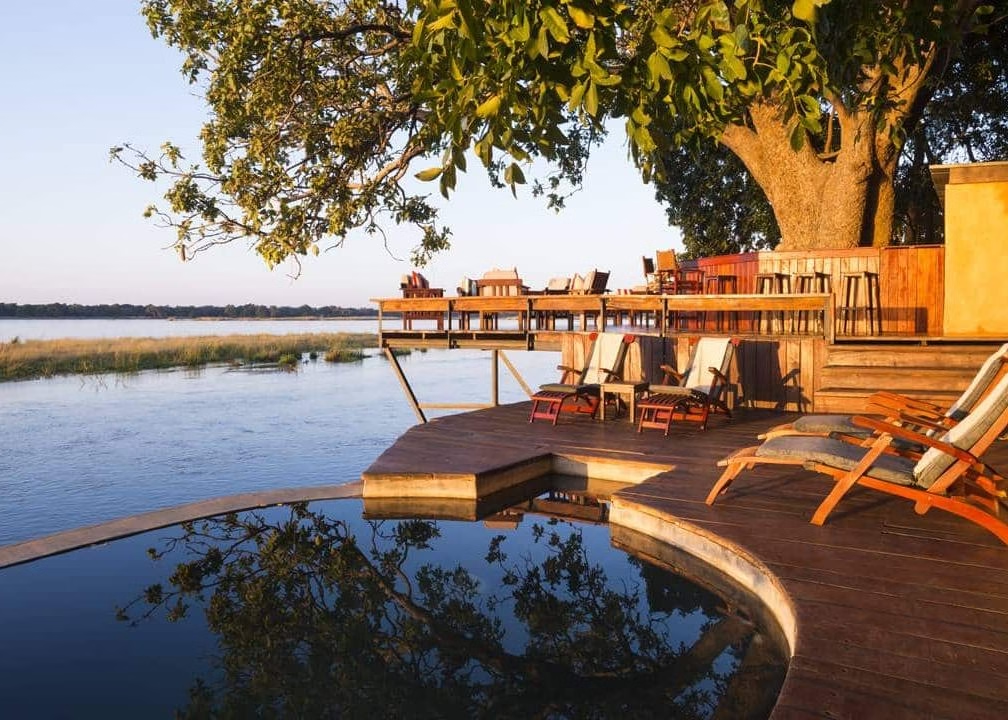
Travel Guide
Discover the top six safari lodges and camps near the Zambezi River. Enjoy luxury stays, thrilling safaris, and stunning views in one of Africa's most iconic regions.
Choosing Safari lodges near the Zambezi River allows travelers to experience one of Africa’s great waterways as an integral part of their safari. The supplied source highlights six properties offering different combinations of luxury accommodation, river views, game drives, walking safaris, boating, canoeing, fishing, birdwatching, and personalized service.
The Zambezi is more than attractive scenery beside a lodge.
The river supports wildlife, vegetation, local communities, and a wide range of safari activities. Elephants may approach the water, hippos occupy river environments, birds concentrate along the banks, and boat-based experiences provide a perspective very different from a conventional vehicle safari.
The six properties in the supplied source range from highly polished luxury lodges to smaller camps designed to create a closer connection with the surrounding wilderness.
The first property in the source is Royal Zambezi Lodge.
It is described as sitting on the banks of the Zambezi and combining comfortable accommodation with direct access to river and safari activities.
For travelers, the location allows the river to remain visible and relevant throughout the stay rather than appearing only during a scheduled excursion.
The supplied source describes spacious suites, some associated with private plunge pools overlooking the river.
Private outdoor space can be particularly valuable during the hours between activities.
Guests can rest while still watching the changing river environment.
Game drives allow visitors to explore wildlife habitat away from the immediate riverbank.
A vehicle safari can complement river-based experiences by reaching landscapes where terrestrial wildlife is more easily observed.
The exact wildlife seen naturally varies from day to day.
The source lists fishing among Royal Zambezi Lodge activities.
Travelers specifically interested in fishing should confirm seasonal conditions, equipment, regulations, and current lodge offerings before arrival.
Fishing can provide a quieter contrast with conventional game viewing.
Canoeing offers a much lower perspective on the Zambezi.
Under professional guidance, visitors can experience the river at a slower pace.
Safety instructions are essential because the river is a natural wildlife environment rather than a recreational swimming area.
Chiawa Camp is the second property highlighted in the supplied source.
It is located in Lower Zambezi National Park and is described as having an eco-conscious design intended to blend with the surrounding environment.
The accommodation uses a tented safari style.
A well-designed tented suite can maintain a stronger sense of connection with the wilderness than a conventional hotel room.
Guests hear natural sounds and remain visually connected with the surrounding landscape while retaining the comforts expected from a safari camp.
The supplied source mentions hippos and elephants among wildlife that may be seen around the river environment.
Such sightings remain unpredictable.
Guests should always follow staff instructions when wildlife approaches the property.
Chiawa is associated with guided walking safaris in the source.
Walking shifts attention from distant wildlife to tracks, vegetation, insects, birds, and signs that might be missed from a vehicle.
Professional guiding is essential in areas containing large wild animals.
Boat cruises provide another way to explore.
The changing light of morning or late afternoon can make the river particularly atmospheric.
Guests can observe banks, waterbirds, and wildlife while learning about the ecosystem from their guide.
The supplied source describes Sausage Tree Camp as a highly exclusive property with only a small number of luxury tents.
This limited scale is presented as contributing to privacy and personalized service.
Such an arrangement can appeal to couples, honeymooners, photographers, and travelers who prefer smaller properties.
The tents are described as having open-plan designs and uninterrupted views toward the Zambezi.
This places the landscape at the center of the accommodation experience.
Guests do not necessarily need to leave camp to feel connected with the river.
Smaller camps can often adapt daily schedules around guest interests within the limits of park regulations and wildlife conditions.
The supplied source emphasizes this personalized atmosphere.
Travelers should discuss priorities with guides at the beginning of the stay.
Dining and sundowners are part of the experience described in the source.
Meals become opportunities to slow down between activities rather than merely practical necessities.
An evening drink overlooking the landscape can provide a quiet conclusion to a game-viewing day.
The source also mentions night safaris.
These can reveal wildlife behavior that differs from daytime viewing.
Availability and rules depend on the specific area, so guests should confirm current camp arrangements.
Anabezi Luxury Tented Camp is presented as combining modern comfort with the Zambezi floodplain environment.
The supplied source emphasizes elevated accommodation, large decks, outdoor baths, fishing, and guided canoe experiences.
Elevated tents can provide wider views and a sense of separation from ground-level activity.
They also allow guests to appreciate the surrounding floodplain from their private space.
Wildlife should still be treated with caution around any unfenced safari environment.
A private deck creates opportunities for photography, birdwatching, reading, or quiet wildlife observation.
Travelers often discover that some of the most memorable safari moments happen during unscheduled periods when they simply sit and watch.
The supplied source highlights outdoor baths as one of the luxury features.
Such facilities are designed to connect relaxation with the natural environment.
Guests should follow lodge guidance regarding privacy and wildlife safety.
Anabezi is described as having a commitment to conservation.
Travelers interested in sustainability should ask about specific current programs, community relationships, and environmental practices.
Detailed information is more useful than general labels such as “eco-friendly.”
The fifth property is Old Mondoro Camp.
The supplied source describes it as small, intimate, and comparatively rustic, with an emphasis on being close to nature.
For some travelers, this simplicity may be more appealing than highly elaborate luxury.
With only a few chalets, Old Mondoro is presented as offering a tranquil experience.
A small guest capacity can make meals and guiding feel more personal.
It can also reinforce the sense of being immersed in a remote environment.
The source notes that elephants may wander through the camp.
This can be exciting, but it is also a reminder that safari camps exist within wildlife habitat.
Guests should never approach animals independently.
Staff instructions are essential whenever large wildlife is nearby.
The appeal of Old Mondoro lies partly in reducing separation between visitor and landscape.
Natural sounds, changing light, wildlife movement, and the rhythm of the river become central to the stay.
Travelers seeking a conventional resort atmosphere may prefer a different property.
The final property in the supplied source is Baines’ River Camp.
It is described as offering colonial-style elegance, spacious suites, gourmet dining, and a selection of safari activities.
The property is aimed at travelers who want refined accommodation alongside river-based wilderness experiences.
Comfortable suites provide a place to rest between game drives and other excursions.
Long safari days can involve early starts and several hours outdoors.
A comfortable room therefore contributes meaningfully to the overall experience.
The source lists birdwatching among activities at Baines’ River Camp.
The Zambezi environment supports extensive birdlife.
Visitors who are not specialist birders can still benefit from carrying binoculars because birds add interest throughout the day.
Photography is another activity highlighted by the source.
The river provides opportunities to photograph wildlife, landscapes, reflections, and birds.
Travelers should discuss photographic priorities with their guide so drives can be approached appropriately where possible.
The six properties differ in style, but the river connects them.
Staying near the Zambezi allows guests to combine land-based wildlife viewing with activities on or beside the water.
This variety can make each day feel different.
The supplied source specifically mentions herds of elephants among the wildlife travelers may encounter in the region.
Watching elephants near water can reveal drinking, bathing, and social behavior.
Guests should remain at appropriate distances and allow guides to manage viewing.
The source also refers to elusive leopards.
Predator sightings should never be guaranteed.
The appeal of the Zambezi ecosystem lies in the possibility of encounters unfolding naturally rather than according to a fixed schedule.
The supplied source emphasizes the relationship between the river, local communities, and sustainable tourism.
Lodges operating in wildlife regions have opportunities to support conservation and local livelihoods.
Travelers can ask properties about current programs before choosing where to stay.
The source provides six distinct styles rather than one universally suitable option.
Travelers wanting polished luxury may prioritize certain properties, while visitors seeking a smaller, more rustic camp may prefer another.
Activity interests also matter.
Canoeing, walking, fishing, photography, and game drives should be considered alongside room style.
The Top 6 Best Safari Lodges & Camps Near the Zambezi River in the supplied source are Royal Zambezi Lodge, Chiawa Camp, Sausage Tree Camp, Anabezi Luxury Tented Camp, Old Mondoro Camp, and Baines’ River Camp.
Each uses the Zambezi landscape differently.
Some emphasize private luxury, others intimacy and simplicity, while several build the stay around canoeing, boating, fishing, walking, or photography.
The common advantage is access to a river ecosystem where wildlife, scenery, and safari activities remain closely connected.
Choosing between them should therefore depend on the traveler’s preferred accommodation style, desired activities, privacy expectations, and the type of relationship they want with the Zambezi landscape.

26 African Countries Under Full or Partial U.S. Travel Ban (Post-December Update) Following the December update to U.S.…
Read article →
3 Days Congo Gorilla Safari – Encounter the Gentle Giants of Virunga A 3 Days Congo Gorilla Safari…
Read article →
Children and Kids on Safari – Family-Friendly Adventures in Africa Taking children on an African safari is one…
Read article →
How to Plan a Safari in Uganda—Your Complete Travel Guide Planning a safari in Uganda is the start…
Read article →