
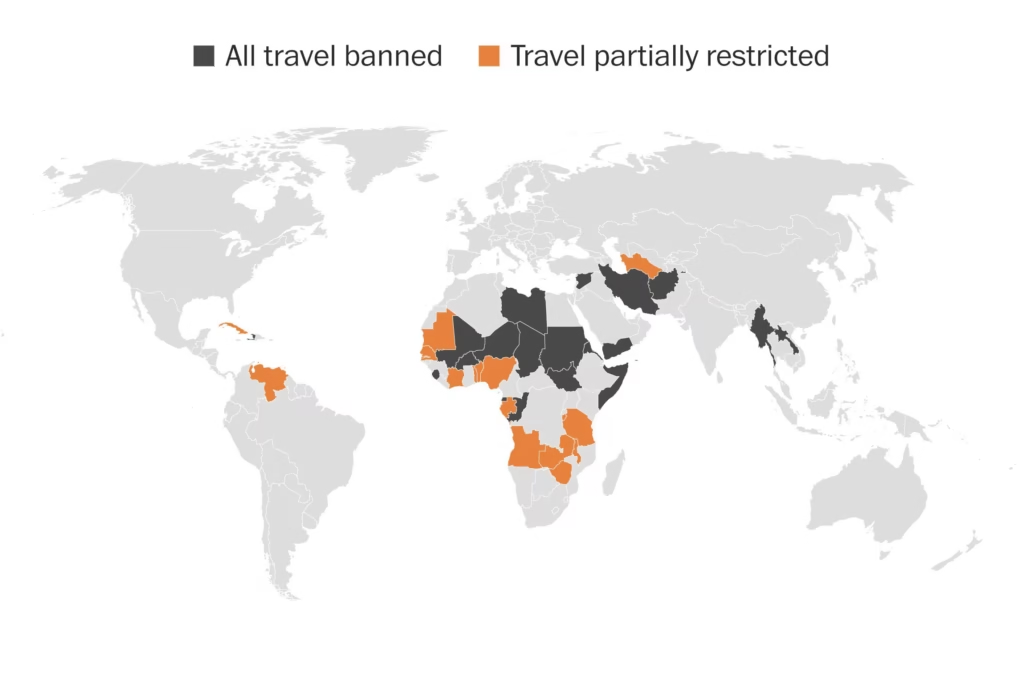
26 African Countries Under Full or Partial U.S. Travel Ban (Post-December Update)
26 African Countries Under Full or Partial U.S. Travel Ban (Post-December Update) Following the December update to U.S.…
Read article →
Travel Guide
Learning how to protect mountain gorillas is essential for travelers, conservation organizations, governments and communities living around gorilla habitats. Mountain gorillas survive in a limited natural range, making the protection of their forest environment particularly important.…
Learning how to protect mountain gorillas is essential for travelers, conservation organizations, governments and communities living around gorilla habitats. Mountain gorillas survive in a limited natural range, making the protection of their forest environment particularly important.
Conservation requires more than protecting individual gorillas. Habitat preservation, responsible tourism, veterinary support, anti-poaching measures, research and community participation all contribute to the wider effort.
Tourists also have a direct role. Every visitor entering gorilla habitat needs to follow the regulations established to reduce disturbance and health risks. Responsible behavior may appear simple, but it becomes significant when thousands of visitors collectively follow the same standards.
Habitat protection is one of the foundations of gorilla conservation.
Mountain gorillas depend on forest ecosystems for food, shelter and movement.
When habitat is reduced or fragmented, wildlife has less space and may face greater pressure from surrounding human activities.
Protected areas therefore play a major role in conservation.
However, protecting forests also requires cooperation with communities living around them. Conservation strategies need to recognize that people have legitimate economic and social needs.
Long-term protection becomes stronger when local communities can see practical benefits from maintaining healthy ecosystems.
Tourism can contribute to conservation when it is carefully managed.
Gorilla permits help control visitor numbers and create revenue associated with protecting the species and its habitat.
Tourists should book through legitimate channels and respect all park regulations.
A gorilla trek is not an ordinary wildlife encounter where visitors can move wherever they want.
Guides establish how visitors should behave around gorillas.
Travelers must listen to those instructions rather than pressuring guides to provide closer access for photographs.
Responsible tourism recognizes that gorilla welfare takes priority over visitor convenience.
Maintaining the required distance from gorillas helps reduce disturbance and health risks.
Wild animals may move closer independently, but visitors should not deliberately approach them.
The instructions of guides should always be followed if a gorilla changes position.
Travelers should resist the temptation to move closer for a photograph.
A longer camera lens can help create detailed images without intentionally reducing the required space.
Respecting distance demonstrates an important principle of wildlife tourism: access to an animal’s habitat does not give visitors unlimited control over the encounter.
Great apes share biological similarities with humans, making health precautions particularly important.
Visitors should take illness seriously before a gorilla trek.
Someone who is unwell should communicate honestly with the relevant operator or authorities rather than hiding symptoms because they do not want to miss the activity.
Any health-related rules established for the trek should be followed exactly.
Travelers should also avoid touching gorillas or vegetation unnecessarily during the encounter.
Protecting gorillas from disease requires cooperation from every visitor, guide and staff member involved in tourism.
Anti-poaching work remains an important part of wildlife conservation.
Even when gorillas are not the intended target of illegal hunting, snares and other threats within forests can endanger wildlife.
Rangers and conservation personnel play a major role in monitoring protected areas.
Supporting legitimate conservation organizations and responsible tourism can help sustain these efforts.
Travelers should never purchase products made from illegally obtained wildlife materials.
Reporting suspicious wildlife products or activities through appropriate channels can also support conservation.
Demand from consumers influences illegal wildlife trade, making responsible purchasing decisions important.
Conservation is most sustainable when communities surrounding protected areas are involved.
People living near gorilla habitat experience both the benefits and costs associated with conservation.
Tourism can support employment through guiding, accommodation, transport, crafts and other services.
Community-based projects can also create economic alternatives linked to protecting natural resources.
Travelers can contribute by purchasing legitimate locally produced goods and participating in responsibly managed community experiences.
The goal should not be charity-based tourism but stronger local economic participation.
Conservation succeeds more effectively when wildlife is viewed as an asset worth protecting.
Waste has no place in a protected forest.
Visitors should carry out everything they bring in unless instructed otherwise by park staff.
Plastic, food packaging and other waste can damage the environment.
Food scraps should not be intentionally left for wildlife.
Even biodegradable material can alter animal behavior if it introduces unfamiliar food.
A small personal waste bag can make responsible disposal easier.
Tour operators should also minimize unnecessary single-use items where practical.
Protecting gorilla habitat includes maintaining the ecological integrity of the wider forest rather than focusing only on the immediate area around a gorilla family.
Guides and rangers are essential to safe and responsible gorilla tourism.
They understand animal behavior, forest conditions and conservation regulations.
Visitors should pay close attention during the pre-trek briefing.
Instructions may cover movement, photography, noise, health precautions and what to do if gorillas approach.
Ignoring these rules can create unnecessary risks.
Travelers should never treat conservation instructions as optional simply because they have paid a substantial amount for a permit.
The permit provides controlled access to the experience. It does not provide ownership of the wildlife encounter.
Photography is one of the main reasons visitors become distracted during wildlife encounters.
Travelers should prepare their camera settings before approaching gorillas.
Flash photography should not be used where prohibited, and visitors should follow all current photography instructions.
Understanding the camera beforehand reduces the temptation to make disruptive adjustments during the encounter.
Photographers should also control their movement and avoid stepping away from the group for a better angle.
Some of the most memorable moments occur when the camera is lowered and the visitor simply observes.
Research contributes to understanding gorilla populations, behavior, health and habitat.
Long-term monitoring can help conservation teams identify changes and respond to emerging threats.
Research also provides information that can inform protected-area management.
Visitors may encounter researchers or monitoring teams during their journey, but they should not interfere with their work.
People interested in supporting research should use legitimate conservation institutions.
Online fundraising claims should be evaluated carefully before money is donated.
Effective conservation support is strongest when directed toward organizations with transparent programs and credible field activities.
Tour operators influence visitor behavior before travelers even reach the park.
Responsible companies should explain conservation regulations rather than promising unrealistic encounters.
They should not advertise rule-breaking as a premium experience.
Travelers can ask operators how gorilla activities are organized and what preparation is required.
Operators should also provide realistic information about trekking conditions and appropriate equipment.
Choosing businesses that respect park regulations strengthens responsible tourism practices.
A company that pressures guides or wildlife to satisfy clients undermines the conservation experience regardless of how luxurious the rest of the safari may be.
Gorilla conservation takes place within a human landscape.
Travelers should show the same respect toward local communities that they are expected to show toward wildlife.
People should not be photographed closely without permission.
Community visits should be arranged responsibly and should provide meaningful local participation.
Visitors can support small businesses, craftspeople and locally employed tourism staff.
Respectful tourism strengthens relationships between conservation and the people living around protected areas.
Wildlife protection is more sustainable when surrounding communities are treated as partners rather than obstacles.
Travelers who have experienced gorilla trekking often become enthusiastic advocates for conservation.
Sharing accurate information can help others understand why gorillas and their habitat need protection.
However, conservation communication should avoid sensationalism.
Images and stories should represent wildlife responsibly rather than encouraging people to seek dangerously close encounters.
Travelers can explain the importance of following park rules and choosing legitimate tourism services.
This helps future visitors arrive with appropriate expectations.
Education becomes a conservation tool when it encourages responsible behavior rather than merely increasing demand.
The responsibility to Protect Mountain Gorillas does not end when a visitor leaves the forest.
Travel choices made before and after the trek also matter.
Visitors can support responsible accommodation, avoid illegal wildlife products and share conservation messages accurately.
They can also support credible organizations involved in habitat protection, research and community conservation.
Governments, conservation organizations and local communities carry much of the long-term responsibility, but travelers contribute through their behavior and spending choices.
The most effective ways to protect mountain gorillas combine habitat conservation, responsible tourism, anti-poaching work, scientific monitoring and community participation.
No single action can secure the species on its own.
Visitors can contribute by following every trekking regulation, respecting viewing distances, responding responsibly to illness and avoiding disturbance.
They can also choose legitimate operators and support local services connected with conservation.
Mountain gorilla tourism is extraordinary precisely because visitors are allowed controlled access to a highly protected wild animal.
Protecting that privilege requires placing gorilla welfare ahead of photographs, convenience or personal expectations. When governments, communities, conservation teams and travelers work toward the same objective, tourism can remain part of a wider system that helps conserve mountain gorillas and their forest habitat for future generations.

26 African Countries Under Full or Partial U.S. Travel Ban (Post-December Update) Following the December update to U.S.…
Read article →
3 Days Congo Gorilla Safari – Encounter the Gentle Giants of Virunga A 3 Days Congo Gorilla Safari…
Read article →
Children and Kids on Safari – Family-Friendly Adventures in Africa Taking children on an African safari is one…
Read article →
How to Plan a Safari in Uganda—Your Complete Travel Guide Planning a safari in Uganda is the start…
Read article →