
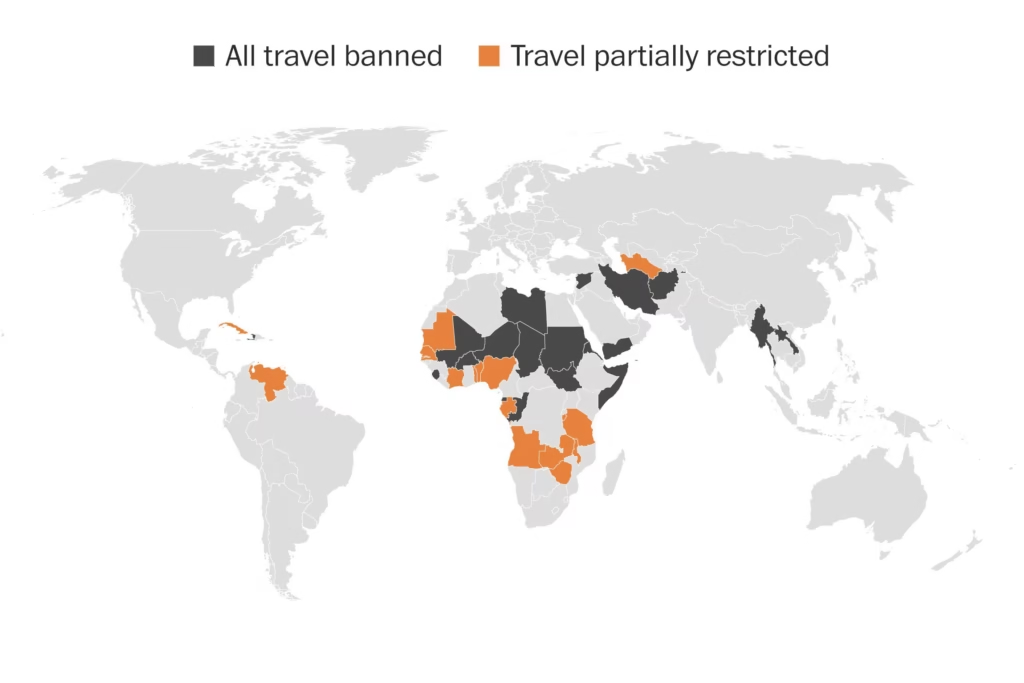
26 African Countries Under Full or Partial U.S. Travel Ban (Post-December Update)
26 African Countries Under Full or Partial U.S. Travel Ban (Post-December Update) Following the December update to U.S.…
Read article →
Travel Guide
Discover the legendary Nzambani Rock near Kitui, Kenya. Learn about its myths, breathtaking views, hiking options, and cultural significance.
Nzambani Rock Kenya combines a striking natural landmark with hiking, panoramic views, local folklore, photography, and community-based cultural tourism. The supplied source describes the rock, also known as Ivia ya Nzambani, as rising dramatically from the landscape near Kitui town in eastern Kenya.
The source gives the rock a height of approximately 183 meters and places it about eight kilometers from Kitui.
Its physical appearance alone makes it an unusual attraction, but much of Nzambani’s identity comes from the stories associated with it.
Local folklore has transformed the rock from a geological landmark into a place surrounded by curiosity and cultural meaning. Visitors therefore come not only to climb but also to hear stories, photograph the countryside, and learn about traditions associated with the area.
The supplied source places Nzambani Rock approximately eight kilometers from Kitui town, along the Kitui–Mutitu road.
It also gives an approximate distance of 160 kilometers east of Nairobi.
These figures provide useful planning context, although actual journey times depend on traffic, road conditions, stops, and the traveler’s exact starting point.
Kitui is the main gateway for a visit.
Because the rock lies relatively close to town, travelers can combine the attraction with other experiences in the area.
The source refers to private cars, public transport, and organized tours as possible ways of reaching the site.
Visitors unfamiliar with the region may find a guided arrangement particularly useful.
The rock rises prominently above the surrounding plains.
This physical contrast explains much of its visual appeal.
From a distance, Nzambani appears as a large isolated formation, while the climb reveals increasingly broad views across the countryside.
The combination of scale and openness makes it especially attractive to photographers.
One of the most memorable aspects of Nzambani Rock Kenya is the local legend described in the supplied source.
The story claims that a person who circles the rock seven times will change gender.
The source presents this clearly as folklore rather than verified fact.
Its importance lies in the way oral tradition has shaped the identity of the attraction.
Visitors should not treat the legend as a scientific claim.
Instead, it can be understood as part of the storytelling tradition associated with the place.
Folklore often gives landscapes meanings extending beyond geology.
Mountains, caves, rivers, forests, and unusual rock formations frequently become associated with stories passed between generations.
The supplied source emphasizes guided community narratives explaining the origins of the myth.
Listening to a local guide is far more informative than simply repeating the most sensational version of the story.
A guide can place the legend within the cultural setting of the region and explain how local people understand it.
The legend has helped attract visitors interested in oral traditions and unusual cultural stories.
However, travelers should avoid reducing Nzambani entirely to the gender-change myth.
The site also offers hiking, views, community interaction, and a broader introduction to the Kitui area.
The supplied source describes a metal staircase providing access up the rock.
This makes the climb more structured than scrambling directly over the natural surface.
The source estimates an ascent of approximately 15 to 20 minutes.
Actual time naturally depends on fitness, pace, weather, and the number of stops.
Even when a climb is relatively short, travelers should avoid rushing.
The staircase gains elevation quickly, and stopping occasionally allows visitors to enjoy changing views.
Comfortable footwear is sensible.
Anyone uncomfortable with heights should assess the experience carefully before continuing upward.
The source describes a relatively flat area at the summit where visitors can rest, take photographs, and listen to stories.
After the confined movement of the staircase, reaching the top opens the surrounding landscape dramatically.
This is the reward for the climb.
From the upper section, visitors can look across Kitui County’s plains and farmland.
The source emphasizes the broad views as one of Nzambani’s strongest attractions.
Rather than focusing only on the rock itself, travelers should use the summit to understand the surrounding landscape.
Photography is a natural part of the experience.
The supplied source highlights sunrise and sunset as particularly attractive times because changing light can transform the rock and countryside.
Clear weather can also provide extensive visibility toward surrounding hills.
Some of the best images may be taken before climbing.
A wider composition can show how dramatically the rock rises above the surrounding terrain.
Including vegetation, people, or nearby landscape features can provide a useful sense of scale.
At the top, panoramic photographs can capture farmland, distant hills, and open sky.
Travelers should remain aware of edges and stair structures while taking pictures.
Safety is more important than achieving a dramatic social-media angle.
The supplied source specifically highlights sunrise and sunset.
Low-angle light can create stronger shadows and warmer tones across the rock and plains.
Visitors planning around these periods should confirm site opening hours and transport arrangements rather than assuming access is available at any time.
An important part of the source’s framing is that Nzambani Rock is community-managed.
The entrance fees therefore contribute to local development according to the supplied material.
This gives the attraction an economic role beyond recreation.
Guides can provide both geological and cultural explanations.
Their knowledge helps transform a short climb into a more complete experience.
Visitors can ask questions about local history, the rock’s legends, the surrounding landscape, and community life.
The supplied source suggests combining Nzambani with Kitui town.
Markets and local cultural experiences can broaden the visit.
Instead of driving directly to the rock and leaving immediately afterward, travelers with sufficient time can explore more of the region.
The source associates the area with Kikamba culture.
A locally guided visit can introduce travelers to aspects of community history and traditions.
As with any cultural experience, visitors should avoid generalizing one presentation to every member of a wider community.
The supplied material mentions the possibility of pre-arranged visits involving farms or schools.
Such experiences should only take place through appropriate community arrangements.
Schools in particular should never be treated as casual tourist attractions without clear local permission and safeguarding practices.
The source describes entrance charges as modest and notes that climbing may involve its own charge.
It does not provide exact current prices.
Travelers should therefore confirm the latest fee structure locally rather than relying on an assumed amount.
According to the source, facilities include toilets, shaded resting areas, and vendors selling drinks and snacks.
These basic services make the attraction more practical for day visitors.
Travelers should still carry personal drinking water, particularly in warm weather.
The supplied source describes guides and caretakers as being present at the site.
Visitors should follow their instructions.
As with any outdoor attraction, personal belongings should be managed sensibly and travel arrangements should be confirmed before departure.
The source identifies June to October and January to March as drier periods offering clearer views.
These seasonal ranges come directly from the supplied material.
Weather can vary, so visitors should check local conditions close to the travel date.
A dry day can make stairs and walking areas easier to navigate.
Clearer skies also improve long-distance visibility from the summit.
Photographers may particularly appreciate conditions where haze and heavy cloud are reduced.
Nzambani offers a contrast with Kenya’s famous safari parks and beaches.
There are no game drives or large wildlife concentrations at the center of the experience.
Instead, visitors encounter a local landmark where landscape, community tourism, oral tradition, and hiking come together.
Travelers already exploring eastern Kenya can include the rock within a broader journey through Kitui County.
The attraction is particularly suitable for people interested in photography, hiking, folklore, and less heavily visited destinations.
Realistic driving times should guide itinerary planning.
Visitors should respect the site, avoid littering, listen to community guides, and follow rules governing access.
Cultural stories should be repeated with context rather than presented as literal facts.
Purchasing local products or using community guides can also increase the local economic value of the visit.
Nzambani Rock, Kenya offers far more than a staircase to a viewpoint. The supplied source presents the approximately 183-meter formation as a combination of natural scenery, local folklore, community tourism, photography, and accessible hiking near Kitui.
Its famous legend about circling the rock seven times adds cultural curiosity, while the climb rewards visitors with broad views over the surrounding countryside.
Local guides provide the context that makes the experience meaningful, explaining stories associated with the rock and introducing visitors to the wider region.
For travelers looking beyond Kenya’s conventional safari circuit, Nzambani provides a distinctive day experience built around landscape and storytelling. Its value lies not only in reaching the top but in understanding how a striking natural formation has become part of local cultural identity.

26 African Countries Under Full or Partial U.S. Travel Ban (Post-December Update) Following the December update to U.S.…
Read article →
3 Days Congo Gorilla Safari – Encounter the Gentle Giants of Virunga A 3 Days Congo Gorilla Safari…
Read article →
Children and Kids on Safari – Family-Friendly Adventures in Africa Taking children on an African safari is one…
Read article →
How to Plan a Safari in Uganda—Your Complete Travel Guide Planning a safari in Uganda is the start…
Read article →