

26 African Countries Under Full or Partial U.S. Travel Ban (Post-December Update)
26 African Countries Under Full or Partial U.S. Travel Ban (Post-December Update) Following the December update to U.S.…
Read article →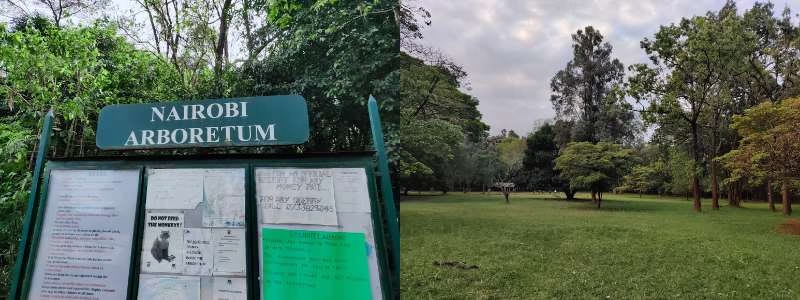
Travel Guide
Discover Nairobi Arboretum, a serene 30-hectare forest reserve in Kenya's capital, offering diverse flora, fauna, and recreational activities. Learn about its history, biodiversity, and visitor information.
Nairobi Arboretum provides a green retreat close to the center of Kenya’s capital, combining conservation, recreation, botanical diversity, birdwatching, education, and opportunities for quiet relaxation. According to the supplied source, this approximately 30-hectare forest reserve lies about three kilometers from Nairobi’s city center and contains more than 350 species of indigenous and introduced plants.
The Arboretum offers a noticeably different experience from Nairobi’s busy roads, commercial districts, offices, and densely developed neighborhoods. Walking beneath mature trees creates a sense of separation from the surrounding city without requiring visitors to travel far outside Nairobi.
Its paths attract walkers and joggers, while open spaces are used for picnics and relaxation. Bird enthusiasts can search for more than 100 bird species identified in the source, and visitors may also encounter Sykes monkeys and vervet monkeys.
Yet Nairobi Arboretum is more than an urban recreation area. Its history is connected with forestry experimentation, while its modern role encompasses conservation, environmental education, scientific knowledge, and public access to nature.
The supplied source states that Nairobi Arboretum was established in 1907.
Its original purpose was considerably different from the recreational role many visitors associate with it today.
According to the source, Mr. Batiscombe, a forest officer with the British East Africa Protectorate, founded the Arboretum to test foreign tree species that might be suitable for timber and fuel.
The site therefore began as a place of practical forestry experimentation.
Over time, its purpose broadened.
The original search for suitable timber and fuel trees resulted in a collection containing numerous plant species.
As the site developed, it became increasingly important as a place for conserving both indigenous and foreign trees.
This transformation illustrates how the purpose of a green space can change across generations.
What began with a focus on forestry trials eventually developed into an urban sanctuary with conservation, education, research, and recreational value.
The supplied source identifies 1993 as another important point in the Arboretum’s history.
It states that neglect and insufficient funding led concerned citizens to establish the Friends of Nairobi Arboretum, commonly referred to as FONA.
The organization was formed under the umbrella of Nature Kenya according to the supplied material.
FONA subsequently worked with the Kenya Forest Service to maintain and improve the Arboretum.
This cooperation is presented as helping preserve the site for recreation, education, scientific knowledge, and biodiversity conservation.
One of the major attractions of Nairobi Arboretum is its botanical diversity.
The supplied source states that the reserve contains more than 350 species of indigenous and foreign plants.
This variety makes an ordinary walk much more interesting for visitors willing to slow down and observe the vegetation.
Trees and shrubs create changing textures, canopy structures, shade patterns, and habitats throughout the reserve.
For students and botanically minded visitors, the collection can also function as a living learning environment.
The Arboretum contains both indigenous and foreign plant species.
This reflects its original history as a forestry trial area.
Visitors can therefore encounter plants from different tropical environments within one relatively compact urban site.
Understanding whether a tree is indigenous or introduced can add context to the visit, particularly for people interested in forestry, ecology, or conservation.
The supplied source describes the Arboretum as a living laboratory for botanical studies and conservation.
This description captures an important part of its identity.
Instead of studying trees only from photographs or textbooks, students and researchers can encounter living specimens.
Differences in bark, leaves, growth patterns, canopy form, and ecological relationships become easier to understand when viewed directly.
Wildlife also contributes to the visitor experience.
The source identifies Sykes monkeys among the animals living in the Arboretum.
Their presence demonstrates how an urban green area can provide habitat even within a large capital city.
Visitors should observe monkeys without feeding or attempting to touch them.
Wild animals should remain able to behave naturally.
Vervet monkeys are another primate species mentioned in the supplied material.
Visitors may notice them moving between trees or using areas closer to the ground.
Their presence can be particularly exciting for families and international travelers who may not expect to encounter primates so close to central Nairobi.
However, sightings remain natural rather than staged and should not be considered guaranteed.
The supplied source states that more than 100 bird species occur within the Arboretum.
This makes the site particularly attractive for urban birdwatching.
A visitor does not necessarily need an entire day.
Even a morning walk can provide opportunities to listen for calls and observe birds moving between trees.
Binoculars are useful because many species remain within the canopy.
Trees provide birds with food, nesting sites, shelter, and resting places.
Different plant species can support different insects, flowers, fruits, and seeds.
The variety of vegetation within Nairobi Arboretum therefore helps explain its bird diversity.
The site can also function as an important green refuge within a heavily developed urban environment.
Walking is one of the simplest ways to experience the reserve.
The supplied source describes well-maintained paths used by visitors.
A slow walk allows travelers to appreciate the trees, birds, monkeys, and general atmosphere.
Unlike a tightly scheduled city attraction, the Arboretum can be experienced at an unhurried pace.
Visitors can stop beneath trees, listen for birds, or simply enjoy being surrounded by greenery.
The paths are also used by joggers.
For Nairobi residents and travelers staying in the city for longer periods, the Arboretum can provide an outdoor exercise environment away from heavily trafficked streets.
People visiting specifically to run should remain considerate of walkers, school groups, and other users.
The shared nature of the space is part of its character.
The source identifies picnicking as another popular activity.
Designated areas allow visitors to enjoy meals surrounded by trees.
A picnic can work particularly well for families or groups looking for an inexpensive outdoor activity in Nairobi.
Visitors should remove all waste when leaving.
Maintaining a clean environment directly contributes to the quality of the reserve.
Nairobi Arboretum provides many opportunities for photography.
Trees, pathways, birds, monkeys, filtered sunlight, and open green spaces create varied subjects.
Nature photography can be particularly rewarding during quieter periods when wildlife is less disturbed.
Visitors photographing other people should ask permission where appropriate rather than assuming that everyone using the park wants to appear in photographs.
The supplied source states that schools and universities frequently organize educational visits.
Topics can include ecosystem restoration, biodiversity, and sustainable practices.
This educational role gives the Arboretum significance beyond recreation.
Young people can learn directly from an urban ecosystem rather than discussing environmental conservation only in classrooms.
Environmental education becomes especially relevant in rapidly developing cities.
People may live close to natural systems without fully understanding the ecological services those systems provide.
An accessible green space can demonstrate the importance of trees, habitat, biodiversity, and responsible public use.
The Arboretum therefore connects conservation with everyday urban life.
The supplied source also emphasizes scientific knowledge.
A collection containing hundreds of plant species can provide opportunities for observation and botanical study.
Long-established trees may also reveal how particular species respond to Nairobi’s conditions.
The Arboretum’s historical role and modern conservation function therefore overlap.
Not every visitor needs a scientific or educational objective.
Many people simply want somewhere peaceful.
The shade of mature trees and separation from heavy traffic can provide a welcome change from the pace of central Nairobi.
Sitting quietly beneath the canopy can be as legitimate a use of the Arboretum as birdwatching or botanical study.
The supplied source places the Arboretum on State House Road, Nairobi, Kenya, approximately three kilometers from the city center.
Its urban location is one of its greatest practical advantages.
Visitors can include the reserve within a Nairobi itinerary without committing to a long journey outside the city.
This makes it suitable for a free morning or afternoon.
According to the provided material, Nairobi Arboretum is open daily from 6:00 AM to 6:15 PM.
These hours are reproduced from the supplied source rather than independently updated.
Visitors planning a trip should confirm current operating information locally if timing is critical.
An early visit can be particularly appealing for walkers and birdwatchers.
The supplied source lists entrance charges of Kshs 65 for adults and Kshs 27 for children.
It also states that payment is accepted through M-PESA or card only.
Because admission arrangements can change, these figures should be understood as the information contained in the supplied source.
Travelers should confirm current rates before visiting rather than relying on an older published amount.
According to the source, facilities include parking, restrooms, and information centers.
These practical amenities make the site easier to use for families, school groups, and independent travelers.
Visitors planning a longer stay may still want to carry water and other personal necessities.
The conservation role of Nairobi Arboretum is central to its modern identity.
The supplied source credits the Friends of Nairobi Arboretum and Kenya Forest Service with contributing to its continued maintenance.
Protecting a green area within a growing city requires ongoing management.
Trees need care, trails need maintenance, and public use needs to be balanced with environmental protection.
The presence of hundreds of plant species, monkeys, and more than 100 bird species demonstrates the biodiversity potential of urban green areas.
The Arboretum provides habitat while also giving city residents access to nature.
These two roles can reinforce one another.
People who regularly use and appreciate a green space may become stronger supporters of its protection.
Visitors can contribute to conservation through simple behavior.
Staying on appropriate paths, disposing of waste correctly, avoiding damage to plants, and not feeding wildlife all help protect the environment.
Large groups should also remain considerate of other visitors and wildlife.
Responsible behavior ensures that recreation does not undermine the qualities that attract people to the Arboretum.
The reserve can suit several types of traveler.
Nature enthusiasts can focus on plants and wildlife. Birdwatchers can explore the canopy. Families can picnic and walk together. Photographers can work with natural scenery, while students can learn about biodiversity.
Travelers who simply need a quiet break from sightseeing can also benefit.
The attraction does not require one particular interest.
Because the site is close to central Nairobi, it can fit naturally into a broader city itinerary.
Visitors do not need to dedicate several travel days to experience it.
A morning walk can be followed by other urban attractions, dining, or business commitments.
This flexibility makes the Arboretum particularly useful for travelers with limited free time.
Nairobi Arboretum combines more than a century of history with botanical diversity, wildlife, recreation, education, and urban conservation.
Established in 1907, the site originally served as a place for testing tree species for timber and fuel. Over time, it developed into a conservation area containing more than 350 indigenous and foreign plant species.
The supplied source identifies Sykes monkeys, vervet monkeys, and more than 100 bird species among its wildlife. Visitors can walk, jog, picnic, watch birds, photograph nature, or participate in educational activities.
Its location only a few kilometers from Nairobi’s center makes it particularly accessible.
More importantly, the Arboretum demonstrates the value of maintaining green spaces within expanding cities. It provides habitat, learning opportunities, recreation, and a quiet environment where visitors can reconnect with nature without leaving Kenya’s capital far behind.

26 African Countries Under Full or Partial U.S. Travel Ban (Post-December Update) Following the December update to U.S.…
Read article →
3 Days Congo Gorilla Safari – Encounter the Gentle Giants of Virunga A 3 Days Congo Gorilla Safari…
Read article →
Children and Kids on Safari – Family-Friendly Adventures in Africa Taking children on an African safari is one…
Read article →
How to Plan a Safari in Uganda—Your Complete Travel Guide Planning a safari in Uganda is the start…
Read article →