

26 African Countries Under Full or Partial U.S. Travel Ban (Post-December Update)
26 African Countries Under Full or Partial U.S. Travel Ban (Post-December Update) Following the December update to U.S.…
Read article →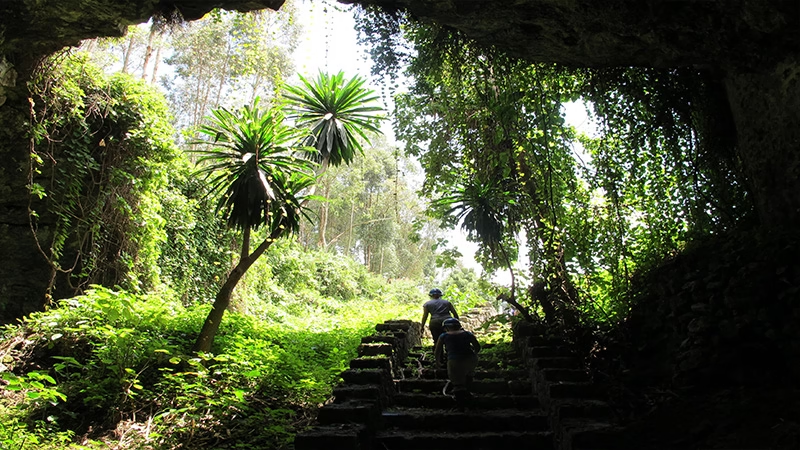
Travel Guide
Explore Rwanda’s Musanze Caves. Learn about tour details, entry cost, gear, geology, and how to include this cave hike in your Volcanoes National Park adventure.
The Musanze Caves provide travelers with an underground experience close to Rwanda’s Volcanoes National Park region. While most visitors travel to Musanze because of mountain gorillas, golden monkeys, volcanic scenery, or hiking, the caves reveal another side of the landscape: the geological processes created by historic volcanic activity.
The supplied source describes the caves as being located near Musanze town and states that they were officially opened for tourism during the 2013–2014 period.
Their accessibility makes them a practical addition to a northern Rwanda itinerary.
A guided cave experience combines geology, history, wildlife such as bats, and the unusual atmosphere of moving through dark underground chambers beneath a region dominated by volcanoes.
The supplied source explains the Musanze Caves as a product of ancient lava flows from the nearby Virunga volcanoes.
As volcanic material moved across the landscape, parts of the lava cooled and solidified while molten material continued moving beneath the hardened surface.
The remaining spaces eventually formed underground tunnels.
This geological origin directly connects the caves with the volcanic character of northern Rwanda.
The source describes the formations as being more than 65 million years old.
This age figure is reproduced from the supplied material rather than independently verified here.
The broader point supported by the source is that the caves are ancient geological features associated with volcanic processes.
Visitors can therefore experience the region from below ground after seeing volcanic peaks from the surface.
According to the supplied source, the cave system extends for approximately 1.25 miles, or about 2 kilometers.
It also describes more than 30 natural entrances.
Some entrances formed where sections of cave roof collapsed, opening the underground tunnels to the surface.
These openings contribute to the dramatic appearance of the cave system.
Visitors explore the caves with a professional guide.
This is important both for safety and interpretation.
Without explanation, the experience might consist simply of walking through a dark tunnel.
A guide can explain volcanic formation, historical use, cave features, and the wildlife encountered underground.
This transforms the visit into an educational experience rather than a simple adventure activity.
The main entrance is described in the source as having a cathedral-like appearance.
Entering from daylight into a darker volcanic tunnel creates a strong contrast.
Temperature and humidity change, while sound behaves differently underground.
The environment can feel surprisingly removed from the cultivated hills and busy roads outside.
The supplied source says that visitors use paved paths and stairways through the main tourism sections.
These improvements make the experience more accessible than an undeveloped cave expedition.
Nevertheless, cave surfaces can still be damp or slippery.
Travelers should walk carefully and follow the guide rather than assuming the constructed path removes every risk.
The source describes the main tour as covering four chambers.
Visitors move through these spaces while learning about the cave system.
The exact route and accessible sections should be confirmed locally because tourism operations can change.
The experience is designed to provide enough underground exploration to understand the caves without requiring specialist caving skills.
Inside the caves, travelers should expect cool, damp air.
This can feel very different from outdoor conditions.
Water may drip from surfaces, while limited natural light creates a darker atmosphere.
Suitable clothing is therefore important even if the day outside feels warm.
A light waterproof layer can add comfort.
The supplied source mentions stalactites among the formations visitors may observe.
Geological features should be viewed without touching or damaging them.
Caves develop slowly, and careless contact can affect delicate surfaces.
Responsible visitors remain on the designated route and follow instructions about where photography and movement are permitted.
Bats may be encountered in the darker corridors.
Their presence adds a biological element to what is primarily a geological attraction.
Visitors should not attempt to touch, chase, or deliberately disturb them.
Bats are adapted to the underground environment and should be observed quietly.
A guide can explain how wildlife uses different parts of the cave.
The supplied source states that the caves have also been used as shelters during periods of conflict, including during the 1994 genocide.
This historical dimension adds a serious human layer to the geological site.
Visitors should listen carefully to local interpretation and avoid treating these stories casually.
The caves are therefore not simply natural tunnels but spaces connected with different periods of human experience.
The source gives a typical tour duration of approximately two to three hours.
This allows time for walking, interpretation, and photography.
The experience can therefore fit into a half-day schedule.
Travelers should still avoid placing another activity immediately afterward without allowing for transfer time and possible delays.
The supplied source lists an expected cost of approximately USD 50–55 per person, including entrance, guiding, and basic safety equipment.
This is source-provided pricing and should not be assumed to remain current.
Entry charges and tourism policies can change.
Travelers should verify the latest official rate before finalizing a budget.
The source says visitors receive a helmet and headlamp.
A helmet provides protection in areas with low overhead surfaces, while a headlamp allows visitors to keep their hands free.
Travelers should use the equipment as instructed and avoid separating from the guided group.
Dark underground environments can become disorienting surprisingly quickly.
The supplied source recommends waterproof boots, long trousers, a rain jacket, and gloves.
These items help with damp conditions and rough surfaces.
Insect repellent is also suggested.
Travelers should choose clothing that can tolerate dirt because caves are naturally wet and muddy environments.
Expensive clothing that must remain spotless is not practical.
Photography inside caves presents different challenges from outdoor landscape photography.
Light levels are low, and bright direct flash can produce harsh results.
A stable camera and appropriate low-light settings may be more useful.
Visitors should also avoid delaying the entire group while repeatedly setting up photographs.
The guided experience needs to move at a reasonable pace.
The supplied source describes the Musanze Caves as open year-round.
It nevertheless suggests June to September and December to February for relatively drier conditions.
Seasonal descriptions should be treated as general guidance.
Even during drier periods, the interior of a cave remains naturally damp.
The source estimates approximately 90 minutes by road from Kigali and places the caves near Musanze town, Innes University, and the wider Kinigi area.
Actual journey time can depend on traffic and the exact starting point.
Travelers already staying in Musanze can include the caves much more easily within a local itinerary.
The most obvious combination is a Volcanoes National Park gorilla safari.
The cave tour can be scheduled on a separate afternoon or another day around the trek.
This gives visitors a geological experience to complement primate tourism.
It is usually better not to schedule a cave tour immediately after an unpredictable and physically demanding gorilla trek unless sufficient flexibility exists.
The supplied source also mentions golden monkey experiences as a possible combination.
Travelers can therefore create a northern Rwanda itinerary with several different themes: gorillas, golden monkeys, caves, lakes, culture, and forest landscapes.
This variety is particularly useful for visitors spending more than two nights in the Musanze region.
Buhanga Eco-Park is listed by the source as another nearby attraction.
Adding such sites can broaden an itinerary beyond headline wildlife experiences.
Travelers should avoid trying to visit too many places in one day, however.
A slower itinerary allows guides to provide better interpretation and reduces the feeling of rushing between stops.
The Twin Lakes of Burera and Ruhondo are also mentioned.
Their open water and highland scenery create a strong visual contrast with the enclosed darkness of the caves.
Combining the two experiences can therefore produce a varied day if driving times and activity schedules are planned realistically.
The source additionally refers to cultural attractions in the Musanze region.
These can introduce visitors to community life, traditions, food, crafts, and local history.
As with all cultural tourism, travelers should choose experiences where local participants have meaningful control over how their stories are presented.
The main reason is variety.
A visitor can spend one morning in a mountain forest and another period exploring underground volcanic tunnels.
The caves reveal how volcanic forces have shaped northern Rwanda beyond the visible peaks.
They also provide a relatively slower-paced activity for travelers who want something different from another long trek.
The Musanze Caves add geological and historical depth to a northern Rwanda journey. The supplied source describes a roughly two-kilometer cave system with numerous natural entrances, guided tourism chambers, bats, damp underground conditions, and historical significance.
Helmets and headlamps are provided according to the source, while appropriate boots and clothing improve comfort.
The caves can be combined with gorilla trekking, golden monkey tracking, the Twin Lakes, cultural experiences, or other attractions around Musanze.
For travelers who arrive in northern Rwanda expecting only volcanoes and primates, exploring beneath the surface reveals another part of the region’s story.

26 African Countries Under Full or Partial U.S. Travel Ban (Post-December Update) Following the December update to U.S.…
Read article →
3 Days Congo Gorilla Safari – Encounter the Gentle Giants of Virunga A 3 Days Congo Gorilla Safari…
Read article →
Children and Kids on Safari – Family-Friendly Adventures in Africa Taking children on an African safari is one…
Read article →
How to Plan a Safari in Uganda—Your Complete Travel Guide Planning a safari in Uganda is the start…
Read article →