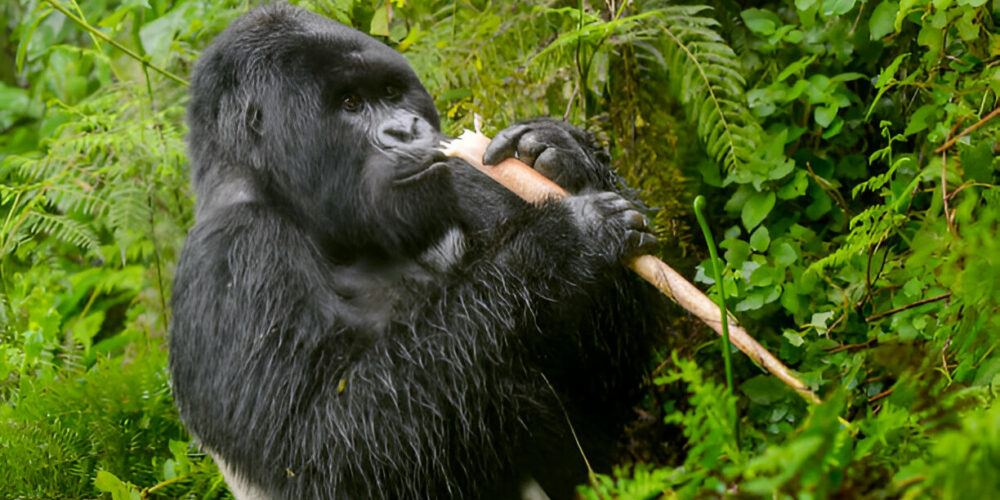

Mountain Gorilla
Mountain Gorilla: Life in the Misty Highlands of Africa
The mountain gorilla stands as one of the most iconic and closely studied primates in the world. It survives in the high-altitude forests of East and Central Africa, where cold temperatures, thick vegetation, and steep volcanic landscapes shape every aspect of its life. Unlike many wildlife species that remain widespread, mountain gorillas exist only in a small, fragmented range shared between Uganda, Rwanda, and the Democratic Republic of Congo.
This limited distribution makes them both extraordinary and highly vulnerable. Yet despite decades of pressure from habitat loss, poaching, and political instability in some regions, their population has slowly increased due to sustained conservation efforts and controlled tourism.
Habitat and Natural Environment
Mountain gorillas live in montane forest ecosystems that rise between 2,200 and 4,300 meters above sea level. These forests form part of the Albertine Rift, one of the most biologically diverse regions in Africa. The landscape includes dense bamboo zones, thick hagenia woodlands, and mist-covered slopes that remain cool throughout the year.
The environment changes quickly with altitude. Lower slopes support dense vegetation with abundant bamboo shoots, while higher zones feature more open forest canopies and moss-covered trees. Rainfall remains frequent, and mist often surrounds the forests in the early morning hours, creating the signature atmosphere associated with gorilla trekking destinations.
The harsh terrain influences movement patterns. Mountain gorillas adapt to steep slopes and uneven ground, often building nests on hillsides where visibility remains limited but food resources stay accessible.
Physical Characteristics
Mountain gorillas display a powerful and stocky build that helps them survive in cold high-altitude environments. Adult males, known as silverbacks, develop thick muscular bodies that can weigh over 180 kilograms. Their dark fur grows longer and denser than that of other gorilla subspecies, providing insulation against low temperatures.
Their broad chest, large hands, and strong jaw structure reflect a life built around strength and endurance. Despite their intimidating appearance, mountain gorillas often show calm and gentle behavior when undisturbed by human presence.
Facial features include a pronounced brow ridge and deep-set eyes that give them a thoughtful and intelligent expression. Each individual carries unique nose prints, which researchers use for identification in long-term studies.
Diet and Feeding Patterns
Mountain gorillas follow a mostly herbivorous diet shaped by limited fruit availability in their high-altitude environment. They feed on leaves, stems, shoots, wild celery, bamboo, and nettles. Bamboo shoots become especially important during certain seasons when they provide a rich source of nutrients.
Because their food sources contain relatively low energy compared to fruit-rich forests, mountain gorillas spend a large portion of their day feeding. They move slowly through vegetation, selecting plant parts carefully to meet their nutritional needs.
This diet influences their movement patterns. Instead of traveling long distances, they remain within relatively stable home ranges, shifting slowly as they exhaust food patches and new vegetation becomes available.
Social Structure and Group Life
Mountain gorillas live in cohesive family groups that usually consist of one dominant silverback, several adult females, juveniles, and infants. The silverback plays a central role in group leadership. He protects members, mediates conflicts, and decides when and where the group moves.
Group sizes vary but often range between 10 and 30 individuals. Strong social bonds define their behavior, especially between mothers and offspring. Young gorillas remain close to their mothers for several years, learning feeding techniques and social cues through observation and interaction.
Male juveniles eventually leave their natal groups to avoid inbreeding. They may live solitary lives or join bachelor groups before forming their own families. Female gorillas also transfer between groups, a behavior that helps maintain genetic diversity across populations.
Behavior and Communication
Mountain gorillas communicate through a wide range of vocalizations, gestures, facial expressions, and body movements. They use soft grunts to maintain group cohesion and loud roars to signal danger or assert dominance. Chest beating, one of their most recognized behaviors, often serves as a display of strength rather than aggression.
Their intelligence shows in their problem-solving abilities and social learning. Gorillas observe one another closely, especially during feeding and grooming activities. Grooming strengthens social bonds and reduces tension within groups.
Despite their strength, mountain gorillas display a generally peaceful temperament. Conflicts rarely escalate into serious violence, especially within stable groups led by experienced silverbacks.
Reproduction and Life Cycle
Female mountain gorillas reach sexual maturity around 8 to 10 years of age, while males mature later. Gestation lasts approximately 8.5 months, resulting in the birth of a single infant. Twins occur rarely and often face survival challenges.
Infants depend heavily on their mothers for the first few years of life. They nurse, cling to their mothers, and gradually begin exploring their surroundings. As they grow, they interact more with other group members and develop social skills essential for adulthood.
The lifespan of mountain gorillas in the wild can reach 35 to 40 years, especially in protected environments where conservation measures reduce threats.
Conservation Status and Protection Efforts
Mountain gorillas remain classified as endangered, although their population has shown encouraging recovery trends in recent years. Conservation success stems from a combination of strict protection, tourism revenue, and community involvement.
National parks such as Bwindi Impenetrable National Park, Mgahinga Gorilla National Park, and Volcanoes National Park provide critical habitat protection. Anti-poaching patrols operate daily within these areas, reducing illegal hunting and human encroachment.
Gorilla tourism plays a major role in conservation funding. Controlled trekking permits generate revenue that supports park management and local communities. This system creates incentives for protecting gorillas while improving livelihoods for surrounding populations.
Despite progress, challenges remain. Habitat fragmentation, human population growth, and disease transmission continue to threaten long-term stability. Conservation organizations focus on habitat corridors, health monitoring, and education programs to secure future survival.
Gorilla Trekking Experience
Mountain gorilla trekking offers one of the most sought-after wildlife experiences in Africa. Visitors hike through dense forests and steep terrain under the guidance of trained rangers and trackers. The journey often takes several hours, depending on the location of the gorilla family.
Once visitors locate a group, they spend a limited time observing them in their natural habitat. The encounter often feels quiet and deeply immersive. Gorillas continue their daily activities without significant disturbance, allowing observers to witness feeding, grooming, and social interactions up close.
Each trekking experience feels unique due to the unpredictable nature of wild gorillas and the constantly changing forest environment.
Importance in the Ecosystem
Mountain gorillas play a crucial ecological role in their habitat. Their feeding behavior helps shape vegetation patterns by influencing plant growth and seed dispersal. As they move through forests, they contribute to nutrient cycling and support overall forest health.
Their presence also indicates ecosystem stability. A healthy gorilla population reflects a well-functioning forest that supports numerous other species, from birds and insects to small mammals and plants.
Protecting mountain gorillas therefore protects entire ecosystems, not just a single species.
Conclusion
Mountain gorillas represent one of nature’s most remarkable success stories in conservation. Their survival in harsh, high-altitude forests demonstrates extraordinary adaptation and resilience. Although still endangered, their population recovery offers hope for long-term protection when conservation, tourism, and local communities work together.
Their quiet strength, complex social lives, and deep connection to their environment continue to inspire global conservation efforts and attract travelers seeking meaningful wildlife encounters.