
Mount Nyiragongo Hiking Safaris
MOUNTAIN NYIRANGONGO HIKING
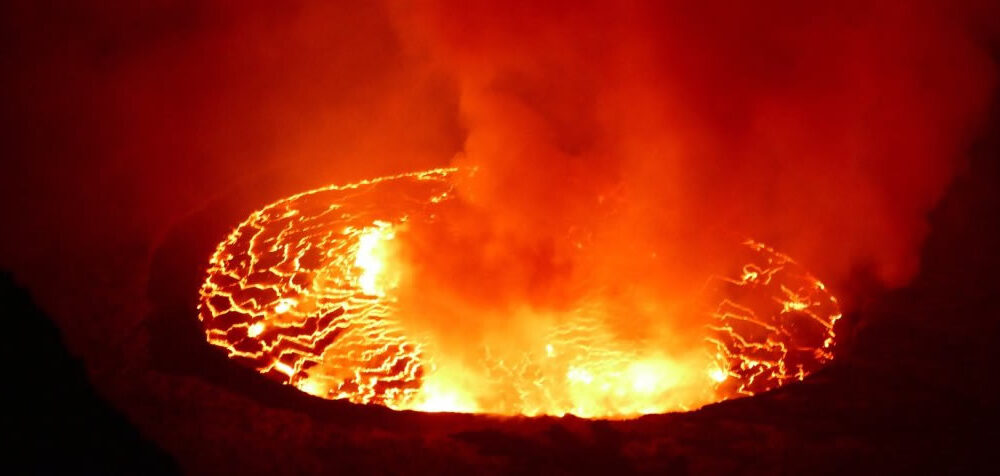
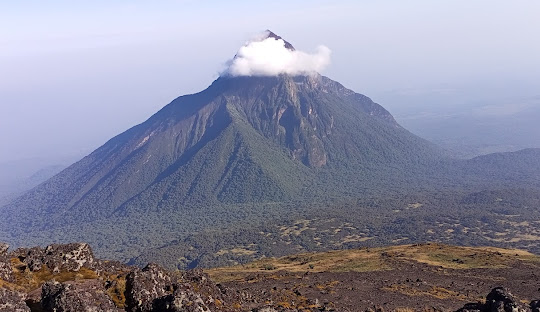
Mount Nyiragongo is home to the world’s largest active lava lake. The volcano rises to 3,470 meters (11,380 feet) above sea level within Virunga National Park in the eastern Democratic Republic of Congo (DRC). It stands about 20 kilometers north of Goma and Lake Kivu, close to the Rwanda border.
Nyiragongo is a spectacular stratovolcano formed by layers of hardened lava from repeated eruptions over thousands of years. Its summit offers one of Africa’s most dramatic natural spectacles, where visitors can watch molten lava swirl deep inside the crater both day and night.
The summit experiences extremely cold conditions throughout the year. Night temperatures often fall below freezing, and light snowfall, dense fog, or hail can occur. Vegetation becomes sparse near the summit because of the harsh climate and volcanic terrain.
The World’s Largest Lava Lake
The volcano’s main crater measures approximately 2 kilometers across. At its center lies a massive lava lake, usually about 600 meters below the crater rim. From specially designated viewing areas, trekkers can safely watch the glowing lava bubble and flow inside the crater.
Nyiragongo ranks among the world’s most active volcanoes. Scientists have recorded more than 34 eruptions since 1882. Despite this activity, experts closely monitor the volcano from the Goma Volcano Observatory, where volcanologists track seismic activity, gas emissions, and ground movement. Continuous monitoring helps authorities assess volcanic conditions and manage visitor safety.
Eruption History
The 2002 eruption remains one of Nyiragongo’s most significant volcanic events. Instead of erupting from the summit crater, lava broke through fractures along the volcano’s slopes. Some lava flows reached speeds of nearly 100 kilometers per hour, eventually flowing into parts of Goma and toward Lake Kivu, around 20 kilometers away.
The eruption caused extensive damage to homes, infrastructure, and natural habitats. Today, visitors can still see the large fissures and secondary craters left behind by this powerful event.
Together with neighboring Mount Nyamuragira, Nyiragongo accounts for nearly half of Africa’s recorded volcanic eruptions, making this region one of the continent’s most active volcanic landscapes.
Wildlife Around the Volcano
The lower slopes of Mount Nyiragongo support tropical forests that form part of the greater Virunga ecosystem. These forests provide habitat for several wildlife species, including monkeys, chimpanzees, bushbucks, and numerous bird species.
Wildlife numbers declined after major volcanic eruptions and years of regional instability. Even so, the surrounding forests continue to play an important role in conserving biodiversity within Virunga National Park.
The Trek to the Summit
The adventure begins at Kibati Patrol Post, located at an elevation of about 1,994 meters. Every trek takes place under the supervision of experienced armed park rangers, who guide visitors throughout the climb.
The trail covers approximately 8 kilometers to the summit. Most hikers complete the ascent in 4 to 8 hours, depending on their pace, weather conditions, and physical fitness. The route climbs steadily with very few gentle sections, so hikers gain altitude quickly.
Fitness and Altitude
Mount Nyiragongo requires a reasonable level of fitness. The trail rises nearly 1,500 meters in elevation over a relatively short distance, making the climb physically demanding.
Rapid altitude gain can affect even experienced hikers. Some people develop symptoms of altitude sickness, including headaches, dizziness, or fatigue. Drinking plenty of water, maintaining a steady pace, and allowing your body to adjust to the elevation all help reduce these effects.
Before attempting the hike, consult your doctor if you have any medical concerns, particularly those related to high altitude, heart conditions, or respiratory health.
Visitors who prefer a lighter backpack can hire local porters at the trailhead. Porters carry heavy equipment and make the climb more comfortable while also supporting nearby communities.
Overnight at the Summit
Most visitors spend one night at the summit before descending the following morning. This schedule allows hikers to recover after the climb and experience the lava lake under both daylight and darkness.
The overnight stay also provides enough time to enjoy the changing colors of the lava lake as evening falls. Many travelers consider the glowing crater after sunset to be the highlight of the entire adventure.
Virunga National Park provides basic summit accommodation and meals as part of the trekking permit. After breakfast the following morning, hikers begin the descent back to Kibati Patrol Post, completing one of Africa’s most unforgettable volcano trekking experiences.
ITEMS TO NOTE WHEN PLANNING TO HIKE
Permits
You need a trekking permit from Virunga National Park before climbing Mount Nyiragongo. The permit costs US$300 per person. You can book it directly through the Virunga National Park office by email, phone, or on the official website at https://virunga.org/. Many travelers also book through tour operators, who handle the permit together with transport and other safari arrangements.
The permit covers the park entry fee, the guided trek, accommodation in the summit cabins, and meals at the top. If you book directly with the park, you can also arrange transfers between the border and the trailhead for an extra fee. These transfers remain optional. Park staff also assist visitors with immigration procedures at the border.
Trek Start Time
The trek begins at Kibati Patrol Post. All hikers must arrive by 9:00 a.m. for registration and a mandatory briefing. Rangers also use this time to organize porter services and hiking gear rentals.
The hike officially starts at 10:00 a.m. Armed ranger guides accompany every group throughout the trek. Arriving late can result in losing your permit without a refund, so plan enough time for border formalities and travel to the starting point.
Distance and Duration
The climb starts at an elevation of 1,994 meters above sea level. From there, the trail rises steeply to the summit.
The one-way distance measures about 8 kilometers. Most hikers reach the summit within 4 to 8 hours, depending on fitness and weather conditions. The descent usually takes less than 4 hours on the second day.
Physical Fitness
Mount Nyiragongo demands good physical fitness. The trail climbs steeply and gains altitude quickly, making the trek physically demanding.
The adventure takes two days. You spend the first day climbing to the summit, where you stay overnight. On the second day, you descend back to the starting point.
The trail becomes much steeper after the first rest stop. It follows a direct route up the volcano with very few switchbacks. Although the climb feels challenging, many people complete it successfully with proper preparation. If you can comfortably walk about 8 kilometers, you have a good chance of reaching the summit.
The rapid gain in elevation may trigger altitude sickness. Speak with your doctor before traveling, especially if you have concerns about high altitude. Some hikers also carry Diamox, but you should only use it under medical advice.
Daily Capacity
Virunga National Park limits the trek to 24 hikers per day. The park operates one departure each day.
Some dates fill up quickly, especially weekends. Many visitors from Goma, including staff from international organizations, choose to hike during this time. If you prefer a quieter experience, ask your tour operator or the park office about less crowded dates.
The summit features 12 simple wooden cabins, each accommodating two people. The cabins provide basic mattresses, but hikers must bring or rent their own sleeping bags and other sleeping equipment.
Security
Security remains an important consideration when planning a trip to eastern Democratic Republic of Congo. Conditions can change, and some areas experience instability.
Virunga National Park closely monitors the situation every day. Park management places visitor safety above everything else. If they believe any risk exists, they immediately suspend trekking activities until conditions improve.
Always rely on the latest updates from the park rather than outdated travel reports or rumors. If the park confirms that trekking is operating, you can expect trained rangers and park staff to support you throughout your visit.
Weather
The summit of Mount Nyiragongo stays extremely cold throughout the year. Night temperatures often fall below freezing, and snow, thick fog, or hail can occur without warning.
Pack plenty of warm clothing because the wooden summit cabins become very cold after sunset. Without proper clothing, you increase your risk of cold-related illnesses.
Weather on the volcano changes quickly. Clear days reward hikers with spectacular views of the lava lake and the surrounding landscape. On other days, clouds and fog can completely hide the scenery. No one can predict the summit weather with certainty before the trek begins.
Hiking Gear
Proper equipment makes the climb much safer and more comfortable. Experienced hikers usually bring their own gear, while first-time climbers often rent equipment from the park.
Your packing list should include a sturdy backpack, sleeping bag, sleeping pad, hiking boots, waterproof jacket, rain pants, insulated jacket, hiking trousers, extra socks, warm clothing, drinking water, and personal items.
Virunga National Park also rents a complete hiking kit for about US$100. The package includes a sleeping bag, rain poncho, warm clothing, drinking water, and packed lunches for the trek.
Meals
The US$300 trekking permit includes meals during your overnight stay on the summit. Porters prepare a hot dinner after your arrival and serve tea the following morning before the descent.
If you rent the hiking gear package, you also receive packed lunches to eat along the trail.
Porter Services
Many hikers hire porters to carry their equipment and make the climb more enjoyable. Although porters work independently, Virunga National Park helps visitors arrange their services at Kibati Patrol Post.
A porter charges about US$24 for the round trip, excluding gratuity. Each porter carries a maximum of 15 kilograms. Hiring a porter also supports local communities while allowing you to hike with a lighter backpack.
Accommodation
The summit has 12 simple wooden cabins, and each cabin accommodates two hikers. Every cabin contains basic leather-covered mattresses only. You must bring your own sleeping bag, sleeping pad, and other overnight essentials unless you rent them through Virunga National Park.
If you plan to arrive a day before the trek, several comfortable accommodation options are available around the border region. Popular choices include Mikeno Lodge, Bukima Tented Camp, and Lake Kivu Serena Hotel in Gisenyi.
Bukima Tented Camp and Mikeno Lodge sit about 45 minutes by road from Kibati Patrol Post. If you stay in Gisenyi, expect a drive of about one hour to the Grande Barrière Border Post, followed by your transfer to the trailhead.
Getting There
Most travelers reach Mount Nyiragongo through Rwanda before crossing into the Democratic Republic of Congo.
If you book through a tour operator, they arrange your transport, border crossings, permits, and visa. This option offers the easiest and most convenient travel experience.
If you book directly with Virunga National Park, the park can organize border transfers for about US$60 each way. A park representative meets you at the Grande Barrière Border Post, transfers you to Kibati Patrol Post, and returns you to the border after the trek.
The park also assists with the single-entry tourist visa, which costs US$100. After purchasing your trekking permit, you complete the visa application online. The process usually takes up to 48 hours and requires very little paperwork.
Direct Travel Option
Most international visitors fly into Kigali International Airport before traveling to Gisenyi. The journey from Kigali to the border takes about four hours.
A private transfer costs around US$100. Travelers on a tighter budget can use a shuttle service for about US$15 each way. From the shuttle stop, a motorcycle taxi (moto) takes you to the border for less than US$1.
The Virunga tourist visa only allows entry through the Grande Barrière Border Crossing between Gisenyi, Rwanda, and Goma, DRC. Gisenyi has two border posts, so make sure you arrive at the correct crossing.
Crossing the border usually takes little time. First, complete Rwanda’s exit formalities. Next, proceed through the luggage inspection before reporting to Congolese immigration. Officials will ask to see your passport, visa, and Yellow Fever vaccination certificate. Carry the certificate with you because officials may require vaccination on arrival if you cannot present proof.
If you need assistance during the process, Virunga National Park staff remain available to help.
What to Pack
Good preparation makes the trek much safer and more comfortable. The summit remains extremely cold throughout the year, with temperatures often dropping below freezing.
Pack warm, waterproof clothing, including a moisture-wicking base layer, fleece or sweater, insulated jacket, waterproof trousers, thermal underwear, warm socks, gloves, a warm hat, and a sleeping bag rated to at least 0°C (32°F).
Most hikers reach the summit feeling warm after the steep climb, but body temperature drops quickly once they stop moving. Carry dry clothing so you can change immediately after arriving at the summit. Proper clothing greatly reduces the risk of hypothermia.
Additional Items to Carry
Bring a headlamp for moving around the summit after dark. The cabins, paths, and toilets have no lighting, and the rocky volcanic ground becomes difficult to navigate at night.
Carry a reusable water bottle or hydration pack and drink regularly throughout the climb. Staying hydrated helps reduce the effects of altitude.
A dry bag protects your spare clothing, electronics, and travel documents from rain and moisture. You should also pack a fully charged power bank because the summit has no electricity or charging facilities.
Many hikers also carry a small insulated flask for hot tea during the cold night. This simple addition can make your overnight stay much more comfortable.
Helicopter Access
Some travelers cannot complete the demanding climb because of age, mobility limitations, or other physical challenges.
Private helicopter transfers offer an alternative way to experience Mount Nyiragongo. Independent aviation companies arrange these flights rather than Virunga National Park. Prices vary but usually cost several thousand US dollars, making this a premium travel option.
Best Time to Visit
You can hike Mount Nyiragongo throughout the year.
The dry seasons, from June to September and December to February, usually provide better trail conditions and clearer views. Rain can fall at any time, so always prepare for wet weather regardless of the season.
Tipping
Tipping remains optional, but local staff greatly appreciate it. Rangers, porters, cooks, and support teams work hard to keep visitors safe and comfortable throughout the trek.
Many hikers choose to tip around US$15 per staff member, although you may give more or less depending on the service you receive.
Safety Tips
The summit crater has no protective barriers. Keep a safe distance from the edge at all times because loose volcanic rocks can become slippery.
Avoid walking alone, especially after dark. If an emergency occurs, rescue teams need several hours to reach the summit.
Drink plenty of water throughout the trek and avoid excessive alcohol. Staying hydrated and alert helps your body adjust to the altitude and reduces unnecessary risks.
Luggage Storage
Kibati Patrol Post provides a secure luggage storage room for items you do not need during the climb.
Carry only essential gear to the summit. This keeps your backpack lighter and makes the climb more comfortable. If needed, you can hire a porter to carry your equipment while you enjoy the trek with less weight.
Book Your Mount Nyiragongo Trek
Planning your Mount Nyiragongo Volcano trek is easier with experienced local support. We can arrange your trekking permit, accommodation, transportation, border assistance, and complete safari itinerary to ensure a smooth and memorable adventure.
To book this experience, complete our booking form or contact us by email at info@visitrwandagorilla.com.