

26 African Countries Under Full or Partial U.S. Travel Ban (Post-December Update)
26 African Countries Under Full or Partial U.S. Travel Ban (Post-December Update) Following the December update to U.S.…
Read article →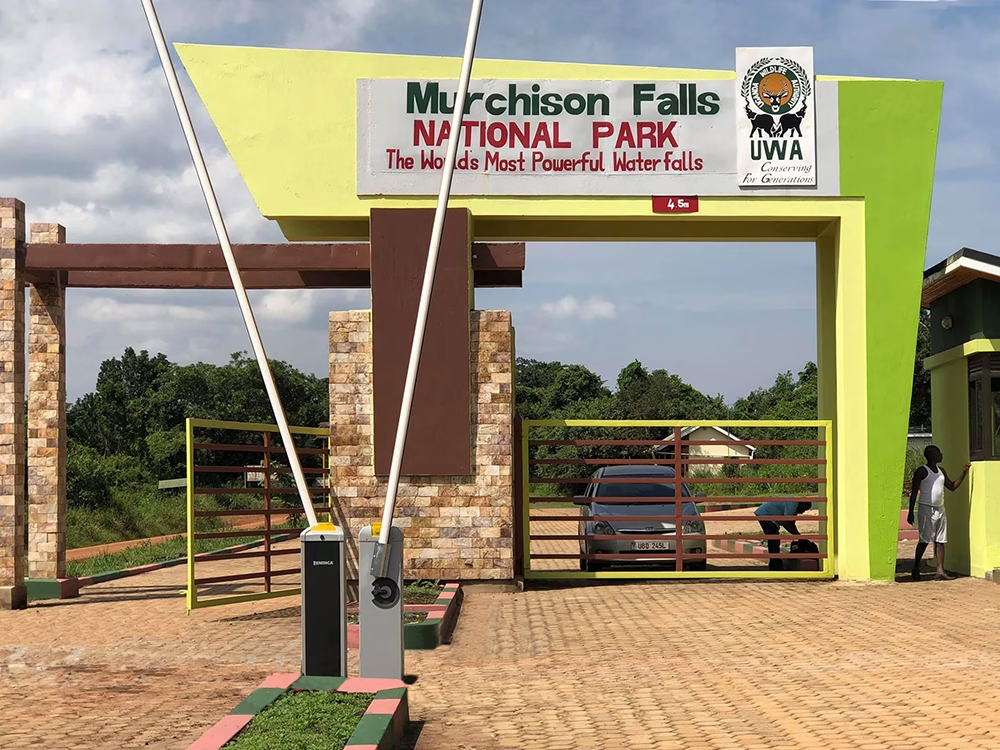
Travel Guide
Discover the main gates and airstrips of Murchison Falls National Park. Learn about entry points, air travel options, and the best routes for your safari adventure.
Understanding the Murchison Falls National Park gates and airstrips is important when planning a safari to Uganda’s largest national park. Murchison covers an extensive landscape around the Victoria Nile, and choosing an appropriate entrance or flight connection can significantly affect transfer times, lodge access and the overall flow of an itinerary.
Travelers arrive from different directions. Some approach by road from Kampala or Entebbe, others continue from destinations such as Ziwa Rhino Sanctuary or northern Uganda, while visitors with limited time may use scheduled or charter flights.
Because accommodation is spread across different parts of the wider conservation area, the most convenient access point depends on where a traveler is staying and which activities have been arranged.
Looking at Murchison Falls National Park on a map can make distances appear deceptively simple.
In reality, park roads, river crossings, wildlife, weather and lodge location can influence travel times.
Entering through an unsuitable gate may add unnecessary driving.
The same applies to flights. Choosing an airstrip without considering accommodation location can replace one long road transfer with another.
A safari operator should therefore coordinate the entire route rather than selecting each component independently.
Travelers coming from Kampala and central Uganda commonly approach Murchison Falls from the south.
This direction can work particularly well when the itinerary includes other attractions along the route.
Road conditions and exact journey times vary.
Travelers should avoid treating online driving estimates as guaranteed safari transfer times.
Stops, traffic and road conditions all matter.
The gate used should match the lodge and planned activities.
Kichumbanyobo is one of the recognized access points associated with the southern side of the Murchison Falls conservation landscape.
Its location can make it useful for travelers approaching through the Masindi direction.
Safari itineraries using this entrance may incorporate forested landscapes before reaching more open sections of the park.
Visitors should confirm current access conditions before travel because operational arrangements and road conditions can change.
Your driver-guide will normally manage park entry procedures.
Bugungu Gate provides another approach associated with the southern side of Murchison Falls National Park.
The suitability of this entrance depends on the route being used and the location of accommodation.
A knowledgeable operator can determine whether Bugungu provides a practical connection for a particular itinerary.
Travelers should resist choosing a gate simply because its name appears closest on a general map.
Actual road networks and travel conditions are more important than straight-line distance.
Travelers approaching Murchison Falls from northern Uganda may use different entry routes from those arriving from Kampala.
This can be relevant when combining Murchison with destinations farther north or northeast.
A north-to-south Uganda safari should be designed around efficient connections rather than repeatedly returning toward Kampala.
The extensive size of the park means northern access can save substantial time on certain itineraries.
Again, current arrangements should be confirmed during trip planning.
Tangi is an important access point on the northern side of the park.
Its position can make it convenient for particular road routes and accommodations.
Visitors approaching from the north or northwest may find it strategically useful.
The exact gate chosen should remain part of the overall transport plan.
Safari travelers rarely need to memorize every access point, but understanding the geography helps explain why two lodges advertised as being around Murchison Falls may require very different transfer routes.
Wankwar is another gate associated with access to Murchison Falls National Park.
Its usefulness depends on where travelers are coming from and the areas they intend to explore.
Remote gates may be particularly relevant to specialized itineraries.
Road conditions can vary seasonally.
Drivers familiar with the park are therefore valuable, particularly after significant rainfall.
Travelers should rely on current local information rather than old route descriptions when planning self-drive or specialized trips.
Mubako is also associated with access within the broader Murchison landscape.
As with other gates, its practical value depends on itinerary direction.
The important planning principle is that Murchison Falls National Park gates and airstrips should be selected together with accommodation and activities.
A gate is not simply an entrance.
It is part of the route connecting the traveler to game-drive areas, boat departure points, the falls and the next safari destination.
Visitors should carry the identification and travel documentation required for their safari arrangements.
Entry procedures are normally handled with assistance from a driver-guide on an organized tour.
Park fees and other arrangements may be included in a safari package depending on the operator.
Travelers should confirm inclusions before arrival.
Do not assume every activity is covered by a general park entrance fee.
Boat excursions, specialized experiences and accommodation are normally handled separately according to the booking.
Pakuba is one of the best-known air access points for Murchison Falls National Park.
Its location makes it useful for reaching accommodation and wildlife areas on the northern side of the Nile.
Flying can significantly reduce the time required to reach Murchison compared with a full road transfer from central Uganda.
However, travelers should include road transfer time between the airfield and lodge when comparing options.
A short flight does not necessarily mean immediate arrival at the room.
Bugungu Airstrip serves another part of the wider Murchison Falls destination.
It can be convenient for accommodations and activities on or near the southern side, depending on the exact itinerary.
Choosing between Pakuba and Bugungu should be based primarily on logistics.
Travelers should ask which airstrip is most appropriate for their booked lodge rather than selecting flights independently.
A safari company can coordinate air and road transfers to minimize unnecessary travel.
The wider Murchison Falls area also has air access associated with the Chobe sector.
This can be useful for travelers staying in that part of the destination or using specialized flight arrangements.
Not every airstrip receives the same scheduled services.
Some flights may depend on passenger numbers, routing or charter arrangements.
Schedules can change, so current flight information should always be confirmed when booking.
Scheduled domestic flights follow published operating patterns but may involve specific baggage limits and routing arrangements.
Charter flights provide greater flexibility but can be considerably more expensive.
The right choice depends on group size, budget and itinerary.
For a couple on a standard Uganda safari, scheduled flights may be the more practical air option where available.
A larger private group may find charter arrangements more attractive.
Always check luggage restrictions before packing.
Flying saves time and can provide aerial views of Uganda’s landscapes.
It is particularly valuable for travelers with limited holiday time.
Road travel has different advantages.
Driving allows visitors to see towns, countryside and changing vegetation between destinations.
It can also make it easier to incorporate attractions along the route.
Neither option is universally better.
A carefully designed safari may use both—for example, driving into Murchison and flying onward to another region.
Travelers approaching by road from Kampala frequently consider adding Ziwa Rhino Sanctuary to their broader route.
This can add a rhino-focused experience before continuing toward Murchison.
The exact sequence should be designed around departure time and planned activities.
Trying to combine too many activities on the transfer day can result in arriving at the lodge late and tired.
Allowing enough time makes the journey more enjoyable.
The Victoria Nile is fundamental to understanding Murchison Falls National Park.
It divides major sections of the landscape and influences where lodges, wildlife areas and activities are located.
Travelers should therefore pay attention to which side of the river their accommodation occupies.
Transport infrastructure and crossing arrangements have evolved, so current logistics should be confirmed rather than relying on outdated travel accounts.
This is another reason a recent, professionally organized route is valuable.
Murchison Falls itself is one of the park’s defining attractions.
The Nile is forced through a narrow rocky passage, creating an extraordinary display of power.
Access to viewpoints should be incorporated into the itinerary alongside game drives and boat activities.
Travelers arriving through one gate should not assume the falls are immediately nearby.
The park is large, and transfers between areas require realistic time.
Most classic game viewing takes place in productive savannah areas where travelers can search for giraffes, elephants, buffaloes, antelopes and predators.
Early morning and late afternoon drives are popular.
The chosen lodge and access point can influence how quickly guests reach game-drive areas.
This is why paying attention to the Murchison Falls National Park gates and airstrips before booking can improve the daily safari experience.
Boat excursions on the Nile provide a completely different perspective.
Visitors can observe hippos, crocodiles, waterbirds and mammals approaching the river.
Depending on the selected excursion, boats may travel toward the falls or explore other sections of the river.
Departure locations and times should be coordinated with road transfers.
A well-designed itinerary avoids unnecessary backtracking between lodge, game-drive area and boat launch point.
Start with your accommodation.
Next, identify the planned activities.
Then determine the gate or airstrip that creates the most practical connection.
Finally, consider where the safari goes after Murchison.
This sequence is more efficient than booking a lodge, flight and road transfer independently.
Travelers combining Murchison with Kibale, Queen Elizabeth or Bwindi should pay particular attention to onward travel because Uganda’s western circuit involves substantial distances.
The Murchison Falls National Park gates and airstrips are not merely logistical details. They determine how efficiently visitors enter, explore and leave this enormous protected landscape.
Road travelers may use entrances such as Kichumbanyobo, Bugungu, Tangi, Wankwar or other appropriate access points depending on their route. Air travelers can use airfields such as Pakuba or Bugungu according to accommodation location and flight arrangements.
Because access conditions and flight schedules can change, current information should always be confirmed when booking.
The best route is ultimately the one that connects your arrival point, lodge, wildlife activities and next destination with the least unnecessary travel. Good access planning leaves more time for what travelers actually come to Murchison Falls to experience: the Nile, the wildlife and one of Uganda’s most spectacular national parks.

26 African Countries Under Full or Partial U.S. Travel Ban (Post-December Update) Following the December update to U.S.…
Read article →
3 Days Congo Gorilla Safari – Encounter the Gentle Giants of Virunga A 3 Days Congo Gorilla Safari…
Read article →
Children and Kids on Safari – Family-Friendly Adventures in Africa Taking children on an African safari is one…
Read article →
How to Plan a Safari in Uganda—Your Complete Travel Guide Planning a safari in Uganda is the start…
Read article →