
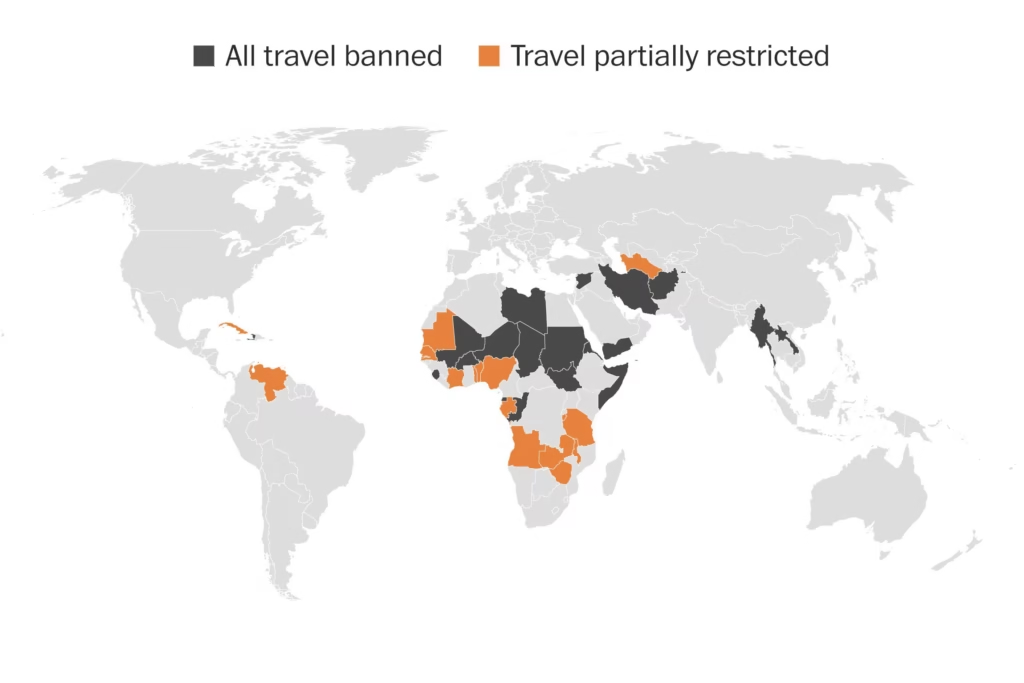
26 African Countries Under Full or Partial U.S. Travel Ban (Post-December Update)
26 African Countries Under Full or Partial U.S. Travel Ban (Post-December Update) Following the December update to U.S.…
Read article →
Travel Guide
Discover Kigali, Rwanda’s capital city, known for its cleanliness, safety, and vibrant culture. Explore top attractions and history.
Kigali City is Rwanda’s capital and the country’s principal urban gateway. The supplied source presents it as a destination where modern development, historical memory, markets, art, community life, business, and contemporary Rwandan culture come together.
For many international visitors, Kigali is the first and last stop on a wider Rwanda itinerary.
Its central position makes it useful for journeys toward the country’s national parks and other regions, but treating Kigali merely as a transit point means missing an important part of Rwanda itself.
The city provides context for the country’s history and transformation while also showing everyday urban life in contemporary Rwanda.
Kigali is the administrative and economic center of Rwanda.
The supplied source emphasizes its modern infrastructure, business activity, cultural attractions, and strategic location.
Visitors can spend time at historical sites, explore markets, experience neighborhoods, visit art spaces, and observe the modern architecture associated with the city’s continuing development.
These different elements make Kigali suitable for more than a short airport transfer.
Any meaningful introduction to Kigali City needs to acknowledge Rwanda’s recent history.
The supplied source discusses the country’s transformation since the 1994 genocide against the Tutsi.
Modern Kigali exists alongside places of remembrance that preserve evidence, testimony, and memory of this period.
Visitors should approach these sites respectfully and allow enough time to engage with difficult material rather than treating them as quick sightseeing stops.
The Kigali Genocide Memorial is one of the major landmarks identified in the supplied source.
It commemorates victims of the 1994 genocide against the Tutsi and provides exhibitions and personal testimony that help visitors understand what occurred.
The memorial also includes spaces for reflection.
For travelers with limited knowledge of Rwanda’s history, visiting can provide essential context for understanding the country beyond its tourism imagery.
A memorial is fundamentally different from an entertainment attraction.
Visitors should dress and behave appropriately, keep conversations respectful, and follow rules regarding photography.
The material can be emotionally difficult.
Allowing time afterward rather than immediately rushing to another activity can help visitors process what they have learned.
The experience is about remembrance and education rather than collecting photographs.
The supplied source highlights Kimironko Market as a place to experience everyday commercial life.
Markets can provide an energetic contrast to Kigali’s quieter memorial spaces.
Visitors may encounter fresh produce, fabrics, crafts, household products, and other goods.
The attraction lies not only in shopping but also in observing how a large urban market functions.
Colorful textiles and handmade products can make appealing souvenirs.
Travelers should take time to ask about items rather than buying immediately.
Learning where a product was made and who produced it can make the purchase more meaningful.
When dealing with vendors, bargaining should remain respectful.
A market is a workplace for local traders rather than a performance created for tourists.
Nyamirambo is another area emphasized by the source.
The neighborhood is known for its lively atmosphere and cultural diversity.
Guided walking experiences can introduce visitors to local streets, food, businesses, and community life.
Exploring with a knowledgeable guide can reveal details that would be easy to miss when simply driving through the area.
A neighborhood walk changes the scale at which travelers experience Kigali.
From a vehicle, the city can appear as a sequence of roads and buildings.
On foot, visitors notice shops, conversations, food, architecture, and daily routines.
The source describes walking tours as a way to learn about local communities and taste Rwandan cuisine.
Such experiences work best when residents and local guides shape the story being told.
Food provides another way to understand the city.
A guided experience in Nyamirambo or elsewhere can introduce visitors to local dishes and eating traditions.
Travelers should approach food with curiosity rather than expecting every meal to resemble familiar cuisine from home.
Trying local dishes can become one of the simplest and most memorable forms of cultural engagement.
The Kigali Convention Centre represents another side of the capital.
The supplied source describes it as a symbol of modern development and an important venue for conferences, exhibitions, and business events.
Its distinctive architecture has become part of Kigali’s contemporary visual identity.
For business travelers, the surrounding area demonstrates the city’s growing role as a regional meetings destination.
The source emphasizes investment and growth in areas such as technology, real estate, and tourism.
This economic dimension matters because Kigali is not simply a historical or leisure destination.
It is a working capital where businesses, institutions, residents, and visitors interact.
Travelers who spend several days in the city can observe this contemporary side alongside cultural attractions.
Art enthusiasts are directed by the supplied source toward Inema Arts Centre.
The center is associated with contemporary Rwandan creativity, including painting, sculpture, and performance.
Art spaces allow visitors to encounter Rwanda through the work of artists rather than exclusively through historical interpretation or wildlife tourism.
This can be particularly valuable for travelers interested in modern cultural expression.
Viewing contemporary art helps challenge the idea that Rwanda should be understood only through its past.
Artists respond to identity, everyday life, imagination, social change, and many other subjects.
Visitors can spend time looking carefully at individual works and, where opportunities exist, learning about the artists behind them.
Purchasing art can also support the creative sector directly.
The supplied source describes Kigali as widely recognized for its clean and green urban environment.
Visitors often notice maintained streets and organized public spaces.
The source connects this reputation partly with environmental policies and community participation.
Cleanliness has become one of the city’s most frequently discussed characteristics in tourism descriptions.
The source mentions Umuganda, a community activity associated with collective public work.
It describes this as taking place on the last Saturday of each month.
Visitors should understand Umuganda within its Rwandan social context rather than reducing it to a tourism curiosity.
If travel coincides with the activity, local advice can help visitors understand how schedules or services may be affected.
The supplied source describes Kigali as having a reputation for safety and hospitality.
Travelers should nevertheless use the normal precautions appropriate to any city.
Personal belongings should be managed carefully, transportation should be arranged sensibly, and current local guidance should be followed.
A reputation for safety does not remove the need for ordinary travel awareness.
One of Kigali’s major advantages is its role as a gateway to wider Rwanda.
Travelers can use the capital before continuing toward national parks, lakes, cultural attractions, and other parts of the country.
This makes it practical to include at least one city day at the beginning or end of a safari.
Doing so also creates a more rounded itinerary.
Visitors heading toward gorilla trekking can use Kigali to recover after an international flight, learn about Rwanda, and organize final preparations.
A city night before traveling onward reduces the pressure of combining a flight arrival with a long road transfer.
Travelers can also use the time to check equipment and confirm safari arrangements.
Kigali can work equally well at the end of a journey.
After days of trekking or road travel, the city provides restaurants, shops, galleries, and comfortable accommodation.
Visitors may also use the final day to purchase crafts or visit attractions missed at the beginning.
This creates a more relaxed conclusion than traveling directly from a distant park to an international departure.
A very short city tour can cover major landmarks but may not reveal much about Kigali’s character.
Travelers interested in history, markets, art, food, and neighborhoods benefit from additional time.
One day can provide an introduction, while a longer stay allows a slower pace.
The ideal duration depends on how important the city experience is within the wider Rwanda itinerary.
A thoughtful Kigali itinerary should balance remembrance with the living city.
The Genocide Memorial provides essential historical context, but visitors should also experience markets, neighborhoods, art, food, and contemporary development.
This combination avoids reducing Rwanda solely to tragedy or presenting the country only through modern tourism imagery.
Both past and present are necessary for a more complete understanding.
Kigali City is much more than the arrival point for a Rwanda safari. The supplied source presents a capital shaped by history while continuing to develop as a cultural, commercial, and regional business center.
The Kigali Genocide Memorial provides an essential space for remembrance and historical understanding. Kimironko Market introduces everyday commerce, Nyamirambo offers neighborhood and food experiences, the Kigali Convention Centre reflects modern development, and Inema Arts Centre highlights contemporary creativity.
Together, these places reveal several dimensions of the capital.
Travelers who give Kigali sufficient time can begin their Rwanda journey with greater context or end it with a deeper understanding of the country. Rather than simply passing through on the way to national parks, visitors can experience Kigali as a destination in its own right—one where history, community life, art, commerce, and modern urban development exist side by side.

26 African Countries Under Full or Partial U.S. Travel Ban (Post-December Update) Following the December update to U.S.…
Read article →
3 Days Congo Gorilla Safari – Encounter the Gentle Giants of Virunga A 3 Days Congo Gorilla Safari…
Read article →
Children and Kids on Safari – Family-Friendly Adventures in Africa Taking children on an African safari is one…
Read article →
How to Plan a Safari in Uganda—Your Complete Travel Guide Planning a safari in Uganda is the start…
Read article →