

26 African Countries Under Full or Partial U.S. Travel Ban (Post-December Update)
26 African Countries Under Full or Partial U.S. Travel Ban (Post-December Update) Following the December update to U.S.…
Read article →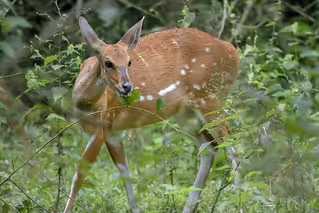
Travel Guide
Katonga Wildlife Reserve is home to a variety of wildlife, which includes the different species of flora and fauna.
Katonga Wildlife Reserve offers travelers an opportunity to explore one of Uganda’s quieter wildlife landscapes. The supplied source describes the reserve as covering about 210 square kilometers in western Uganda near the Katonga River, with wetlands, savannah, woodland, and riverine environments supporting a variety of plants and animals.
Unlike Uganda’s better-known national parks, Katonga is not presented as a destination centered on large predators or dense concentrations of game.
Its appeal lies instead in walking, wetland scenery, antelopes, birdwatching, canoe exploration, and a slower approach to wildlife observation.
For travelers interested in less crowded environments, this difference can be a strength.
The supplied source places Katonga Wildlife Reserve around the Katonga River in western Uganda.
The river and surrounding wetlands influence much of the reserve’s character.
Open areas, woodland, and wet environments provide different ecological niches within a relatively compact protected landscape.
Visitors should therefore think of Katonga as a varied ecosystem rather than simply another savannah game park.
Katonga differs from destinations famous for lions, elephants, or very large concentrations of wildlife.
The supplied source specifically notes that the reserve does not have the same density of large predators.
Travelers expecting a conventional Big Five-style game drive would therefore misunderstand the destination.
Katonga rewards a slower and more observant approach.
The source emphasizes antelopes among the reserve’s wildlife.
Different habitats support species adapted to grassland and wetter environments.
Watching antelopes on foot can feel very different from observing them from a safari vehicle.
Visitors become more aware of distance, wind, sound, and animal behavior.
Reedbucks are among the animals specifically highlighted by the source.
Their association with grassy and wetland environments fits the reserve’s landscape.
A knowledgeable guide can help visitors identify animals that might otherwise appear similar from a distance.
Waterbucks are also mentioned.
As their name suggests, they are commonly associated with areas where water is readily available.
The Katonga River and wetland systems therefore provide suitable habitat.
Visitors should carry binoculars because animals may remain at a comfortable distance from walking groups.
The supplied source includes zebras among animals occurring in the reserve.
Seeing zebras within Katonga’s quieter environment can be rewarding because wildlife viewing is not necessarily surrounded by many safari vehicles.
Sightings remain natural and should never be guaranteed.
Impalas are also listed in the source.
Their presence adds to the diversity of herbivores visitors may encounter.
Guided exploration can help travelers learn how different antelope species use the landscape rather than simply recording each animal on a checklist.
The source mentions hippos, particularly in relation to water environments.
Visitors must always treat hippos with caution.
Despite their familiar appearance, they are powerful wild animals.
Observation should occur only according to guide instructions and from appropriate distances.
Otters are another water-associated animal included in the supplied material.
Such sightings may require considerable patience.
The possibility of observing smaller and less frequently emphasized species contributes to Katonga’s appeal for travelers who enjoy detailed wildlife watching.
One of the principal activities in the source is guided nature walking.
This suits Katonga particularly well because the reserve’s attraction lies in moving gradually between wetlands, woodland, and open areas.
Walking brings visitors closer to smaller environmental details that are often missed from a vehicle.
A guide can interpret tracks, plants, animal behavior, bird calls, and the relationships between different habitats.
The supplied source emphasizes guides providing information about flora, fauna, conservation, and the wider ecosystem.
This interpretation can make a relatively quiet wildlife day surprisingly rich.
Walking changes the way visitors experience wildlife.
An antelope seen from a vehicle may appear routine, while encountering the same animal during a guided walk can feel far more immediate.
Travelers become aware of their own movement and the animal’s response.
This encourages careful, respectful observation.
The supplied source presents Katonga as a destination for bird lovers.
Its varied habitats attract both water-associated and woodland birds.
Visitors interested in birding should bring binoculars and, where possible, travel with a guide familiar with local calls and habitats.
The source mentions grey crowned cranes among birds that may be observed.
These striking birds are closely associated with Uganda’s national identity.
Seeing them within natural wetland or grassland habitat provides a very different experience from recognizing their image in national symbolism.
Herons are another group highlighted in the source.
Wetlands and riverbanks provide feeding environments for waterbirds.
Visitors should watch shallow-water areas carefully, especially during quieter periods when bird activity may be easier to observe.
The supplied material also mentions kingfishers.
These birds can be associated with waterways and may be observed perched above the water or moving quickly between positions.
Their speed can make photography challenging, but patient observation can be rewarding.
A particularly distinctive activity described by the source is the canoe safari.
Exploring sections of the reserve from the water provides a different perspective on riverbank vegetation, birds, and aquatic wildlife.
The pace can be quiet and immersive.
A canoe allows visitors to observe the landscape close to water level.
Birds may be particularly interesting along the banks.
Any canoe excursion should be undertaken with experienced local guides and according to current safety conditions, especially where large aquatic wildlife may occur.
The source states that fishing may occasionally be permitted in certain areas.
Because access rules can change, visitors interested in fishing should verify current regulations before planning the activity.
Fishing should occur only where officially permitted and under the conditions established by reserve management.
For visitors who enjoy fishing, the attraction may be as much about spending quiet time beside the Katonga River as catching fish.
The landscape, bird calls, and wetland environment contribute to the experience.
This slower approach fits the reserve’s overall character.
Although the source says Katonga lacks the large-predator emphasis of other destinations, wildlife viewing remains important.
Waterbucks, reedbucks, zebras, and other herbivores can be encountered across the landscape.
Travelers should arrive with realistic expectations.
The reserve is about diversity and tranquility rather than spectacular concentrations of famous animals.
The supplied source repeatedly refers to flora and fauna, emphasizing the relationship between vegetation and wildlife.
Wetlands support different species from woodland or open savannah.
A guided walk can therefore focus on habitat transitions as much as individual animal sightings.
Protected areas do not need to contain large numbers of lions or elephants to be valuable.
Wetlands, river systems, plants, birds, antelopes, and smaller animals all form important ecological communities.
Katonga’s conservation value lies partly in protecting this mixture of habitats.
The source highlights the drier seasons as particularly convenient for visiting.
It specifically refers to December through February and June through July.
These periods are presented as providing easier access and clearer wildlife viewing conditions.
Seasonal patterns should nevertheless be treated as general guidance.
Drier ground can make walking and road access more manageable.
Vegetation conditions may also influence visibility.
Travelers should still carry suitable outdoor clothing because weather can vary.
Current conditions should be checked before departure.
The supplied source concentrates on the advantages of dry-season travel and does not provide detailed wet-season guidance.
Travelers considering wetter months should therefore seek current local information.
Wetlands can become particularly scenic, but access conditions may differ.
The source describes Katonga as accessible by road and gives an estimate of approximately 270 kilometers from Kampala, requiring around five to six hours of driving.
These are source-provided estimates.
Actual journey time depends on the starting point, traffic, stops, and road conditions.
The supplied material refers to travel through western Uganda and the Kampala–Fort Portal direction.
A road journey allows visitors to see changing landscapes outside the capital.
The transfer should be planned with enough time rather than treating the reserve as an effortless short excursion from Kampala.
Katonga is particularly suitable for travelers who enjoy walking, birds, wetlands, smaller-scale wildlife encounters, and quieter protected areas.
It may appeal less to someone whose only objective is photographing large predators.
Understanding this difference before arrival helps visitors appreciate what the reserve actually offers.
Because of its western Uganda location, Katonga can potentially be incorporated into a broader overland itinerary.
The exact routing should depend on the traveler’s other destinations and available time.
It is better to include the reserve where it fits naturally than to create unnecessary driving simply to add another location.
Katonga Wildlife Reserve offers a quieter interpretation of Uganda’s wildlife experience. The supplied source emphasizes wetlands, savannah, woodland, the Katonga River, antelopes, zebras, hippos, otters, birds, guided walking, canoe excursions, and occasional fishing opportunities.
Its character differs from Uganda’s large national parks.
Visitors come here not for dense predator sightings but for slower observation and closer engagement with the landscape.
For birdwatchers, walkers, nature enthusiasts, and travelers interested in less heavily visited protected areas, Katonga provides an opportunity to appreciate the ecological value of wetlands and riverine habitats while discovering another dimension of Uganda’s varied wildlife landscape.

26 African Countries Under Full or Partial U.S. Travel Ban (Post-December Update) Following the December update to U.S.…
Read article →
3 Days Congo Gorilla Safari – Encounter the Gentle Giants of Virunga A 3 Days Congo Gorilla Safari…
Read article →
Children and Kids on Safari – Family-Friendly Adventures in Africa Taking children on an African safari is one…
Read article →
How to Plan a Safari in Uganda—Your Complete Travel Guide Planning a safari in Uganda is the start…
Read article →