
Kahuzi-Biega Park
Kahuzi-Biega National Park: A Deep Dive into Congo’s Hidden Gorilla Stronghold
Kahuzi-Biega National Park sits in the eastern part of the Democratic Republic of Congo and protects one of Africa’s most important rainforest ecosystems. The park stretches across vast lowland jungle and rugged highland terrain, creating a rare combination of habitats that support exceptional biodiversity. Travelers who reach this destination often describe it as raw, remote, and deeply immersive, with a wilderness character that feels untouched by modern tourism development.
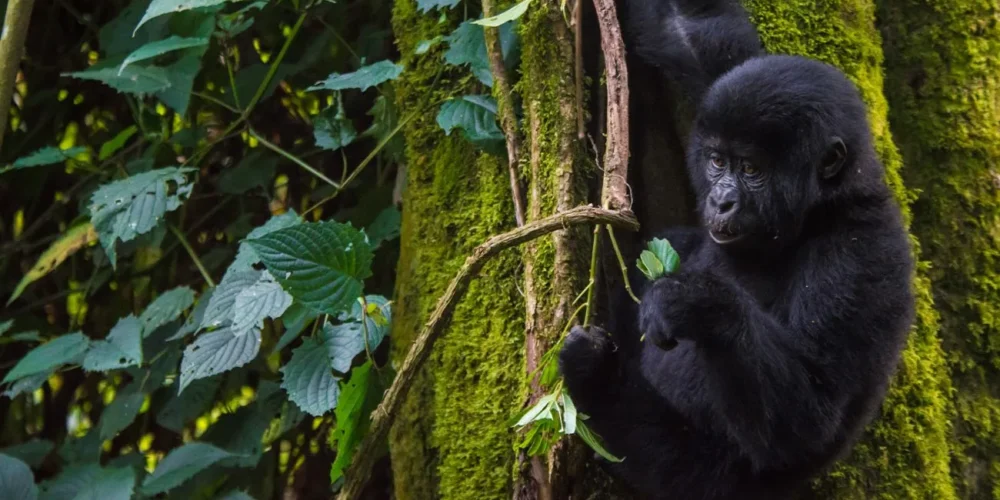
The park plays a critical role in protecting the endangered eastern lowland gorilla, also known as Grauer’s gorilla. These primates live in larger body frames than their mountain cousins and move through dense forest floors where visibility often shifts within seconds. Kahuzi-Biega offers one of the few remaining safe havens for this subspecies, making it a significant conservation landmark in Central Africa.
Location and Landscape
Kahuzi-Biega National Park spreads across South Kivu Province near the shores of Lake Kivu, close to the border with Rwanda. The park covers both lowland rainforest and high-altitude volcanic ranges, which creates a striking ecological contrast within a single protected area. The lowland section dominates most of the park and supports thick vegetation, swampy areas, and winding forest rivers. The highland section rises sharply with ancient volcanic peaks that shape cooler climates and different plant life.
This variation in altitude creates a strong biodiversity gradient. As visitors move deeper into the forest, they encounter shifting plant species, changing bird calls, and a noticeable transformation in air humidity and temperature. The terrain challenges even experienced trekkers, but it rewards them with unmatched natural scenery that few places in Africa still preserve at this scale.
Wildlife and Biodiversity
Kahuzi-Biega National Park protects one of the richest ecosystems in Central Africa. The park shelters more than just gorillas. Forest elephants move quietly through remote corridors, while chimpanzees occupy upper canopy zones where they communicate through loud calls that echo across valleys. Antelopes such as the blue duiker and forest sitatunga navigate the undergrowth, relying on dense vegetation for protection.
Birdlife adds another layer of diversity. The park hosts several Albertine Rift endemics, including species that rarely appear outside this region. Birdwatchers often focus on hornbills, turacos, and sunbirds that thrive in both lowland and montane environments. Reptiles and amphibians also occupy the humid forest floor, contributing to a balanced and complex ecosystem.
The eastern lowland gorilla remains the park’s most iconic resident. These gorillas live in social groups that vary in size and structure. Dominant silverbacks lead family units and guide movements across large feeding territories. Unlike mountain gorillas that stay in higher elevations, eastern lowland gorillas prefer dense lowland forests where food sources remain abundant throughout the year.
Gorilla Trekking Experience in Kahuzi-Biega
Gorilla trekking in Kahuzi-Biega National Park offers one of the most authentic wildlife encounters in Africa. The experience begins early in the morning when visitors gather at park headquarters for briefing sessions. Rangers explain forest rules, safety procedures, and gorilla behavior patterns before groups move into the jungle.
Treks often last several hours depending on gorilla movements. The forest does not follow predictable paths, so trackers rely on fresh feeding signs, broken vegetation, and vocal cues to locate families. Once visitors find a gorilla group, they spend a strictly limited time observing them in their natural environment.
The encounter feels intense and personal. Eastern lowland gorillas display powerful physical presence, yet they often behave calmly when undisturbed. You may observe juveniles playing, mothers nursing infants, or silverbacks monitoring their group with quiet authority. The dense vegetation sometimes creates partial visibility, which adds to the feeling of being fully immersed in the forest ecosystem rather than observing it from a distance.
Kahuzi-Biega differs from other gorilla trekking destinations because it receives fewer tourists. This lower traffic level creates a quieter and more exclusive experience. The absence of heavy tourism infrastructure also preserves the park’s wild character, making every trek feel unpredictable and raw.
Best Time to Visit Kahuzi-Biega National Park
Kahuzi-Biega welcomes visitors throughout the year, but seasonal changes influence trekking conditions. The dry seasons offer the most stable hiking conditions, with less rainfall and firmer forest trails. These periods usually occur from June to September and December to February. During these months, trekkers move more easily through the forest, and visibility improves slightly due to reduced vegetation density.
The rainy seasons transform the park into a more challenging environment. Heavy rains increase humidity and create slippery paths that demand stronger physical effort. However, the forest becomes more vibrant during this period, and wildlife often disperses across wider feeding ranges. Travelers who prefer solitude and deep immersion often choose these months despite the tougher conditions.
Temperature remains relatively stable throughout the year due to the park’s equatorial location. The main variation comes from rainfall intensity rather than temperature shifts.
Conservation and Ongoing Challenges
Kahuzi-Biega National Park plays a crucial role in protecting one of the world’s most endangered gorilla species, but it also faces significant conservation pressures. Human activity around the park edges affects wildlife movement and habitat integrity. Local communities depend on forest resources for survival, which creates complex relationships between conservation goals and daily human needs.
Illegal mining, deforestation, and armed group activity in certain regions of eastern Congo have also impacted conservation efforts. Park authorities work with international organizations and local communities to strengthen protection systems and promote sustainable practices that reduce pressure on natural resources.
Despite these challenges, conservation teams continue to record progress in gorilla population monitoring and habitat protection. Ranger patrols operate in difficult conditions, often covering large areas on foot to maintain security and track wildlife activity. Conservation programs also focus on community engagement, education, and alternative livelihood support to reduce dependency on forest exploitation.
The survival of eastern lowland gorillas depends heavily on continued protection of Kahuzi-Biega. Each successful conservation effort contributes directly to the stability of this rare subspecies and the broader health of the Congo Basin rainforest.
Access and Travel Logistics
Traveling to Kahuzi-Biega National Park requires careful planning due to its remote location. Most visitors access the park through Bukavu, a city located on the southern shores of Lake Kivu. Bukavu connects to regional transport networks and serves as the main gateway for gorilla trekking operations in the park.
International travelers often arrive through Rwanda and then cross into the Democratic Republic of Congo via border points near Goma or Bukavu. This route offers relatively smoother logistics compared to direct entry from other parts of Congo. Once in Bukavu, visitors travel by road to park headquarters where trekking arrangements begin.
Road conditions vary depending on weather and seasonal maintenance. Some sections require four-wheel-drive vehicles, especially during rainy months when mud and water affect rural routes. Local guides and tour operators play an essential role in coordinating transport, permits, and security arrangements for visitors.
Accommodation options exist in Bukavu and surrounding areas, with lodges and guesthouses offering midrange and luxury comfort levels. Many travelers prefer staying near Lake Kivu to enjoy scenic views before or after trekking experiences.
Cultural Encounters and Local Communities
Communities living around Kahuzi-Biega maintain deep cultural connections with the forest. Many families depend on agriculture, fishing, and small-scale trade for their livelihoods. Cultural traditions reflect a long history of coexistence with the natural environment, where forests provide both resources and spiritual meaning.
Visitors who spend time in the region often engage with local guides who share insights into traditional practices, forest knowledge, and daily life. These interactions help build stronger relationships between conservation efforts and community development. Tourism revenue also supports local initiatives that improve education, healthcare, and infrastructure in surrounding villages.
Cultural experiences around Kahuzi-Biega add depth to the safari journey. They connect wildlife exploration with human stories that shape the broader identity of eastern Congo.