
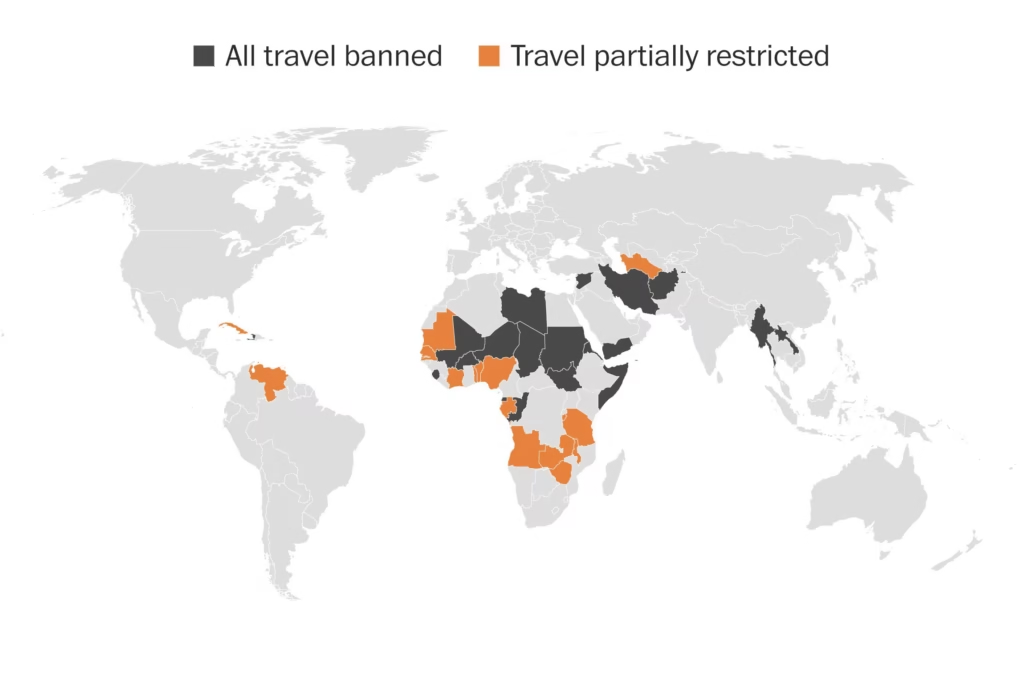
26 African Countries Under Full or Partial U.S. Travel Ban (Post-December Update)
26 African Countries Under Full or Partial U.S. Travel Ban (Post-December Update) Following the December update to U.S.…
Read article →
Travel Guide
Itanda Falls in Uganda, a top spot for whitewater rafting, birdwatching, and scenic beauty. Plan your adventure to this hidden gem today!
Itanda Falls: Uganda’s Hidden White-Water Rafting Paradise introduces travelers to a powerful section of the Nile near Jinja, where moving water, rocky channels and surrounding vegetation create one of eastern Uganda’s memorable adventure landscapes. The area appeals particularly to travelers interested in rafting and outdoor experiences, but visitors do not need to enter the rapids to appreciate the setting.
Watching the river itself can be impressive.
The speed and volume of water demonstrate why professional guidance and strict safety procedures are essential for any white-water activity.
Itanda can fit naturally into a broader Jinja itinerary involving the Nile, cultural experiences and other adventure activities.
Jinja is closely associated with the Nile and has developed into one of Uganda’s principal adventure-tourism centers.
The river landscape provides opportunities for rafting and other water-based activities.
Itanda Falls represents the more powerful character of the river.
Visitors accustomed to calm lakes or gentle boat cruises immediately notice the difference.
The water demands respect.
The term “falls” may lead some travelers to imagine a single vertical waterfall.
The landscape is better appreciated as a powerful section of turbulent river characterized by rapids and rocky features.
Viewing the water from safe locations allows visitors to appreciate its force.
Travelers should never climb onto wet rocks or approach dangerous currents without authorization.
Rafting is one of the activities most strongly associated with Itanda Falls: Uganda’s Hidden White-Water Rafting Paradise and the wider Jinja adventure region.
Professional operators organize experiences according to river conditions and appropriate safety procedures.
Participants receive instructions before entering the water.
Listening carefully is essential.
A rafting guide’s commands are part of the safety system rather than optional suggestions.
Travelers should use established operators with trained guides and suitable equipment.
Ask about helmets, personal flotation devices and emergency procedures.
Equipment should fit properly.
The operator should explain the physical demands and suitability of the activity before departure.
A company willing to ignore safety concerns simply to make a sale should not be considered a good option.
Rafting suitability depends on age, health, swimming confidence and the exact trip offered.
Travelers should disclose relevant medical conditions.
People uncomfortable with intense water activity should not feel pressured to participate.
Jinja offers other ways to experience the Nile.
Watching the rapids or choosing a gentler activity can be equally enjoyable.
White water can be dangerous.
Participants should never remove safety equipment because it feels uncomfortable.
If a raft overturns or a participant enters the water, the instructions provided during the safety briefing become important.
Remaining calm and following the guide’s directions improves the response to unexpected situations.
Visitors who do not raft can still appreciate Itanda.
The surrounding environment provides opportunities to observe the Nile’s power from appropriate viewpoints.
Photography can capture the contrast between turbulent white water and green vegetation.
Visitors should remain behind safe boundaries and follow local guidance.
A dramatic photograph is never worth standing in a hazardous location.
Fast shutter speeds can freeze splashing water and rafting action.
Slower shutter speeds can create a smoother sense of movement when the photographer has a stable position.
Protect cameras from spray and rain.
Those photographing rafters should avoid distracting participants or guides during technically demanding sections.
Safety must take priority over posing.
The broader river environment can support birdlife.
Binoculars allow visitors to observe birds without approaching sensitive areas.
Travelers focused on adventure often overlook the ecological side of Jinja.
Taking time to watch birds and vegetation can provide a quieter counterpoint to rafting.
A local guide can identify species and explain habitat.
River systems support complex ecological communities.
Vegetation along the banks provides habitat and contributes to landscape stability.
Insects, birds, reptiles and other animals depend on aquatic and riverside environments.
Adventure tourism should therefore be managed so that recreation does not unnecessarily damage the river ecosystem.
Itanda can be incorporated into a wider stay in Jinja.
Rather than driving from Kampala solely for one short stop, travelers may spend one or two nights exploring the region.
This creates time for rafting, sightseeing and relaxation.
Jinja also provides restaurants and accommodation suitable for different budgets.
Many visitors to Jinja are interested in the Nile’s connection with Lake Victoria.
A wider itinerary may therefore include a Source of the Nile experience alongside Itanda.
The two attractions reveal different characteristics of the river.
One focuses on geographical and historical interest, while Itanda emphasizes power, rapids and adventure.
Jinja’s tourism industry offers more than rafting.
Available activities can change, so travelers should ask operators for current options.
The important point is not to overload the itinerary.
A demanding rafting trip may already provide enough physical activity for one day.
Allowing time to recover makes the experience more enjoyable.
Travelers can also explore communities and cultural experiences around the wider Jinja region.
Local guides can explain how the Nile relates to everyday life and regional history.
Cultural activities should be approached respectfully.
Ask before photographing people and support legitimate community enterprises where possible.
Rafting operators normally provide guidance about suitable clothing and equipment.
Quick-drying clothing is practical.
Travelers should bring dry clothes for afterward.
Secure footwear appropriate to the activity may be recommended.
Sun protection can also be useful.
Valuables that cannot get wet should be left securely rather than taken onto the river.
Phones and cameras should only be carried during water activities if the operator confirms a safe method.
Waterproof cases reduce risk but do not eliminate it.
Professional photography services may sometimes be a better solution for action images.
Travelers should not compromise their grip or attention because they are trying to record the activity themselves.
River and weather conditions can influence adventure activities.
Operators may adjust routes or schedules for safety reasons.
Travelers should accept these decisions.
Demanding that a guide proceed in unsuitable conditions places everyone at risk.
Flexibility is part of responsible adventure travel.
Do not leave plastic or other waste near the river.
Use established access routes.
Avoid damaging vegetation to create viewpoints.
Support operators that demonstrate environmental responsibility.
Adventure tourism depends on the continued quality of the natural environment, so protecting the Nile is in the long-term interest of both communities and visitors.
Itanda provides a strong contrast with Uganda’s wildlife experiences.
A traveler might trek gorillas in Bwindi, take game drives in Queen Elizabeth or Murchison Falls and then finish with adventure around Jinja.
This creates an itinerary combining forest, savannah and river environments.
Enough time should be allowed between distant destinations.
Itanda Falls: Uganda’s Hidden White-Water Rafting Paradise reveals the Nile at its most energetic.
For adventure travelers, professional rafting can provide an exciting encounter with powerful rapids. For non-rafters, the river itself offers dramatic scenery, photography and an opportunity to appreciate the natural force of moving water.
The destination works particularly well as part of a longer Jinja stay.
Whether visitors enter the water or remain on land, Itanda demonstrates why the Nile is more than a geographical feature. It is a dynamic landscape that supports ecosystems, communities and one of Uganda’s most established adventure-tourism regions.

26 African Countries Under Full or Partial U.S. Travel Ban (Post-December Update) Following the December update to U.S.…
Read article →
3 Days Congo Gorilla Safari – Encounter the Gentle Giants of Virunga A 3 Days Congo Gorilla Safari…
Read article →
Children and Kids on Safari – Family-Friendly Adventures in Africa Taking children on an African safari is one…
Read article →
How to Plan a Safari in Uganda—Your Complete Travel Guide Planning a safari in Uganda is the start…
Read article →