
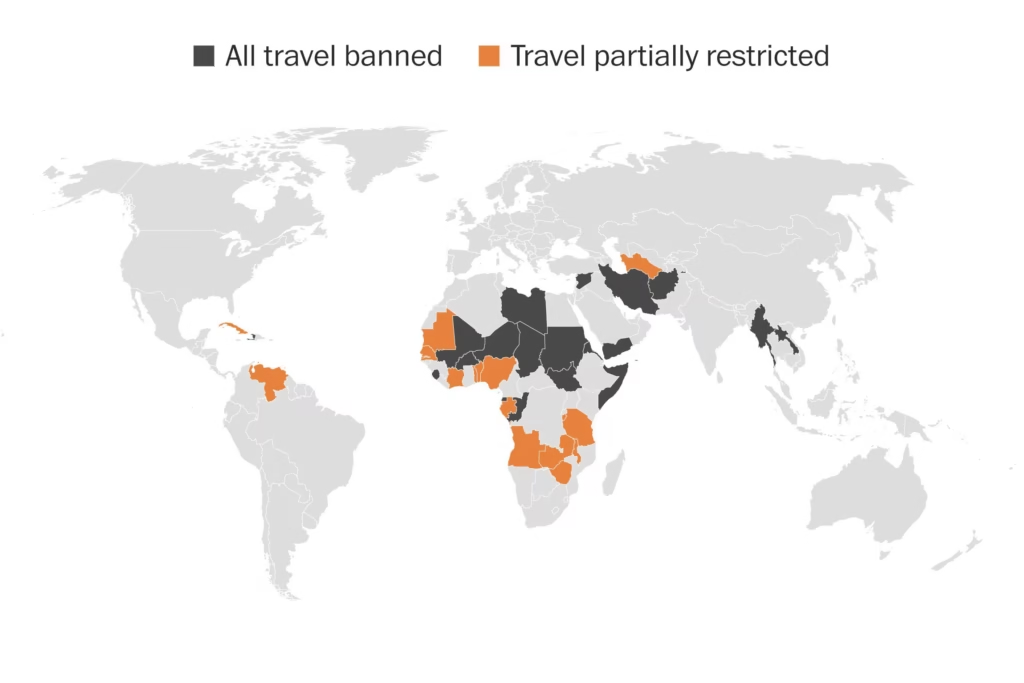
26 African Countries Under Full or Partial U.S. Travel Ban (Post-December Update)
26 African Countries Under Full or Partial U.S. Travel Ban (Post-December Update) Following the December update to U.S.…
Read article →
Travel Guide
Discover 5 fascinating facts about the incredible warthog, from its tusks and speed to its clever burrow tactics and grazing habits. Learn what makes warthogs unique!
The Incredible Warthog can easily be overlooked when travelers focus on Africa’s largest predators and most famous mammals. Yet the source highlights five characteristics that make warthogs worth observing closely: their tusks, speed, burrow tactics, grazing habits, and the combination of adaptations that makes them unique.
Warthogs can provide some of the most entertaining and educational observations on safari because their behavior is often visible in relatively open environments.
Instead of treating them as animals to notice only while searching for something “bigger,” visitors can spend time watching how they feed, move, react to danger, and use their surroundings.
Tusks are among the most obvious features of the Incredible Warthog.
They contribute strongly to the animal’s recognizable appearance.
Travelers seeing a warthog for the first time may concentrate immediately on the face, where the tusks and other distinctive features create an unmistakable profile.
Photography can emphasize these details, but visitors should remain at a responsible distance.
A long lens is preferable to attempting to move close simply for a portrait.
The second characteristic identified in the source is speed.
A warthog may appear relaxed while feeding, but its ability to move quickly becomes obvious when the animal is disturbed or needs to respond to danger.
For safari travelers, this is a reminder that wildlife should never be approached casually.
An animal that seems calm can change behavior rapidly.
The best sightings occur when visitors remain quiet and allow the warthog to continue behaving naturally.
The third fascinating feature is the use of burrows.
The source refers specifically to clever burrow tactics.
This introduces travelers to the importance of shelter and landscape features in an animal’s daily life.
Rather than observing only the animal, visitors can begin looking at the environment around it.
Wildlife behavior often makes more sense when habitat is included in the observation.
A knowledgeable guide can explain what visitors are seeing without requiring them to leave appropriate viewing positions.
The fourth characteristic concerns grazing habits.
Warthogs are often encountered with their attention directed toward feeding.
Watching an animal graze may initially seem less exciting than seeing a predator, but feeding behavior is fundamental to wildlife ecology.
Travelers who spend time observing can notice how animals move through a landscape and how much of their daily routine revolves around obtaining food.
The fifth fact is really the combination of these qualities.
Tusks, speed, burrow use, and grazing behavior together help explain what makes the warthog distinctive.
An animal does not need to be rare or difficult to see to be fascinating.
Sometimes common safari species provide the best opportunities for prolonged observation because visitors can watch them without the pressure that often surrounds a famous predator sighting.
The Incredible Warthog can be especially rewarding for families.
Children may recognize the animal immediately and can then learn about its actual behavior rather than relying only on fictional representations.
Guides can help explain why the animal feeds in particular ways, how it reacts to danger, and how it uses its environment.
Photography is often enjoyable because warthogs can display expressive-looking behavior.
Visitors should nevertheless avoid assigning human emotions too confidently to wildlife.
An image may appear humorous, but the animal is responding to its environment rather than performing for tourists.
Wide photographs can show the warthog within the landscape.
Close portraits can highlight tusks and facial features when the animal is naturally within suitable viewing range.
Travelers should not ask drivers to chase a moving warthog simply because they missed a photograph.
If the animal chooses to leave, the sighting should end.
Responsible wildlife viewing means accepting that decision.
Warthogs can also encourage visitors to pay attention during quieter periods of a game drive.
Safari enjoyment should not depend entirely on seeing lions, leopards, or elephants.
Smaller or more familiar animals can reveal equally interesting behavior when given time.
One of the most useful lessons from the Incredible Warthog is that a successful safari does not require every sighting to be rare.
Travelers sometimes arrive with checklists dominated by a handful of famous species.
This can lead them to ignore animals they encounter repeatedly.
A better approach is to ask what each species is doing.
A warthog grazing, moving toward shelter, interacting with another animal, or responding to its environment can provide a memorable observation.
This mindset also reduces pressure on guides.
Instead of racing continuously in search of the next major predator, travelers can appreciate the wildlife already around them.
Slower observation often reveals details that are missed during hurried game drives.
The source’s five themes—tusks, speed, burrow tactics, grazing habits, and uniqueness—provide a simple framework for doing exactly that.
Each theme encourages visitors to look beyond appearance.
The warthog’s body, movement, shelter behavior, and feeding all relate to the way it survives.
Wildlife should always be observed responsibly.
Visitors should remain inside designated viewing arrangements, follow guide instructions, avoid feeding animals, and keep noise under control.
Waste should never be thrown into the environment.
The Incredible Warthog may not always receive the same attention as Africa’s largest predators, but it can become one of the most enjoyable animals to watch.
Its distinctive tusks immediately attract attention, while its speed, use of burrows, and grazing behavior reveal a highly adapted wild animal.
Travelers who take time to observe these characteristics can transform an apparently ordinary sighting into a meaningful safari moment.
The next time a warthog appears beside a safari route, it is worth resisting the urge to look past it in search of something else.
Watch carefully.
The behavior happening in front of you may provide one of the most memorable lessons of the day.

26 African Countries Under Full or Partial U.S. Travel Ban (Post-December Update) Following the December update to U.S.…
Read article →
3 Days Congo Gorilla Safari – Encounter the Gentle Giants of Virunga A 3 Days Congo Gorilla Safari…
Read article →
Children and Kids on Safari – Family-Friendly Adventures in Africa Taking children on an African safari is one…
Read article →
How to Plan a Safari in Uganda—Your Complete Travel Guide Planning a safari in Uganda is the start…
Read article →