
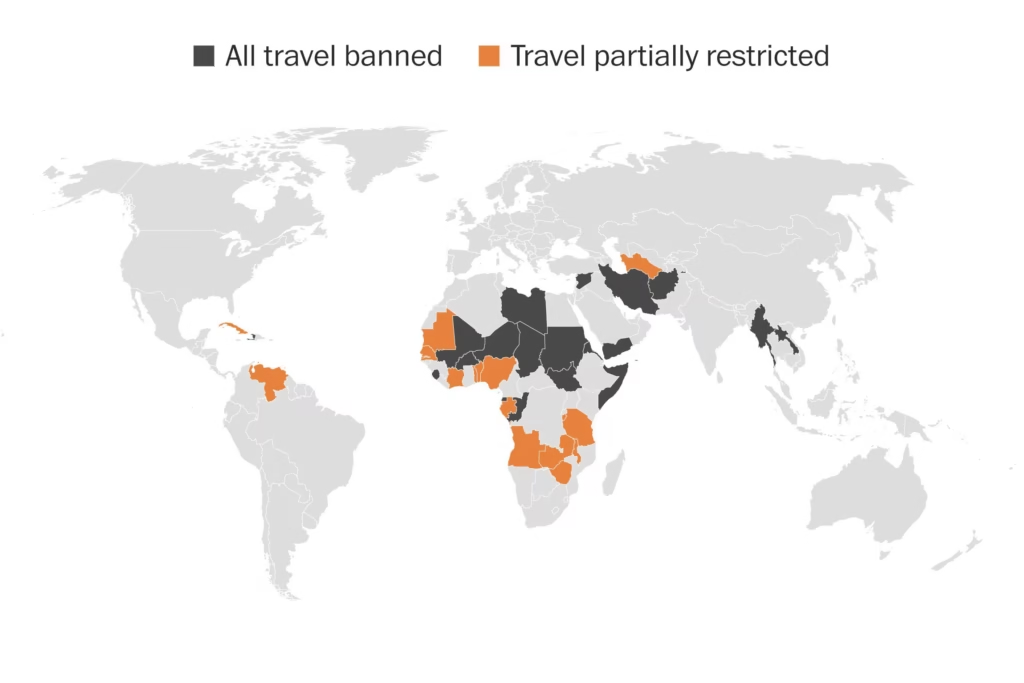
26 African Countries Under Full or Partial U.S. Travel Ban (Post-December Update)
26 African Countries Under Full or Partial U.S. Travel Ban (Post-December Update) Following the December update to U.S.…
Read article →
Travel Guide
Knowing how to access Gishwati-Mukura National Park is an important part of planning a journey into Rwanda's forested western landscapes. The park offers travelers an opportunity to experience a different side of Rwanda from the better-known…
Knowing how to access Gishwati-Mukura National Park is an important part of planning a journey into Rwanda’s forested western landscapes. The park offers travelers an opportunity to experience a different side of Rwanda from the better-known gorilla trekking areas and savannah destinations. Its forest environment, biodiversity and location make it particularly interesting for visitors building a broader Rwanda itinerary.
Gishwati-Mukura National Park offers several routes for travelers to access its lush landscapes and diverse wildlife. The most appropriate approach depends on where the traveler begins the journey, current road conditions and the activities arranged within the park.
Visitors should organize their park experience before departure rather than treating the forest as an attraction where every activity can automatically be arranged on arrival.
Gishwati-Mukura National Park is located in western Rwanda.
This position makes it possible to incorporate the park into an itinerary that explores other parts of the country’s west and northwest.
Rwanda’s relatively compact geography is helpful for travelers because several destinations can be connected by road within a multi-day itinerary.
However, driving time should still be calculated realistically.
Mountainous terrain can make road journeys slower than the distance on a map might suggest.
A knowledgeable driver-guide can select the most practical route according to the day’s conditions and the traveler’s next destination.
Many international visitors begin their Rwanda holiday in Kigali.
The capital is the country’s primary transport hub and a logical starting point for a private road journey toward Gishwati-Mukura.
Travelers should allow enough time for the drive rather than scheduling a major forest activity immediately after arriving on an international flight.
A night in Kigali can provide time to recover before continuing west.
Those already staying in Rwanda may travel directly according to their wider itinerary.
Private transport is particularly convenient because it allows the journey to be coordinated with accommodation and planned activities.
Gishwati-Mukura can work well as part of a broader western route.
Instead of traveling from Kigali solely for the park and immediately returning, visitors can connect it with other destinations when the itinerary permits.
This approach can reduce unnecessary backtracking.
Lake Kivu may form part of the wider western journey, providing a contrasting lakeside environment after forest activities.
Travelers continuing toward other national parks can also structure their route according to available time.
The important point is to consider Gishwati-Mukura within the complete journey rather than planning each destination independently.
Road travel is generally the most practical way for many visitors to approach the park.
A private vehicle with an experienced driver offers flexibility and can accommodate luggage comfortably.
Travelers should use a vehicle suitable for the intended route and current conditions.
Weather can influence some roads, so advice from local operators is valuable.
Visitors should not judge transfer times solely from online mapping estimates. Stops, terrain and local road conditions can affect the journey.
A realistic schedule reduces the temptation to drive too quickly or arrive at accommodation late in the evening.
Accommodation should be selected according to the planned park activities and access route.
A property that appears attractive online may not necessarily be the most convenient base.
Travelers should ask how long it takes to reach the relevant activity starting point.
This becomes particularly important for experiences that begin early.
Staying closer can reduce morning travel and provide more time to rest.
Accommodation categories can range according to the wider destination and current options, so travelers should select a property that matches their preferred comfort level and budget.
Accessing the park physically is only one part of the planning process.
Visitors should also confirm which activities they intend to undertake and whether advance arrangements are required.
Forest experiences may involve guides, designated starting points and specific departure times.
Travelers should therefore avoid assuming that arriving at the general park area is enough.
A tour operator can coordinate transport with the correct meeting point.
Current activity arrangements and fees should be confirmed before travel because operational details can change.
Gishwati-Mukura’s forest environment requires practical clothing.
Comfortable walking shoes with good grip are useful because trails can become wet or muddy.
Long trousers and a long-sleeved shirt can provide protection from vegetation and insects.
A lightweight waterproof jacket should remain accessible.
Travelers may also want a small backpack containing drinking water, camera equipment and personal essentials.
Heavy luggage should remain at the accommodation or in the vehicle rather than being carried unnecessarily during forest activities.
Weather can influence the experience of traveling through forested and hilly areas.
Rain may affect trail conditions and some road sections.
Visitors should therefore prepare for changing weather rather than expecting completely dry conditions.
A rainy morning does not necessarily mean an entire day is lost.
Forest environments can be atmospheric during changing weather, although visitors need appropriate clothing and equipment protection.
Travelers carrying cameras should use waterproof bags or covers.
Current local advice remains important when deciding the most appropriate access route.
Forest photography requires patience.
Light can be limited beneath the canopy, and wildlife may move quickly between vegetation.
A camera capable of working effectively at higher ISO settings can be useful.
A versatile lens may be more practical than carrying several heavy lenses.
Photographers should protect their equipment from moisture.
Wildlife should never be disturbed for an image, and visitors should follow all instructions provided by their guides.
The forest itself can also provide photographic opportunities through vegetation, landscapes and changing light.
Lake Kivu can create a natural contrast to a forest visit.
Travelers may choose to spend time near the lake before or after Gishwati-Mukura, depending on the direction of the itinerary.
A lakeside stay can provide relaxation after walking activities.
It also adds a different landscape without requiring travelers to leave western Rwanda.
The route should be planned to avoid unnecessary driving.
Travelers with only a few days may prefer to concentrate on one part of western Rwanda rather than attempting to visit every attraction.
Visitors interested in Rwanda’s primates may also want to include mountain gorilla trekking.
The gorilla component requires separate planning, including permits and accommodation positioned appropriately for the trekking day.
Gishwati-Mukura should therefore be fitted around confirmed permit dates rather than creating a schedule that risks missing a major activity.
A longer Rwanda itinerary can provide a rewarding contrast between different forest landscapes.
Travelers should allow realistic transfer time and avoid placing several demanding activities back to back without rest.
Visitors have a responsibility to protect the environments they come to experience.
Waste should never be left in the forest.
Travelers should remain on approved trails and follow guide instructions.
Plants should not be removed, and wildlife should not be approached outside the guidance provided.
Noise should be kept at an appropriate level.
Responsible tourism also includes respect for communities living around protected landscapes.
Locally provided guiding, accommodation and other services can help tourism contribute to livelihoods when managed appropriately.
Travelers can explore Rwanda at different times of year, but weather conditions influence forest experiences.
Rather than relying on the assumption that a particular month will be completely dry, visitors should prepare for variable conditions.
Those traveling during popular periods should arrange accommodation and activities early.
Travelers combining the park with gorilla trekking should pay particular attention to permit availability because the gorilla date may become the fixed point around which the rest of the itinerary is designed.
Before leaving Kigali or another destination, travelers should confirm the next day’s schedule with their guide.
Departure time, expected transfer duration, accommodation and planned activity should all be clear.
Carrying water and personal essentials in the vehicle is useful.
Visitors should also have appropriate travel insurance and documentation for their complete Rwanda journey.
A small amount of preparation can prevent confusion later.
Understanding Access Gishwati-Mukura National Park planning means looking at the complete route rather than only the final road into the forest.
Travelers can approach the destination from Kigali or incorporate it into a wider western Rwanda itinerary. Road transport with an experienced driver provides a practical way to connect the park with accommodation and other destinations.
The exact route should reflect current conditions and the activities booked.
Visitors should confirm their forest experience, starting point and accommodation before traveling.
When these arrangements are coordinated properly, Gishwati-Mukura can become a rewarding component of a Rwanda journey, adding forest scenery, biodiversity and a quieter protected-area experience to an itinerary that may also include Kigali, Lake Kivu, gorilla trekking or other national parks.

26 African Countries Under Full or Partial U.S. Travel Ban (Post-December Update) Following the December update to U.S.…
Read article →
3 Days Congo Gorilla Safari – Encounter the Gentle Giants of Virunga A 3 Days Congo Gorilla Safari…
Read article →
Children and Kids on Safari – Family-Friendly Adventures in Africa Taking children on an African safari is one…
Read article →
How to Plan a Safari in Uganda—Your Complete Travel Guide Planning a safari in Uganda is the start…
Read article →