

26 African Countries Under Full or Partial U.S. Travel Ban (Post-December Update)
26 African Countries Under Full or Partial U.S. Travel Ban (Post-December Update) Following the December update to U.S.…
Read article →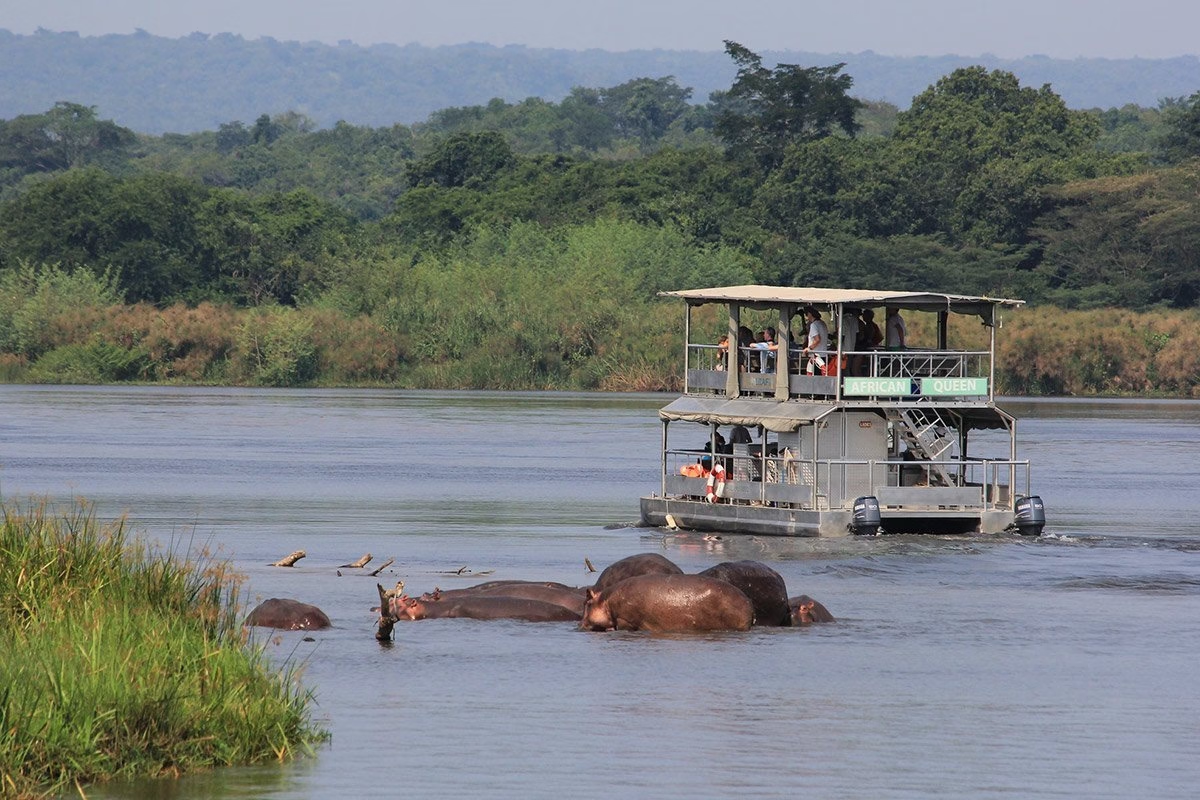
Travel Guide
Explore the history of Murchison Falls National Park, from its early explorers to modern conservation efforts. Discover how Uganda's largest park evolved over time.
The History of Murchison Falls National Park combines the natural story of the Nile with exploration, colonial-era conservation policies, changing wildlife populations, political instability and modern efforts to protect one of Uganda’s most important landscapes.
Today, visitors know Murchison Falls for game drives, giraffes, elephants, hippos, boat trips on the Nile and the extraordinary point where the river is forced through a narrow rocky passage.
The park’s present character, however, is the result of decades of change.
Understanding that history gives travelers a deeper appreciation of why conservation matters and why the wildlife seen today cannot be separated from the challenges the landscape has experienced.
Long before the creation of a national park, the Nile shaped the ecology and human history of the region.
Communities lived within and around landscapes influenced by the river.
Wildlife moved through grasslands, woodland and riverine habitats without the modern boundaries tourists recognize today.
The falls themselves existed as a dramatic geological feature long before European explorers documented them.
Modern tourism often begins the story with exploration, but the landscape had a much longer history involving local communities and indigenous knowledge.
During the nineteenth century, European explorers traveled through parts of East Africa while attempting to understand the Nile and its sources.
The falls became associated in European records with Samuel Baker, who reached the area during his exploration of the Nile.
He named the falls after Roderick Murchison.
The name became established in colonial mapping and later tourism literature.
However, describing this as the “discovery” of the falls would ignore the people who already knew and lived within the wider region.
The name Murchison Falls reflects the colonial-era practice of European explorers naming African geographical features after European figures.
This history is important because place names can reveal how landscapes were represented during colonial expansion.
Uganda’s modern relationship with historical names has included debate and alternative terminology.
Travelers should recognize that names are not culturally neutral.
They can carry layers of history, identity and political meaning.
The area that eventually became Murchison Falls National Park experienced changing forms of wildlife management before receiving its present national park status.
Colonial authorities created protected areas and game regulations across parts of East Africa.
These systems were often designed without the participatory conservation approaches emphasized today.
Communities could experience restrictions on access to land and resources.
Understanding this history is important because modern conservation increasingly recognizes that protected landscapes cannot be considered separately from the people living around them.
Murchison Falls National Park was formally established in the early 1950s.
Its creation placed a large area of savannah, woodland and Nile habitat under national park protection.
The park eventually became central to Uganda’s wildlife tourism identity.
Its enormous size and ecological diversity allowed it to support large populations of mammals and birds.
The Nile added another dimension by creating habitats for aquatic and river-associated wildlife.
As East African safari tourism developed, Murchison became a major destination.
The combination of wildlife and the falls gave the park a distinctive attraction.
Visitors could experience conventional game viewing and then travel along the Nile toward one of Africa’s dramatic river features.
Accommodation and tourism infrastructure developed to serve visitors.
The park became associated with Uganda’s image as a major wildlife destination.
Murchison Falls are created where the Nile is compressed through a narrow rocky gorge before plunging powerfully downstream.
The force of the water is central to the visitor experience.
From viewpoints, travelers can appreciate the speed and energy of the river.
From a boat approaching downstream, the falls appear within a broader river landscape populated by birds, hippos and crocodiles.
This combination of geology and wildlife remains one of the park’s defining characteristics.
Historically, the wider Murchison landscape supported abundant large mammals.
Elephants, buffaloes, antelopes, giraffes, predators and numerous other species formed part of the ecosystem.
Wildlife populations have never remained completely static.
Disease, environmental conditions, hunting pressure, poaching and human activity have all influenced numbers.
This is why historical descriptions of wildlife should not automatically be treated as descriptions of present conditions.
Conservation landscapes change over time.
Uganda experienced periods of severe political instability during the 1970s and 1980s.
Protected areas suffered from weakened management and widespread poaching.
Murchison Falls National Park was among the landscapes affected.
Large mammal populations declined substantially in many areas.
Infrastructure and tourism were also disrupted.
This period demonstrates how wildlife conservation depends on broader institutional stability.
A national park boundary on a map cannot protect animals if management systems collapse.
Poaching can affect wildlife populations directly by removing animals.
The consequences can extend much further.
Loss of large herbivores and predators can alter ecological relationships.
Species with slow reproduction can take many years to recover.
Illegal hunting can also make surviving animals more wary of people.
Restoring a damaged wildlife population therefore requires long-term management rather than simply stopping one immediate threat.
As Uganda regained stability and rebuilt its tourism sector, conservation efforts in Murchison strengthened.
Wildlife protection, tourism investment and improved management contributed to recovery.
The Uganda Wildlife Authority plays a central role in managing the country’s national parks.
Tourism also became economically important to conservation.
Visitors paying park and activity fees create revenue associated with keeping wildlife landscapes protected.
Murchison Falls is particularly well known for giraffes.
Conservation work involving giraffe populations has included efforts to strengthen their distribution within protected landscapes.
These programs illustrate how modern wildlife management can involve active interventions rather than simply leaving ecosystems entirely untouched.
Monitoring, translocations and habitat management may all form part of conservation strategies.
Visitors seeing giraffes on a game drive are therefore witnessing animals within a landscape shaped by deliberate conservation decisions.
Modern tourism has helped restore Murchison’s international profile.
Travelers arrive for game drives, boat safaris, birdwatching and visits to the falls.
Accommodation ranges from simpler options to higher-end safari lodges.
Road and air connections make the park accessible within wider Uganda itineraries.
The growth of tourism creates opportunities but also responsibilities.
Increasing visitor numbers need to be managed so that wildlife and habitats are not damaged by the activity intended to support them.
The boat journey toward Murchison Falls has become one of Uganda’s classic safari experiences.
Travelers can observe hippos, crocodiles and waterbirds along the Nile.
Elephants and other mammals may approach the river.
The excursion reveals how important water is to the park’s ecosystem.
It also provides a perspective unavailable from game-drive vehicles.
The river is not merely a scenic feature. It is one of the ecological foundations of the entire landscape.
Modern game drives concentrate on productive wildlife areas where visitors search for giraffes, elephants, buffaloes, antelopes, lions and other species.
The experience differs substantially from the troubled periods when wildlife populations were heavily affected by poaching.
This recovery should not be taken for granted.
Continued law enforcement, habitat protection, scientific monitoring and responsible tourism remain important.
Conservation is an ongoing process rather than a problem permanently solved.
The modern History of Murchison Falls National Park also involves communities living around the protected area.
People may experience both benefits and costs from wildlife conservation.
Tourism can create jobs and business opportunities.
At the same time, wildlife can damage crops or create other forms of conflict.
Long-term conservation therefore depends partly on relationships between protected-area management and surrounding communities.
When people receive meaningful benefits from conservation, the system has a stronger foundation.
Protected areas face pressures that can include habitat change, infrastructure development, illegal activities and increasing human populations around park boundaries.
Murchison’s conservation story continues to evolve.
Visitors should therefore avoid thinking of the park as an isolated wilderness untouched by modern pressures.
Its future depends on decisions involving wildlife management, tourism, communities and development.
Responsible tourism can contribute positively, but it is only one component of the broader conservation picture.
Travelers can help by following park regulations.
Stay on authorized roads, maintain appropriate distances from wildlife and avoid littering.
Never ask a guide to drive illegally off route for a closer photograph.
Support legitimate tourism businesses and respect local communities.
On boat excursions, follow instructions designed to protect both passengers and wildlife.
Small actions become important when repeated across thousands of visitors.
Knowing the History of Murchison Falls National Park changes the way visitors see the landscape.
A herd of giraffes becomes part of a conservation story.
An elephant beside the Nile represents not only a wildlife sighting but also the survival and recovery of large mammals after periods of intense pressure.
The falls themselves connect modern tourism with centuries of human interaction with the river.
History adds depth to what might otherwise become a simple checklist of attractions.
Murchison Falls National Park is now one of Uganda’s major safari destinations.
Its combination of the Nile, savannah wildlife, dramatic falls and extensive protected landscapes makes it distinctive.
Yet its importance cannot be understood solely through current visitor experiences.
The park has passed through periods of exploration, formal protection, tourism development, political instability, wildlife decline and conservation recovery.
That history demonstrates both the vulnerability and resilience of protected ecosystems.
For today’s traveler, appreciating this story makes every game drive and Nile journey more meaningful.
Murchison is not simply a place where wildlife happens to survive. It is a landscape whose modern richness reflects decades of protection, recovery and continuing conservation work.

26 African Countries Under Full or Partial U.S. Travel Ban (Post-December Update) Following the December update to U.S.…
Read article →
3 Days Congo Gorilla Safari – Encounter the Gentle Giants of Virunga A 3 Days Congo Gorilla Safari…
Read article →
Children and Kids on Safari – Family-Friendly Adventures in Africa Taking children on an African safari is one…
Read article →
How to Plan a Safari in Uganda—Your Complete Travel Guide Planning a safari in Uganda is the start…
Read article →