

26 African Countries Under Full or Partial U.S. Travel Ban (Post-December Update)
26 African Countries Under Full or Partial U.S. Travel Ban (Post-December Update) Following the December update to U.S.…
Read article →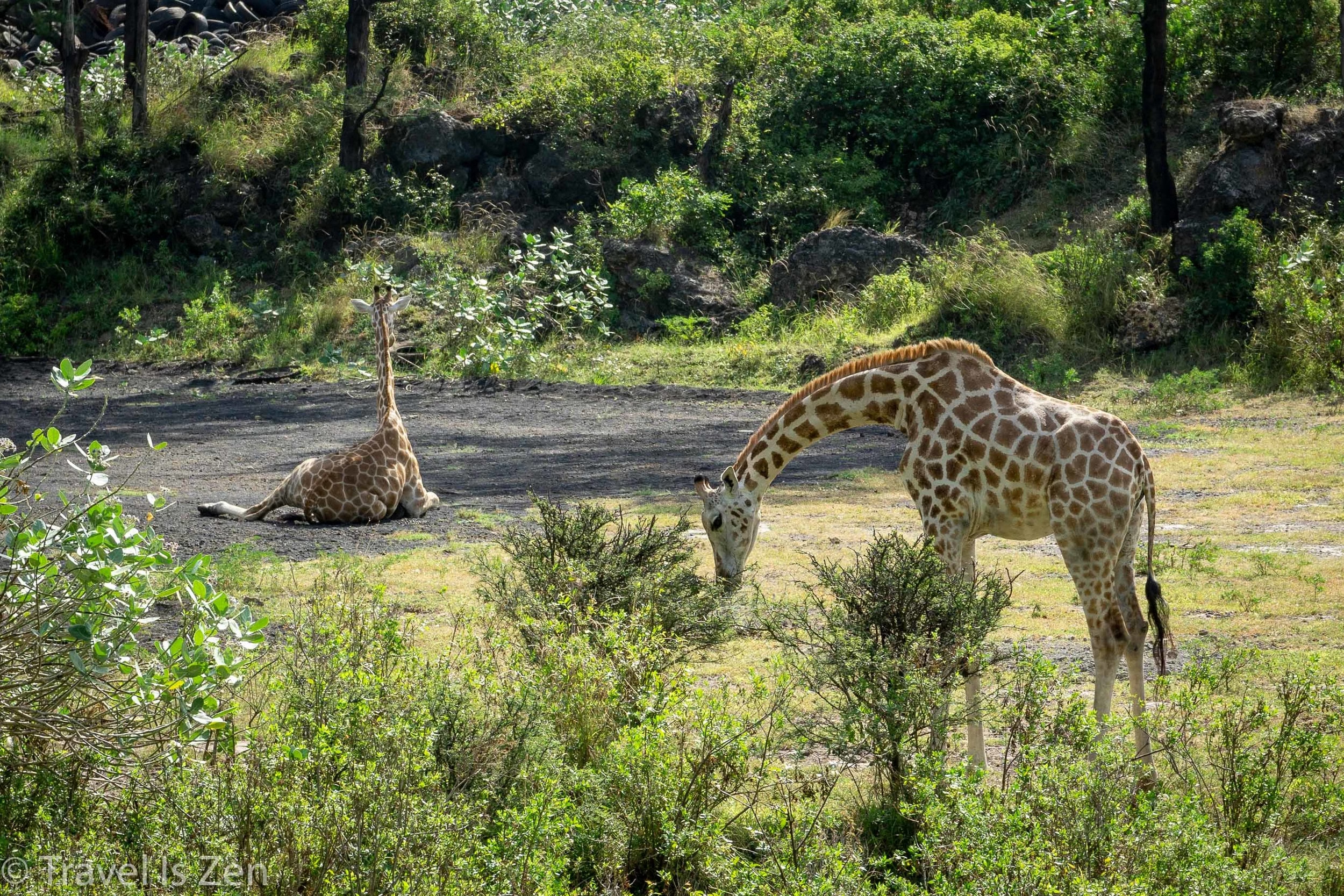
Travel Guide
Explore Haller Park in Mombasa, Kenya—a thriving wildlife sanctuary transformed from a former limestone quarry into a lush ecological haven. Learn what to see and why it matters.
Haller Park Kenya offers visitors to Mombasa an opportunity to experience wildlife, restored vegetation and environmental conservation without traveling deep into Kenya’s traditional safari regions. Located along the country’s Indian Ocean coast, the park is especially interesting because the landscape visitors see today developed from land that had previously been heavily altered by limestone quarrying.
Its transformation into a greener environment demonstrates how damaged land can be rehabilitated through long-term ecological work. Trees, ponds and other habitats now support a variety of animals and plants, turning the site into both a visitor attraction and an example of environmental restoration.
For travelers spending several days around Mombasa, Haller Park can complement beaches, marine activities and cultural sightseeing.
The history behind Haller Park is one of its most important features.
Limestone extraction had left sections of the landscape difficult for vegetation to recolonize naturally. Restoration therefore required more than simply abandoning the quarry and waiting for plants to return.
Rehabilitation involved identifying species capable of surviving challenging soil conditions and gradually improving the environment.
Over time, vegetation became established and ecological processes developed. What had been an industrial landscape began supporting a much wider range of life.
This transformation is central to understanding why Haller Park attracts interest beyond its wildlife.
Land restoration is becoming increasingly important as natural habitats face pressure from development and resource extraction.
A former industrial area may have compacted or nutrient-poor soils, altered drainage and very limited vegetation.
Successful restoration must address these problems gradually.
Haller Park demonstrates that environmental recovery can involve active intervention. Planting suitable vegetation, creating habitats and monitoring ecological changes can help damaged land become biologically productive again.
Visitors therefore encounter more than an ordinary wildlife attraction. They see the results of a long-term effort to rebuild ecological value.
Mombasa is known primarily for beaches, coastal history and the Indian Ocean.
Haller Park provides a different experience.
Walking through its greener surroundings gives travelers a break from beaches and urban sightseeing while remaining within the wider Mombasa tourism area.
This accessibility is useful for families and visitors who do not have enough time to include a full inland safari.
The experience should not be compared directly with a wilderness game drive in the Maasai Mara or Tsavo. Its value lies in conservation education and restored habitat.
The park supports different animals within its managed environment.
Visitors may encounter reptiles, mammals, birds and other species depending on current conditions and management arrangements.
The experience is generally slower and more educational than a conventional game drive.
Instead of covering long distances in a vehicle, visitors can pay attention to individual species and learn about their ecological roles.
Wildlife sightings should still be approached respectfully. Animals should not be disturbed simply to obtain photographs.
Giraffes are among the animals strongly associated with the visitor experience at Haller Park.
Their height and distinctive patterns make them particularly popular with families and photographers.
Observing giraffes at relatively close range provides an opportunity to notice features that can be harder to appreciate during a distant safari sighting.
Their long necks, specialized feeding behavior and unusual movement demonstrate how well they are adapted to browsing vegetation.
Visitors should follow all instructions concerning interaction and feeding.
Reptiles are another interesting part of the park experience.
Many safari travelers concentrate so heavily on large mammals that they overlook reptiles and smaller animals.
A conservation-oriented attraction can help visitors appreciate these less celebrated species.
Reptiles perform important ecological functions as predators and prey.
Learning about them can also reduce unnecessary fear.
Visitors should never attempt to touch wildlife unless the activity is specifically supervised and permitted.
Restored vegetation and water features can provide habitat for birds.
For birdwatchers, this makes Haller Park an interesting addition to a coastal itinerary.
Even travelers without specialist birding knowledge can enjoy watching different feeding and movement patterns.
Bring binoculars if bird observation is important to you.
A camera with a moderate telephoto lens can also help capture smaller species without approaching too closely.
The variety of birdlife demonstrates how restoring vegetation can benefit more than the most visible mammals.
Water plays an important role in creating habitat diversity.
Ponds and wet areas can support organisms that would not survive in a completely dry environment.
They also attract birds and other animals.
The presence of several habitat types within a restored landscape demonstrates an important conservation principle: biodiversity increases when animals and plants have access to different ecological niches.
Visitors can therefore view the park as a functioning network of habitats rather than simply a collection of individual attractions.
A visit becomes more rewarding when travelers focus on ecological relationships.
Trees provide shade and food. Insects interact with plants. Birds feed on insects and fruits. Larger animals influence vegetation.
These relationships are what turn a planted area into an ecosystem.
Restoration takes time because ecological complexity cannot be created instantly.
Haller Park’s development demonstrates how decades of environmental management can gradually produce a landscape capable of supporting diverse life.
Families can find Haller Park particularly accessible.
Children may find it easier to remain engaged when wildlife can be observed without spending many hours inside a safari vehicle.
Parents can use the experience to introduce basic ideas about conservation and habitat restoration.
Instead of simply naming animals, encourage children to notice what the animals are eating and where they prefer to spend time.
This turns the visit into an informal environmental lesson.
The combination of wildlife and vegetation provides numerous photography opportunities.
A telephoto lens can help isolate animals, while wider images can show the restored environment.
Light can become harsh during the middle of the day, so photographers should adapt their settings accordingly.
More importantly, photography should never interfere with animal welfare.
Do not cross barriers or ignore staff instructions for a closer photograph.
A responsible image should document the experience rather than alter it.
One advantage of Haller Park Kenya is that it can fit comfortably into a broader coastal holiday.
Visitors can spend one part of their stay enjoying the beaches and another exploring the park.
This creates more variety than remaining entirely within a resort.
Families in particular may appreciate alternating swimming and beach relaxation with wildlife and educational activities.
The exact schedule should account for travel time and the day’s weather conditions.
Mombasa’s marine attractions provide an interesting contrast with Haller Park.
A marine excursion introduces visitors to coral ecosystems and Indian Ocean wildlife, while Haller Park demonstrates terrestrial restoration.
Together, these experiences reveal two different sides of conservation.
One protects natural marine habitats, while the other illustrates the rehabilitation of land affected by human activity.
This combination can be especially valuable for environmentally interested travelers.
A complete Mombasa itinerary should also leave time for cultural and historical exploration.
The city has been influenced by centuries of Indian Ocean trade and interaction among different communities.
Historic architecture, local food and old-town environments provide context that beaches alone cannot offer.
Combining culture, marine nature and Haller Park creates a more balanced understanding of Mombasa.
Lightweight clothing is suitable for the coastal climate.
Comfortable walking shoes are useful because the experience involves exploring on foot.
Sun protection remains important even where vegetation provides shade.
Carry drinking water and remain hydrated.
A light rain layer can be useful when weather conditions suggest showers.
Travelers should avoid carrying excessive equipment because the park can be enjoyed with a relatively simple daypack.
Visitors play a role in protecting the environment.
Use designated paths and follow staff instructions.
Do not litter or remove plants.
Wildlife should not be fed unless feeding is part of a controlled activity specifically permitted by park management.
Avoid loud behavior around animals.
Children should be supervised so that enthusiasm does not result in chasing or disturbing wildlife.
Conservation areas work best when visitors recognize that animal welfare takes priority over entertainment.
The park’s strongest lesson is that environmental damage does not always have to be permanent.
Restoration cannot recreate every feature of an original ecosystem, and preventing damage is generally preferable to repairing it later.
Nevertheless, rehabilitation can restore significant ecological value to degraded land.
For students, families and environmentally interested travelers, this makes Haller Park an unusually practical conservation classroom.
The landscape itself becomes evidence of what long-term restoration can achieve.
Discover Haller Park Kenya: A Green Oasis in Mombasa is more than an invitation to see animals. The park tells a broader story about the relationship between industry, environmental damage and ecological recovery.
Its wildlife attracts visitors, but the restored landscape provides the deeper reason the destination matters.
A visit can be combined easily with Mombasa’s beaches, marine environments and cultural attractions. This makes Haller Park especially valuable for travelers who want their coastal holiday to include more than relaxation.
By understanding how the landscape changed from a quarry into a greener habitat, visitors leave with a stronger appreciation of both conservation and the possibility of environmental restoration.

26 African Countries Under Full or Partial U.S. Travel Ban (Post-December Update) Following the December update to U.S.…
Read article →
3 Days Congo Gorilla Safari – Encounter the Gentle Giants of Virunga A 3 Days Congo Gorilla Safari…
Read article →
Children and Kids on Safari – Family-Friendly Adventures in Africa Taking children on an African safari is one…
Read article →
How to Plan a Safari in Uganda—Your Complete Travel Guide Planning a safari in Uganda is the start…
Read article →