
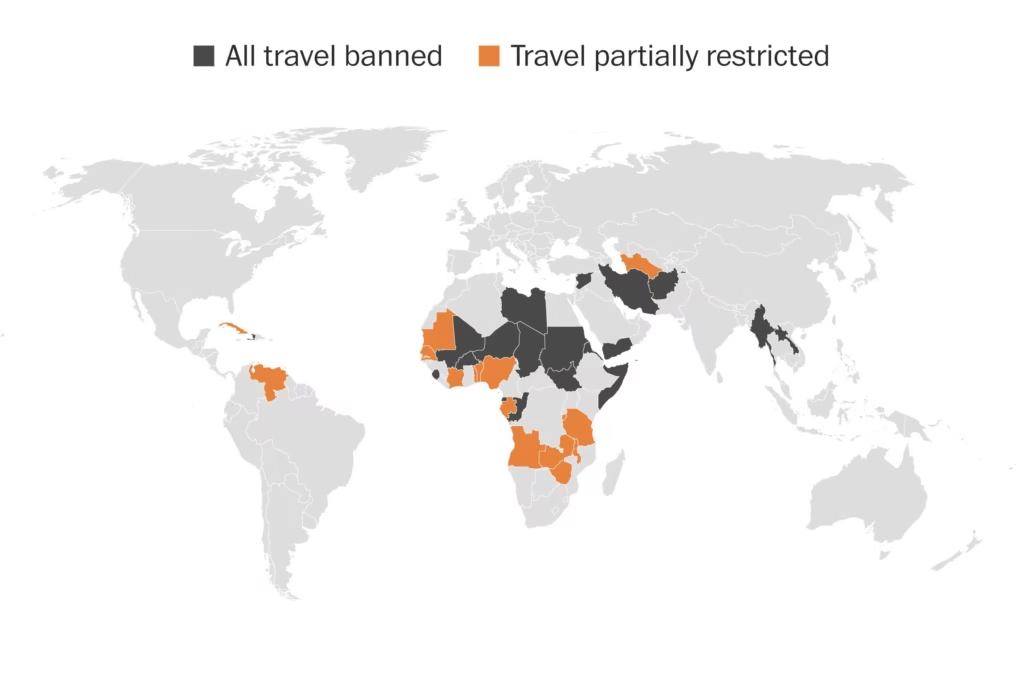
26 African Countries Under Full or Partial U.S. Travel Ban (Post-December Update)
26 African Countries Under Full or Partial U.S. Travel Ban (Post-December Update) Following the December update to U.S.…
Read article →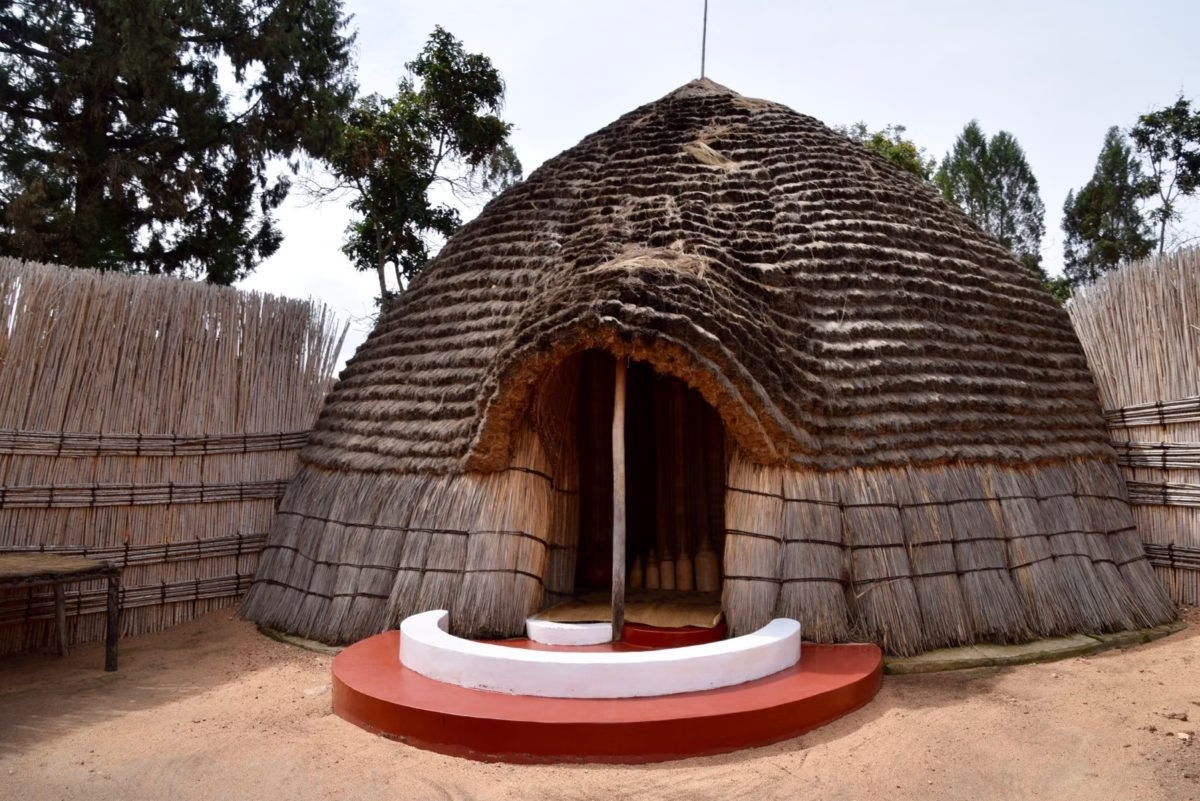
Travel Guide
Plan your visit to the Butare Tourism Center in Huye, Rwanda. Discover the Ethnographic Museum, traditional crafts, and cultural heritage.
The Butare Tourism Center Rwanda experience introduces travelers to one of the country’s most important cultural and historical destinations. Today officially known as Huye, Butare remains a familiar name among travelers and is widely associated with museums, education, traditional heritage and Rwanda’s intellectual history. Visitors traveling beyond Kigali can include Huye in a southern Rwanda itinerary to gain a deeper understanding of the country’s culture.
Unlike destinations centered primarily on wildlife, Huye rewards travelers who enjoy museums, history, architecture, traditional crafts and everyday local life. It can be visited during a dedicated cultural journey or combined with trips toward Nyungwe Forest and other attractions in southern Rwanda.
Travelers will encounter both the names Butare and Huye while researching southern Rwanda. Butare is the historic and widely recognized name of the city, while Huye is the present administrative name.
The city has long been associated with education and cultural institutions. This gives the Butare Tourism Center Rwanda experience a different character from Kigali’s faster urban pace or the wildlife-focused atmosphere of Rwanda’s national parks.
Streets, museums, educational institutions and surrounding communities provide opportunities to understand Rwanda beyond its most internationally famous attractions.
One of the main reasons travelers visit Huye is the Ethnographic Museum. It offers an excellent introduction to Rwanda’s traditional ways of life, material culture and social history.
Collections help visitors explore subjects including traditional clothing, agriculture, household objects, craftsmanship, architecture and cultural practices. Spending time here before visiting other parts of Rwanda can provide useful context for experiences later in the journey.
Rather than rushing through the displays, visitors should allow enough time to read the explanations and examine individual objects. A guided visit can add further context and make the collection easier to understand.
For travelers interested in the Butare Tourism Center Rwanda, the museum is one of the most important stops to include.
Rwanda’s cultural identity extends far beyond individual monuments or museums. Music, dance, oral traditions, cattle culture, craftsmanship and social customs all contribute to the country’s heritage.
Huye provides a useful setting in which to explore these themes. Cultural experiences can complement the historical information presented in museums and help visitors understand how traditions continue to influence contemporary life.
Travelers should approach cultural encounters respectfully. Asking permission before photographing people, listening carefully to guides and supporting locally operated activities can make visits more meaningful for everyone involved.
Craftsmanship is another interesting element of a visit to southern Rwanda. Woven baskets, textiles, decorative items and other handmade products demonstrate skills passed through communities and adapted for contemporary markets.
Travelers interested in souvenirs can look for locally produced crafts rather than mass-produced alternatives. Purchasing directly from cooperatives, artisans or reputable local shops can help ensure that more of the value remains within the community.
The famous woven basket designs associated with Rwanda are particularly recognizable. However, visitors will find many other forms of craftsmanship that reflect local creativity.
Exploring these products adds another dimension to a Butare Tourism Center Rwanda visit because cultural heritage becomes something visitors can see being maintained and reinterpreted.
Although the museum is a major attraction, visitors should not treat Huye simply as a quick museum stop. Walking or driving through the city reveals a different side of Rwanda.
Local markets can be fascinating places to observe everyday commerce. Fresh produce, household goods, clothing and other products create busy scenes that contrast with the quiet atmosphere of museum galleries.
Restaurants and cafés offer opportunities to stop for a meal and experience the city at a slower pace. Travelers interested in photography can also find street scenes and surrounding landscapes that capture southern Rwanda’s distinctive character.
A guided city experience can be useful for visitors who want historical explanations rather than simply walking independently.
Huye fits naturally into itineraries traveling between Kigali and Nyungwe. Instead of treating the journey purely as a transfer, travelers can use the route to explore cultural attractions.
An overnight stay can make the experience more relaxed. Visitors can travel from Kigali, spend time exploring Huye and continue toward Nyungwe the following day.
This approach works particularly well for travelers combining cultural tourism with chimpanzee tracking, canopy experiences or forest walks in Nyungwe.
The combination demonstrates Rwanda’s diversity. Within a relatively compact journey, visitors can experience urban life, cultural heritage, rural landscapes and tropical rainforest.
The appropriate amount of time depends on the traveler’s interests. Visitors passing through can see a major attraction during a half-day stop, but a full day provides more breathing room.
Travelers particularly interested in history, museums and local culture may prefer an overnight stay. This avoids the pressure of fitting several experiences between long road transfers.
A longer stay also provides more opportunity to explore the surrounding area rather than concentrating only on central Huye.
When designing an itinerary around the Butare Tourism Center Rwanda, consider travel time as well as attraction opening hours. Building a realistic schedule generally produces a more enjoyable experience than trying to cover too much in a single day.
Huye lies south of Kigali and is connected by road. Private safari vehicles are a convenient option for travelers following a customized Rwanda itinerary because they allow stops along the route.
Public transportation is another possibility for independent travelers. However, visitors carrying significant luggage or following a tightly scheduled itinerary may find private transfers more convenient.
The road journey itself reveals Rwanda’s famous hilly scenery. Towns, cultivated slopes and rural communities create constantly changing views.
Travel times can vary with traffic, road conditions and stops, so itineraries should allow reasonable flexibility.
Huye does not require specialized safari clothing for ordinary cultural visits. Comfortable walking shoes are useful, particularly if the itinerary includes markets or walking tours.
Lightweight clothing works well during warmer parts of the day, while a light jacket can be useful in the evening or during cooler weather. A compact rain jacket is sensible because Rwanda can experience showers in different seasons.
Travelers should carry drinking water, sunscreen, personal medication and a camera if desired. Keeping a small amount of local currency can also be useful when buying crafts or making smaller purchases.
Modest, comfortable clothing is appropriate for cultural sites and community visits.
Exploring food can add another dimension to a Huye visit. Rwandan cuisine commonly uses ingredients such as beans, plantains, potatoes, vegetables and grains, while meat dishes are also available.
Travelers can ask guides for recommendations based on their preferences and dietary requirements. Trying local dishes provides a simple way to engage with the destination beyond sightseeing.
Markets can also reveal the agricultural character of southern Rwanda. Displays of fruit, vegetables and other produce connect the visitor experience with the surrounding countryside.
Food experiences do not need to be elaborate to be memorable. Sometimes a simple local meal provides a stronger sense of place than a highly structured tourist activity.
Southern Rwanda offers several possibilities for visitors who want to extend their journey. Nyungwe is the most obvious addition for travelers interested in primates and rainforest activities.
Cultural and historical attractions elsewhere along the southern route can also be incorporated depending on available time. This allows travelers to build an itinerary around Rwanda’s heritage rather than focusing exclusively on national parks.
Kigali can provide the beginning or end of the journey, while Lake Kivu can be added for relaxation after forest activities.
The resulting itinerary can combine museums, landscapes, wildlife and lakeside scenery without requiring excessively long distances between every stop.
Cultural tourism is most valuable when visitors engage respectfully with the people and places they encounter. Travelers should avoid treating communities as displays created solely for photography.
Ask before taking close photographs of individuals. Listen to explanations rather than imposing assumptions, and purchase crafts at fair prices when possible.
Using knowledgeable local guides can improve both interpretation and local economic benefits. Guides often provide historical and cultural details that are easy to miss during independent sightseeing.
Responsible travel also involves respecting museums, heritage sites and local customs. These simple practices help create more positive interactions.
Many Rwanda itineraries emphasize mountain gorillas, chimpanzees and savannah wildlife. These are exceptional experiences, but they represent only part of the country.
The Butare Tourism Center Rwanda experience gives travelers a chance to explore Rwanda through its cultural institutions, heritage and everyday urban life. Visiting the Ethnographic Museum and spending time in Huye can provide context that makes the rest of the journey more meaningful.
The destination is particularly valuable for travelers heading toward southern Rwanda because it fits naturally into the route.
Rather than racing directly between Kigali and the forests, spending time in Huye creates a more layered understanding of the country.
A successful visit should balance museum time, cultural exploration and practical travel arrangements. Check attraction schedules before traveling and decide whether Huye will be a short stop or an overnight destination.
Travelers continuing toward Nyungwe should also consider the following day’s driving time when choosing accommodation and activities.
With thoughtful planning, Butare Tourism Center Rwanda can become far more than a stop between major safari destinations. It offers a window into Rwanda’s history, creativity, education and cultural identity.
For travelers who want their Rwanda journey to include more than wildlife, Huye provides an important opportunity to understand the people, traditions and historical influences that have shaped the country.

26 African Countries Under Full or Partial U.S. Travel Ban (Post-December Update) Following the December update to U.S.…
Read article →
3 Days Congo Gorilla Safari – Encounter the Gentle Giants of Virunga A 3 Days Congo Gorilla Safari…
Read article →
Children and Kids on Safari – Family-Friendly Adventures in Africa Taking children on an African safari is one…
Read article →
How to Plan a Safari in Uganda—Your Complete Travel Guide Planning a safari in Uganda is the start…
Read article →