

26 African Countries Under Full or Partial U.S. Travel Ban (Post-December Update)
26 African Countries Under Full or Partial U.S. Travel Ban (Post-December Update) Following the December update to U.S.…
Read article →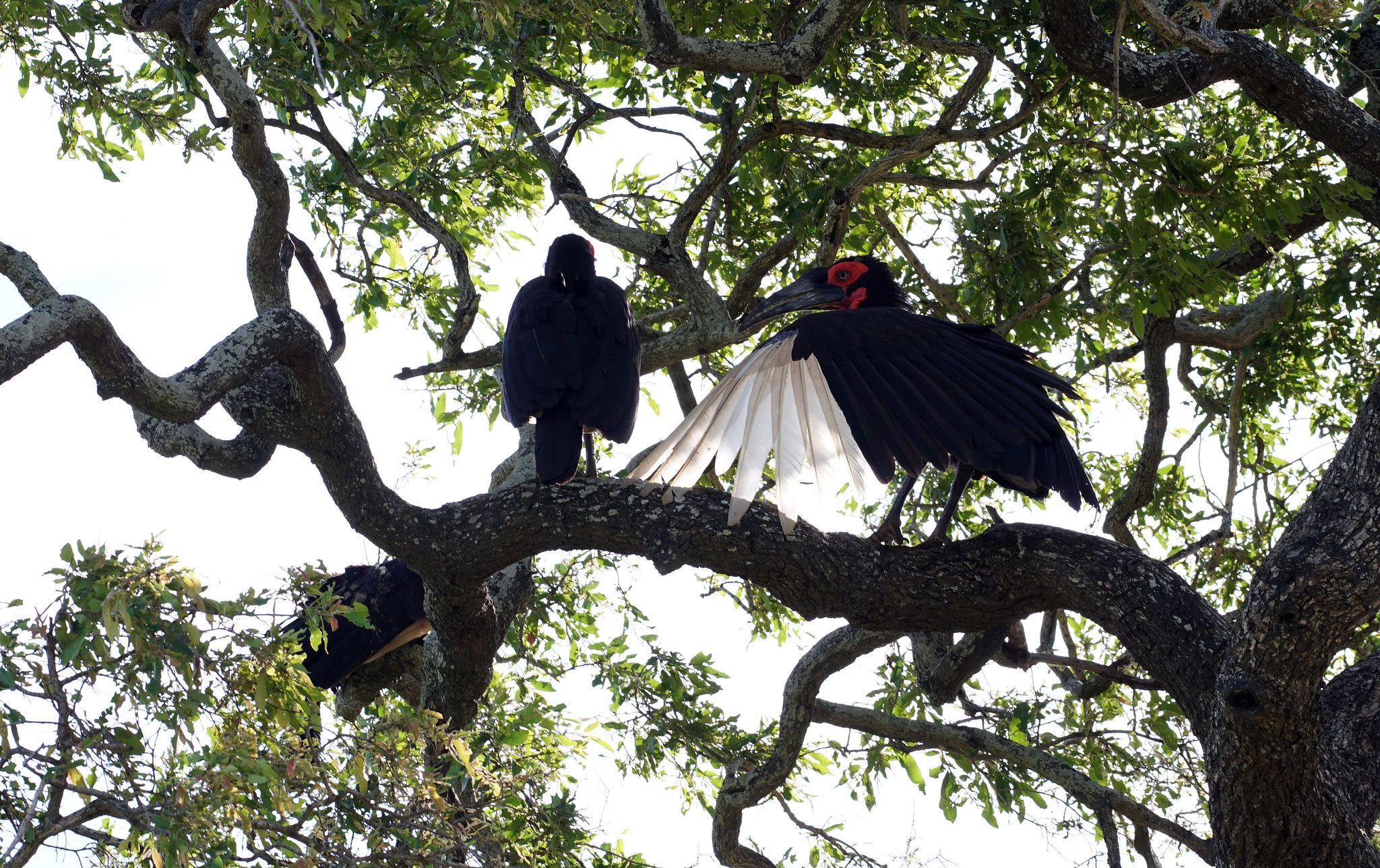
Travel Guide
Discover five amazing facts about the ground hornbill, Africa’s iconic and largest hornbill. Learn about its size, social behavior, diet, breeding strategy, and ecological role.
Ground hornbills are among Africa’s most distinctive birds. Their large size, dark plumage, colorful facial skin, powerful bills, slow breeding patterns, and unusual family structure make them very different from many other birds encountered on safari.
The supplied source identifies two species: the southern ground hornbill, Bucorvus leadbeateri, and the northern ground hornbill, Bucorvus abyssinicus.
Unlike many hornbills associated strongly with trees and fruit, ground hornbills spend substantial time moving across the ground and hunting animal prey.
These five Ground Hornbill Facts explain their extraordinary size, complex social organization, carnivorous feeding habits, breeding strategy, and wider ecological and cultural importance.
The first of the supplied Ground Hornbill Facts concerns size.
The source describes ground hornbills as the largest members of the hornbill family.
The southern ground hornbill is identified as the larger of the two species.
According to the supplied material, it can stand approximately 3.9 feet or 1.2 meters tall and weigh as much as 13 pounds or 6 kilograms.
These dimensions make the bird immediately impressive when encountered walking through open habitat.
Many people associate birds primarily with flight or perching high in trees.
Ground hornbills create a very different impression.
Their large bodies and deliberate walking style make them appear almost terrestrial as they move through savannah.
They can perch in trees, but much of their feeding behavior described in the source takes place on the ground.
This lifestyle helps explain both their name and their powerful build.
The supplied source emphasizes the bird’s predominantly black plumage.
The dark feathers contrast dramatically with exposed areas of brightly colored facial skin and wattles.
This combination makes ground hornbills relatively easy to recognize once visitors know what to look for.
Their size further distinguishes them from many other birds moving through the same landscape.
The source refers to vivid red or blue facial patches and wattles.
These features differ between the two ground hornbill species and contribute to their striking appearance.
The supplied material also associates the colorful features with courtship displays and social interactions.
This means the coloration is not simply visually attractive to human observers; it also has a role within the birds’ own behavior.
Because these birds spend considerable time walking, visitors may encounter them while on game drives.
They are worth watching for longer than the time required to take a photograph.
Their movement across the ground often reflects active searching for food.
Observing the bill, posture, and interactions between group members can reveal the behaviors described throughout the source.
The second fact concerns social organization.
The supplied source describes ground hornbills as living in family groups.
A typical group contains a dominant breeding pair, their offspring, and sometimes one or two helpers.
This arrangement is particularly interesting because some offspring remain with the family rather than immediately leaving to breed independently.
The source explains that helpers are often previous offspring.
These birds assist the breeding pair with raising younger chicks.
This cooperative structure means reproduction is not solely the work of two adult birds.
Other family members contribute to the survival of the next generation.
For wildlife observers, understanding this structure makes a group sighting more meaningful because different individuals may occupy different social roles.
Ground hornbill families defend substantial areas.
The supplied material states that a territory may cover as much as 40 square miles or approximately 100 square kilometers.
Such a large area provides the resources required by a group of large carnivorous birds.
It also means neighboring groups need effective ways to communicate territorial boundaries.
One of the most memorable behaviors described by the source is the ground hornbill’s deep booming call.
These calls can travel over considerable distances.
They help family groups advertise territory and maintain cohesion.
A traveler may sometimes hear ground hornbills before seeing them.
Learning to recognize the call can therefore add an auditory dimension to wildlife observation.
Long-distance communication is particularly useful when animals occupy large territories.
A family does not need to physically patrol every boundary at every moment if vocal signals can announce its presence.
The booming call therefore becomes part of how ground hornbills use and defend space.
It also contributes to the atmosphere of landscapes where they occur.
The cooperative family structure described in the source suggests that relationships between individuals are important.
Helpers remain with parents and participate in chick rearing.
The group also needs to coordinate movement and foraging.
Visitors who encounter several birds together should watch how they position themselves and respond to one another rather than treating the sighting as several unrelated individuals.
Another striking characteristic is diet.
The source contrasts ground hornbills with other hornbills described as primarily fruit-eating.
Ground hornbills are carnivorous predators that hunt a wide range of animal prey.
Their diet includes insects, small mammals, reptiles, amphibians, and even other birds.
This feeding strategy helps explain why they spend so much time searching across the ground.
Insects form one part of the diet identified by the source.
A ground hornbill can move through grass and soil while searching for suitable prey.
Its large bill provides a useful tool for capturing and handling food.
Because insects can occur in many microhabitats, the bird needs to investigate its surroundings carefully.
The source also includes small mammals and reptiles among prey.
This demonstrates the bird’s predatory capability.
A large, powerful bill allows ground hornbills to handle prey very different from fruit or seeds.
Visitors observing a bird walking through grass may therefore be watching an active hunter rather than a bird simply moving from one place to another.
Amphibians and birds are also included in the supplied description of the diet.
The range of prey shows considerable feeding flexibility.
An opportunistic predator can exploit different food sources depending on what is available.
This adaptability can be valuable across landscapes where prey abundance changes seasonally.
The source describes ground hornbills using their powerful bills to dig in soil and turn over rocks.
This reveals prey hidden beneath the surface or under objects.
The behavior also affects the immediate environment.
Disturbing soil while feeding can influence small-scale ecological processes, connecting the bird’s diet with its wider role in the ecosystem.
According to the supplied material, predation helps control populations of insects and smaller animals.
Predators are therefore part of the ecological relationships maintaining balance within a habitat.
Removing a predator can have effects extending beyond the species itself.
This helps explain why ground hornbill conservation matters even to organisms that are not directly connected with tourism.
The fourth of the supplied Ground Hornbill Facts concerns reproduction.
Ground hornbills are described as slow breeders.
According to the source, a pair may successfully produce only one chick every three to five years.
Such a slow reproductive rate means populations cannot rapidly replace individuals that are lost.
This makes adult survival and successful breeding particularly important.
The supplied source states that a breeding pair lays two eggs but that only the stronger chick typically survives.
The weaker chick may starve or be killed by its sibling within the source’s description.
This may appear harsh from a human perspective, but wildlife reproductive strategies are shaped by environmental pressures rather than human ideas about fairness.
The surviving chick receives concentrated parental and group resources.
Producing a single surviving chick means the family invests heavily in that individual.
The breeding pair and helpers can direct food and attention toward its development.
Because reproduction is slow, each successful chick becomes important to the continuity of the group.
This also explains why disturbances affecting nesting success can have long-term population consequences.
Species that reproduce slowly may struggle to recover when adult mortality increases.
If a breeding bird is lost, replacing it through reproduction can take considerable time.
The source later refers to persecution and hunting in some regions.
When such pressures affect a slow-breeding species, the consequences can persist for years.
The fifth fact in the supplied material connects ecology with culture.
Ground hornbills are described as keystone species because of their role as predators and their influence on the environment while foraging.
At the same time, they carry cultural meanings within different African communities.
The source specifically associates them with ideas of rain and fertility in some traditions.
By feeding on insects, reptiles, small mammals, and other prey, ground hornbills participate in regulating animal populations.
Their digging and rock-turning behavior also disturbs soil.
These activities demonstrate how a single species can influence an ecosystem through several mechanisms.
The importance of the bird therefore extends beyond its visual appeal.
The supplied source states that ground hornbills are viewed as symbols of rain and fertility within some African cultures.
Such beliefs show how wildlife can become integrated into cultural interpretation of landscapes and natural events.
Animals that people regularly observe can acquire meanings extending far beyond biology.
The source also notes that cultural beliefs can have negative consequences.
In some regions, ground hornbills are associated with superstition or are hunted for traditional medicine.
This creates a conservation challenge.
Cultural significance does not always translate automatically into protection.
The relationship between people and wildlife can contain both reverence and exploitation.
The combination of slow breeding and human pressure makes conservation particularly important.
A species producing one successful chick only after long intervals cannot easily compensate for repeated losses.
Protecting habitat, reducing unnecessary persecution, and improving understanding of the species can therefore contribute to long-term survival.
Ground hornbills can be extremely rewarding birds to observe.
Their size makes them easier to see than many smaller species.
Their family groups provide opportunities to watch social behavior, while their hunting style can produce interesting encounters.
Photographers can capture walking, feeding, calling, and interactions between group members.
The most interesting observation begins when travelers look beyond the bird’s black feathers and colorful face.
Is it searching for prey?
Are several family members moving together?
Is one bird calling while others respond?
Does a younger individual appear to be following adults?
These questions turn a sighting into an opportunity to understand behavior.
The supplied source identifies both the southern ground hornbill and northern ground hornbill.
Although they share the ground hornbill name, they should not be treated as completely identical.
Their distributions and visible characteristics differ.
Recognizing that two species exist is the first step toward more accurate identification.
The five Ground Hornbill Facts supplied for this article reveal a bird whose life is unusually complex.
Ground hornbills are the largest members of their family, with the southern species described as reaching approximately 1.2 meters in height and six kilograms in weight. Their black plumage and vivid facial skin make them immediately distinctive.
They live in territorial family groups where previous offspring may help breeding adults raise younger chicks. Deep booming calls allow groups to communicate across territories that can cover large areas.
Unlike many other hornbills, they are carnivorous hunters feeding on insects, mammals, reptiles, amphibians, and birds. Their breeding rate is exceptionally slow, with the source describing one successful chick every three to five years.
Finally, ground hornbills have ecological and cultural significance. They influence smaller animal populations and soil while also appearing in cultural traditions connected with rain, fertility, superstition, and traditional medicine.
Together, these qualities make the ground hornbill much more than a large and unusual-looking safari bird. It is a social predator, cooperative breeder, ecological participant, and culturally significant species worthy of careful observation and conservation.

26 African Countries Under Full or Partial U.S. Travel Ban (Post-December Update) Following the December update to U.S.…
Read article →
3 Days Congo Gorilla Safari – Encounter the Gentle Giants of Virunga A 3 Days Congo Gorilla Safari…
Read article →
Children and Kids on Safari – Family-Friendly Adventures in Africa Taking children on an African safari is one…
Read article →
How to Plan a Safari in Uganda—Your Complete Travel Guide Planning a safari in Uganda is the start…
Read article →