
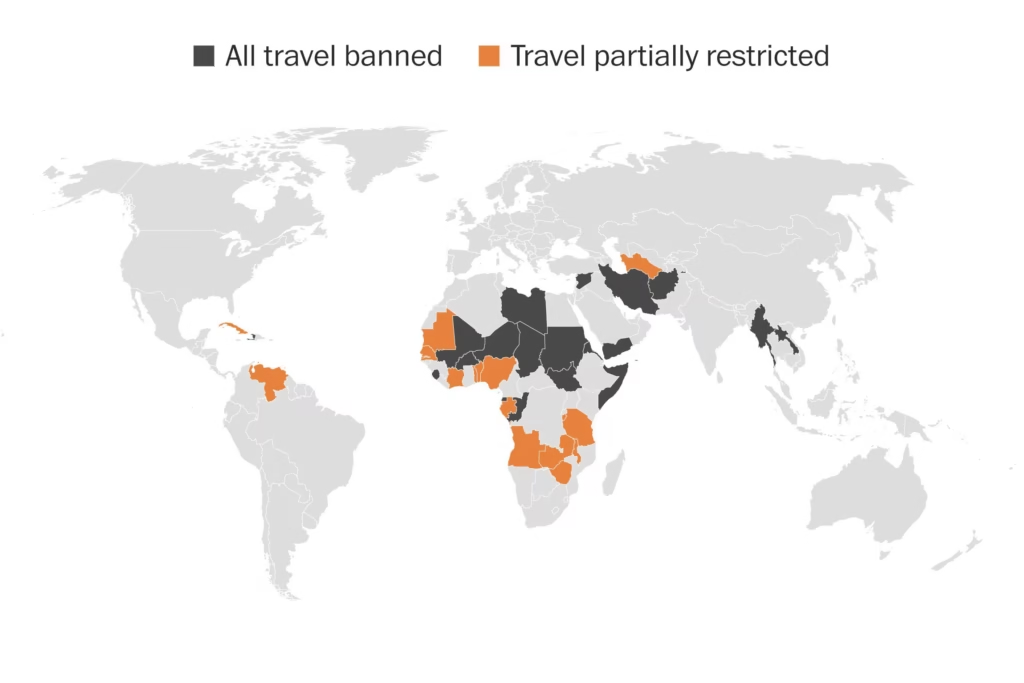
26 African Countries Under Full or Partial U.S. Travel Ban (Post-December Update)
26 African Countries Under Full or Partial U.S. Travel Ban (Post-December Update) Following the December update to U.S.…
Read article →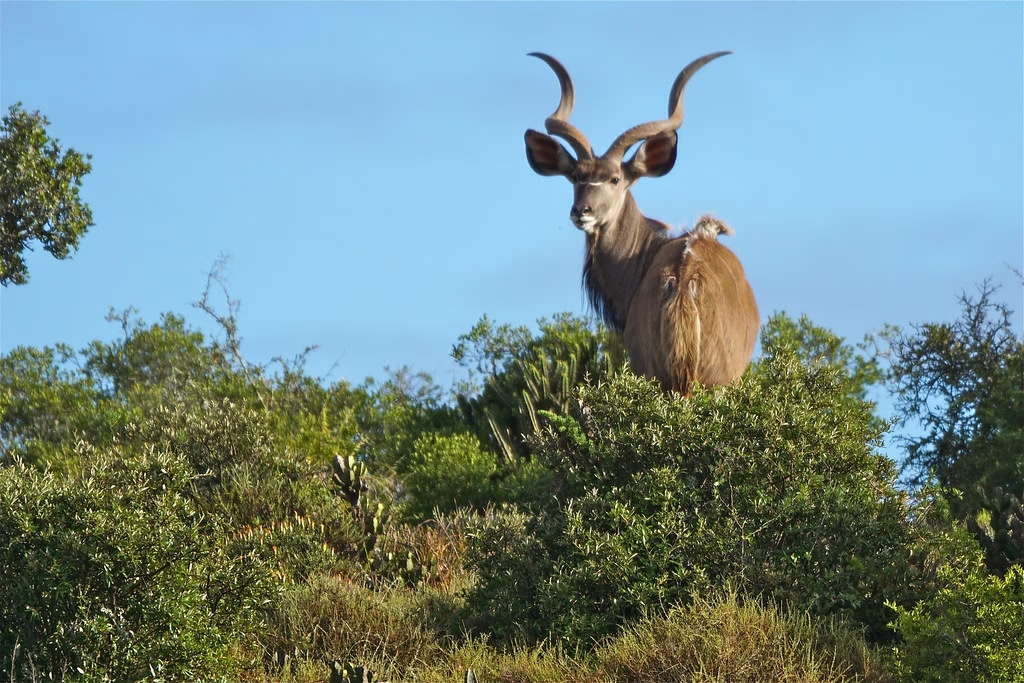
Travel Guide
5 fascinating facts about the Greater Kudu, from its impressive spiral horns to its agility, camouflage, and adaptable habitat.
Among Africa’s most elegant antelopes, the greater kudu is instantly recognizable when an adult male turns its head and reveals an impressive pair of spiraling horns. Yet horns are only one part of what makes the species interesting. These Greater Kudu Facts reveal an animal adapted to woodland, bushland and other habitats where camouflage, alertness and agility can be as important as speed.
Greater kudus are popular safari sightings because their appearance is distinctive without being easy to take for granted. A kudu standing motionless among branches can almost disappear into its surroundings. Seconds later, the same animal may clear an obstacle with remarkable grace.
Understanding these characteristics helps safari travelers appreciate why encountering a kudu is about much more than simply adding another antelope to a wildlife list.
The horns of an adult male are the greater kudu’s most famous feature.
They grow into striking spirals that can make mature males appear exceptionally imposing.
Horn development occurs gradually as the animal matures.
Females generally do not carry the dramatic horns associated with adult males, making mature males and females relatively easy to distinguish.
The horns are permanent structures rather than antlers that are shed annually.
This distinction is important when comparing African antelopes with deer species found elsewhere in the world.
Large horns are associated with competition and display among males.
Physical characteristics can communicate maturity and strength.
When rival males compete, horns can become important.
However, visitors should avoid imagining that male kudus spend all their time fighting.
Like most wild animals, they conserve energy whenever possible.
Their horns are also a powerful visual feature that helps make the greater kudu one of Africa’s most recognizable antelopes.
For photographers, a mature male standing against uncluttered vegetation can be an exceptional subject.
One of the most useful Greater Kudu Facts for safari travelers is that these large animals can be surprisingly difficult to see.
Greater kudus have vertical pale stripes along their bodies.
When standing among branches, grasses and changing patterns of light, these markings can help break up the animal’s outline.
Their coloration blends particularly effectively with woodland and bush environments.
A kudu may remain completely still while watching an approaching vehicle.
Travelers sometimes realize that an animal has been standing only a short distance away after a guide points it out.
Camouflage becomes even more effective when combined with stillness.
Movement attracts attention.
By standing quietly among vegetation, a kudu can be difficult for predators and humans to distinguish from the background.
This is why safari guides constantly scan shaded areas and spaces between bushes rather than looking only at open grassland.
Visitors can improve their own wildlife spotting by doing the same.
Instead of searching only for entire animals, look for shapes such as ears, horns and unusual lines.
A large adult kudu may look too heavy to move gracefully, but the species is remarkably agile.
Greater kudus can negotiate uneven terrain and obstacles with impressive ability.
Their long legs help them move through bush environments.
This agility is particularly useful when escaping danger.
A kudu disappearing through vegetation can demonstrate a completely different side of the animal from the calm individual observed browsing moments earlier.
Their athletic ability is one reason safari encounters can change so quickly.
The greater kudu’s body reflects the habitats in which it lives.
Long legs allow movement through grasses and brush.
Large ears help create the species’ distinctive appearance and contribute to its alertness.
Its body coloration works with vegetation rather than the open plains associated with some other antelopes.
Each characteristic contributes to survival.
When safari visitors begin viewing animals in relation to habitat, wildlife observation becomes more interesting.
Physical features stop appearing random and instead become adaptations that help species live within particular environments.
Greater kudus feed substantially on leaves, shoots and other plant material rather than relying exclusively on short grass.
This browsing behavior influences where they spend time.
Woodland, bush and areas with suitable shrubs can provide feeding opportunities.
Travelers searching for kudu should therefore pay attention to vegetation rather than expecting to find every individual standing in open grassland.
Diet also illustrates why habitat diversity matters within protected areas.
A landscape supporting only one vegetation type cannot provide equally suitable conditions for every herbivore.
Watching a kudu feed can reveal the animal’s calm and deliberate nature.
Individuals may move between bushes selecting suitable plant material.
This is an excellent time for photographers to observe natural behavior rather than waiting for the animal to look directly toward the camera.
Feeding scenes can also reveal how well the kudu’s stripes blend into branches.
Patience often produces more interesting safari experiences than immediately moving to the next species.
Another important entry among Greater Kudu Facts is the species’ ability to occupy different suitable habitats across parts of eastern and southern Africa.
They are particularly associated with woodland and bush environments that provide both food and cover.
Local abundance varies.
Protected areas containing appropriate vegetation can offer good opportunities for sightings.
Travelers should ask guides about local habitat rather than assuming kudu distribution is identical in every safari destination.
Understanding habitat helps explain why some parks produce frequent sightings while others do not.
Greater kudus are not always found in enormous herds.
Females and young may occur in small groups, while adult males can have different social patterns.
Group size and composition vary according to circumstances.
This contrasts with species that may form very large aggregations.
Safari visitors should therefore value a sighting of one or a few individuals rather than expecting a dramatic herd.
A solitary mature male with well-developed horns can be one of the most memorable antelope sightings on a safari.
Young animals lack the imposing appearance of mature males.
Calves depend on strategies that reduce their vulnerability to predators.
Vegetation and concealment can be important.
Visitors fortunate enough to see young kudu should maintain appropriate distance and allow natural behavior to continue.
Never ask a guide to drive off established routes or disturb vegetation simply to approach a young animal.
Wildlife photography should not come at the expense of animal welfare.
Greater kudus share landscapes with large African predators.
Their alertness, camouflage and agility all contribute to avoiding danger.
Predation is a normal part of natural ecosystems.
If travelers witness a predator pursuing prey, guides should not intervene.
Although such scenes can be emotionally difficult, they demonstrate the ecological relationships that maintain wild systems.
Safari visitors should remember that protected areas are not zoos where animals are separated from natural risks.
Water availability influences wildlife distribution, although animals differ in how they obtain and use moisture.
Seasonal changes can therefore affect where safari guides search for herbivores.
During dry conditions, areas containing suitable food and water can become particularly important.
After rains, animals may disperse more widely as resources become available across larger landscapes.
This is one reason safari sightings vary by season.
The animals are responding to changing ecological conditions.
Kudus are excellent photographic subjects.
A mature male’s horns create strong shapes, while the vertical body stripes add visual detail.
The challenge is often the habitat.
Branches and leaves can obstruct autofocus or create distracting backgrounds.
Photographers should remain patient and wait for the animal to move into a clearer position naturally.
A telephoto lens allows images to be captured without approaching too closely.
Early morning and late afternoon light can emphasize the texture of the horns and coat.
Greater kudus occur in suitable habitats across parts of Africa.
Travelers visiting parks and reserves within their range should ask guides about recent sightings.
Rather than searching only in wide-open plains, scan woodland edges and bushy areas.
The species’ camouflage makes experienced guiding particularly useful.
Sometimes the first visible clue is the curved shape of horns rising above vegetation.
Once visitors learn what to look for, they may begin finding kudu before the guide points them out.
Like all wildlife, greater kudus depend on functioning ecosystems.
Protected areas help preserve habitat and maintain ecological relationships among herbivores, predators and vegetation.
Responsible tourism can contribute economically to maintaining wildlife landscapes.
Visitors can support conservation by following park rules, avoiding litter and selecting operators that respect wildlife.
Never encourage guides to chase animals or approach them too closely.
An ethical sighting allows the kudu to continue its natural behavior.
These five Greater Kudu Facts demonstrate why the species deserves attention on safari.
First, mature males carry extraordinary spiral horns. Second, their stripes and coloration provide effective camouflage. Third, their large bodies hide impressive agility. Fourth, their browsing behavior connects them closely with woodland and bush vegetation. Fifth, their adaptability allows them to occupy suitable habitats across a broad part of Africa.
The greater kudu combines elegance with practical survival adaptations.
Seeing one standing silently among trees can be as memorable as encountering a much larger animal.
On an African safari, learning to appreciate species such as kudu also changes the way visitors see the landscape. Bushes become feeding grounds, stripes become camouflage and horns become part of a long evolutionary story.
That deeper observation is often what turns wildlife viewing into genuine understanding.

26 African Countries Under Full or Partial U.S. Travel Ban (Post-December Update) Following the December update to U.S.…
Read article →
3 Days Congo Gorilla Safari – Encounter the Gentle Giants of Virunga A 3 Days Congo Gorilla Safari…
Read article →
Children and Kids on Safari – Family-Friendly Adventures in Africa Taking children on an African safari is one…
Read article →
How to Plan a Safari in Uganda—Your Complete Travel Guide Planning a safari in Uganda is the start…
Read article →