

26 African Countries Under Full or Partial U.S. Travel Ban (Post-December Update)
26 African Countries Under Full or Partial U.S. Travel Ban (Post-December Update) Following the December update to U.S.…
Read article →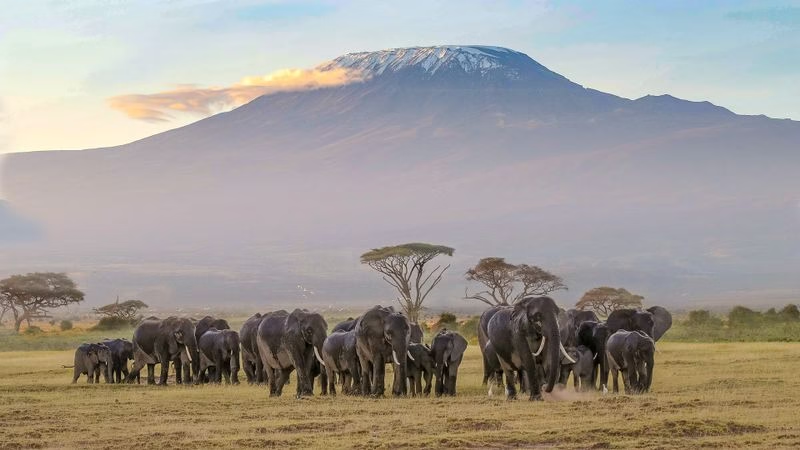
Travel Guide
Learn how to reach Amboseli National Park from Nairobi or Tanzania. Compare road vs air travel, find the best entry gates, and plan your safari route.
Understanding how to get to Amboseli is an important part of planning a safari to one of Kenya’s best-known wildlife destinations. Amboseli National Park lies in southern Kenya, close to the Tanzanian border and approximately 230 kilometers southeast of Nairobi. The park is particularly famous for its elephant herds and views toward Mount Kilimanjaro, making it a popular addition to both Kenya-only safaris and cross-border East African itineraries.
Travelers can reach Amboseli by road or air. Those traveling overland from Nairobi have two principal routes described in the supplied information, while visitors arriving from Tanzania can enter Kenya through Namanga before continuing toward the park. Travelers with less time can use scheduled domestic flights from Nairobi’s Wilson Airport to Amboseli Airstrip.
The best option depends on your budget, available time, preferred style of travel, and the location of your accommodation.
Amboseli is positioned in southern Kenya near the international border with Tanzania. Its location makes it accessible from Nairobi while also allowing it to fit naturally into itineraries connecting Kenya with destinations around Arusha and Moshi.
The journey is part of the safari experience.
Travelers approaching by road pass through changing landscapes, agricultural areas, settlements, and areas associated with Maasai communities before reaching the park.
Amboseli has four principal gates identified in the source: Kimana Gate, Meshanani Gate, Iremito Gate, and Kitirua Gate. Selecting the correct gate matters because it can reduce unnecessary driving and place travelers closer to their chosen lodge or camp.
Traveling by road is a popular way to reach Amboseli.
The source gives an approximate distance of 230 kilometers for the most direct route and a driving time of around four to five hours.
Actual travel time can depend on traffic, road conditions, weather, stops, and the exact location of your accommodation.
Driving allows visitors to experience the landscape between Nairobi and the park instead of simply flying over it.
It can also work particularly well for travelers combining Amboseli with other destinations as part of a longer overland safari.
The first route described in the source runs from Nairobi through Emali and Loitoktok to Kimana Gate.
This is presented as the most direct and popular road option.
Travelers leave Nairobi using the Mombasa Highway, identified as the A109 in the supplied material. At Emali, the route turns away from the main highway and continues toward Loitoktok before approaching Kimana Gate.
The total distance is approximately 230 kilometers, with a suggested journey time of four to five hours.
The road is described as tarmac as far as Emali, followed by murram or gravel sections toward the park.
One advantage of traveling overland is seeing areas that would be missed on a short domestic flight.
The source describes the final part of the journey as passing farmland and local Maasai villages.
This provides a gradual transition from the busier Nairobi region toward the landscapes surrounding Amboseli.
Travelers should not plan the route as if it were a continuous high-speed highway journey.
Road surfaces change, and conditions can vary.
A well-paced transfer allows enough time for comfort stops and unexpected delays without creating pressure to speed.
A second route runs from Nairobi south toward Namanga before turning toward Amboseli and entering through Meshanani Gate.
The supplied source gives an approximate distance of 240 kilometers and a driving time of around five to six hours.
Travelers follow the A104 south from Nairobi toward Namanga, a border town between Kenya and Tanzania.
From the Namanga area, the journey continues toward Amboseli.
This route takes somewhat longer than the Emali option but can be useful depending on the travel itinerary and accommodation arrangements.
The choice should not be based only on which route appears shortest on a map.
Your lodge location matters.
Entering through a gate on the opposite side of the park can add unnecessary driving after an already lengthy transfer.
Safari planners therefore normally consider where guests are staying before deciding which approach is most practical.
Road conditions can also influence the choice.
During wetter periods, some sections may become more difficult, so local knowledge remains valuable.
The supplied source recommends a 4×4 vehicle, particularly during the rainy season.
This is an important practical consideration.
Road conditions inside and around wildlife areas can change after heavy rain. Sections may become muddy or affected by standing water.
A four-wheel-drive safari vehicle provides greater capability on these surfaces than an ordinary urban vehicle.
The benefit extends beyond simply reaching the entrance gate.
Once inside Amboseli, game drives take place on park roads where conditions may also vary.
For travelers prioritizing time, flying is the fastest option described in the source.
Scheduled domestic flights depart from Wilson Airport in Nairobi and arrive at Amboseli Airstrip.
The flight is described as taking approximately 40 minutes.
This can turn a four- or five-hour road transfer into a relatively short air journey.
The supplied material identifies Safarilink, Airkenya, and Fly ALS among airlines associated with the route.
Travelers should organize the flight as part of the overall safari plan so that ground transfers at both ends work smoothly.
The source places Amboseli Airstrip inside the park near Observation Hill.
Arriving directly within the protected area creates a very different experience from approaching by highway.
Once passengers land, they generally need onward transport to their lodge or camp.
The source notes that many lodges can arrange airstrip collection when organized in advance.
This should be confirmed before travel.
Arriving without a planned transfer can create unnecessary complications, particularly in a protected area where ordinary public transport is not available.
Scheduled flights suit many individual travelers and small groups.
The source notes that one-way and return arrangements can be made.
Private charters provide another option, particularly for groups or travelers seeking a more exclusive itinerary.
The most appropriate choice depends on the number of passengers, budget, timing, and onward destination.
Flying is generally associated with higher costs than overland travel, but it can save substantial time.
For a short Kenya itinerary, that time saving may be particularly valuable.
There is no single correct answer when deciding how to get to Amboseli.
Road travel provides an overland experience and can be more suitable for budget-conscious travelers or longer safari circuits.
Flying provides speed and can be particularly attractive to travelers with limited time.
The road journey also makes it easier to incorporate stops or continue directly toward another overland destination.
A flight, by contrast, minimizes transfer fatigue and places travelers quickly inside the safari environment.
Your itinerary should determine the transport method rather than choosing transportation in isolation.
Amboseli’s position near Tanzania makes it a logical destination for cross-border safari itineraries.
According to the supplied source, travelers coming from Arusha or Moshi can cross into Kenya through the Namanga border post.
From Namanga, the source gives an approximate road distance of 90 kilometers toward Meshanani or Kitirua Gate.
This arrangement can work well for visitors combining northern Tanzania with southern Kenya.
The border crossing, however, adds immigration procedures that need to be considered when planning travel time.
Namanga is one of the important road connections between Kenya and Tanzania.
Travelers need the correct travel documentation for the countries included in their itinerary.
The supplied source refers to a valid East African visa or Kenyan tourist visa.
Because entry requirements relate to individual nationality and travel circumstances, travelers should ensure their documents match their own itinerary before departure.
The important planning point is that the border crossing takes time.
A cross-border transfer should not be scheduled as though it were an ordinary domestic drive.
Kimana Gate is particularly useful for travelers approaching from the Emali and Loitoktok direction.
The source associates the gate with properties such as Tawi Lodge and Kibo Safari Camp.
Entering through Kimana can therefore make sense when the accommodation and road route align with that side of the park.
The surrounding approach also gives travelers their first introduction to the greater Amboseli landscape.
Meshanani Gate is associated with access from Namanga.
The supplied material links it with accommodation including Amboseli Serena and Sentrim Amboseli.
Travelers arriving from the Kenya-Tanzania border may therefore find this gate particularly practical.
As with all entrance choices, the exact route should be coordinated with the lodge or safari operator rather than selected solely because the gate appears convenient on a general map.
Iremito Gate is described in the source as useful for internal park roads and properties such as Tortilis Camp and Ol Tukai Lodge.
Travelers already moving within the Amboseli ecosystem may use this gate depending on their itinerary.
Safari routes are often designed around accommodation location, wildlife-viewing areas, and onward travel.
A knowledgeable driver-guide can determine the most efficient access based on those factors.
The source associates Kitirua Gate particularly with access connected to Tanzania and cross-border safaris.
This can make it useful when combining Amboseli with destinations south of the international boundary.
Again, the final gate decision should account for current route conditions and accommodation.
Cross-border itineraries are most enjoyable when transfers are planned as connected stages rather than independent journeys.
The source presents road access as particularly suitable for budget travelers and overland safaris.
A road transfer can avoid the additional cost associated with scheduled or charter flights.
It can also be incorporated into a private safari vehicle that remains with travelers throughout a broader Kenya itinerary.
However, travelers should consider the value of their time.
Saving money on transport may not be worthwhile if a very short holiday becomes dominated by road transfers.
Flying is particularly useful when time is limited.
A traveler spending only a few days in Kenya may prefer to arrive in Amboseli quickly and devote more time to game drives.
The approximately 40-minute flight described in the source provides a major time advantage compared with driving.
The convenience becomes even greater when a lodge transfer is waiting at the airstrip.
This creates a smooth transition from Nairobi to the park.
Regardless of transport method, arrival timing matters.
A road transfer should begin early enough to avoid unnecessary pressure later in the day.
Flight schedules should be coordinated with lodge transfers.
Travelers crossing from Tanzania should allow time for border procedures.
A relaxed arrival gives guests an opportunity to settle into accommodation before beginning safari activities.
Trying to squeeze a major game drive into an already complicated transfer day can make the itinerary unnecessarily exhausting.
The supplied information gives travelers several practical answers to how to get to Amboseli.
From Nairobi, visitors can drive through Emali and Loitoktok toward Kimana Gate or travel south through Namanga toward Meshanani Gate. Road journeys generally take several hours and are best handled with a suitable vehicle.
Travelers wanting faster access can fly from Wilson Airport to Amboseli Airstrip, with the source describing the flight as approximately 40 minutes.
Visitors arriving from Tanzania can travel through Namanga before continuing toward the park.
Whichever method you choose, coordinate the route with your accommodation and entry gate. Good transfer planning reduces unnecessary driving and gives you more time to enjoy what makes Amboseli famous: elephants, open landscapes, and the unforgettable presence of Mount Kilimanjaro on the horizon.

26 African Countries Under Full or Partial U.S. Travel Ban (Post-December Update) Following the December update to U.S.…
Read article →
3 Days Congo Gorilla Safari – Encounter the Gentle Giants of Virunga A 3 Days Congo Gorilla Safari…
Read article →
Children and Kids on Safari – Family-Friendly Adventures in Africa Taking children on an African safari is one…
Read article →
How to Plan a Safari in Uganda—Your Complete Travel Guide Planning a safari in Uganda is the start…
Read article →