

26 African Countries Under Full or Partial U.S. Travel Ban (Post-December Update)
26 African Countries Under Full or Partial U.S. Travel Ban (Post-December Update) Following the December update to U.S.…
Read article →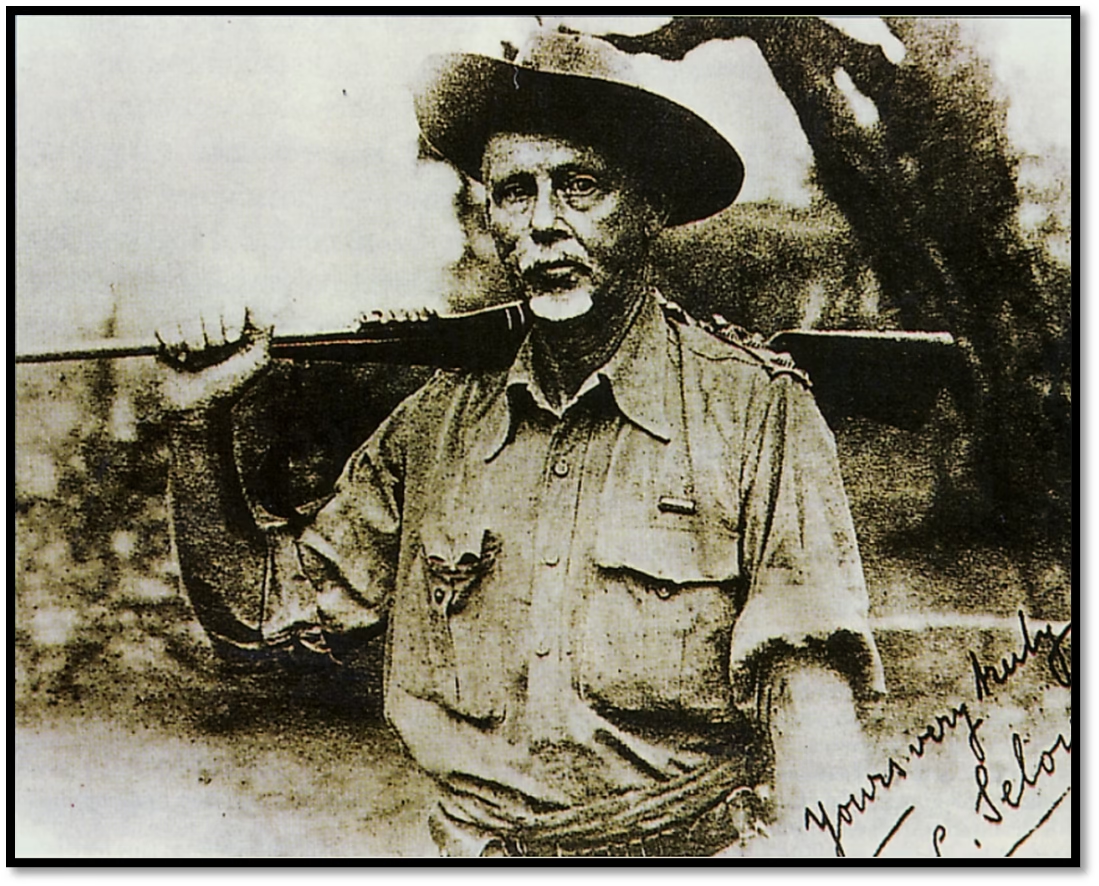
Travel Guide
Discover the life of Frederick Courteney Selous, the legendary explorer and conservationist whose legacy lives on in Africa's Selous Game Reserve.
Frederick Courteney Selous was a British explorer, hunter, soldier, author, and later advocate for wildlife conservation whose life became closely associated with European exploration of southern and eastern Africa during the Victorian and Edwardian periods. The supplied source places his life between 1851 and 1917 and describes a career shaped by extensive travel, big-game hunting, writing, military service, and a later recognition of the need to protect African wildlife.
His historical reputation is complicated. The activities that made Selous famous included big-game hunting on a scale characteristic of his era, while the source also presents him as someone who later recognized the damage caused by uncontrolled hunting and supported the idea of protected wildlife areas.
Understanding Selous therefore requires viewing his life within its historical context rather than reducing him to a single role.
The supplied source states that Frederick Courteney Selous was born on December 31, 1851, in London.
From an early age, he developed a strong interest in the outdoors, natural history, exploration, and hunting.
The source says he attended Rugby School, where this fascination with outdoor life continued to develop.
For a young man growing up during the Victorian period, stories of exploration and distant landscapes could hold enormous appeal.
Selous eventually decided that a conventional life in England was not what he wanted.
According to the supplied material, Selous left England for Africa at approximately 19 years of age.
This decision became the foundation of the public identity for which he would later be known.
Rather than making a short journey and returning home, he spent a significant part of his adult life traveling through African landscapes.
The source associates his travels particularly with regions now forming parts of Zimbabwe, Zambia, and Botswana.
Travel during Selous’s era was very different from modern safari tourism.
There were no organized national-park circuits, established safari lodges, or tourism roads connecting protected areas in the way travelers understand them today.
The source portrays Selous as moving through remote landscapes and developing extensive knowledge of wildlife and terrain.
His experiences later became material for his writing.
One of the most prominent parts of Selous’s early reputation was big-game hunting.
The supplied source describes him as one of the best-known hunters of his time.
He tracked elephants, lions, and other African wildlife and became recognized for his field skills.
Such activities reflected the values and attitudes toward wildlife common among many European hunters of that period.
The source notes that Selous’s hunting reputation contributed to a wider Victorian fascination with Africa as a place of adventure and wilderness.
Historical accounts from this era often framed African landscapes through the experiences of European explorers and hunters.
Modern readers should recognize that this perspective represents only one part of a much larger history involving African societies, knowledge systems, and relationships with wildlife.
Selous documented his experiences in A Hunter’s Wanderings in Africa, published in 1881 according to the supplied source.
The book became one of the works associated with his reputation as an explorer and hunter.
His descriptions offered contemporary readers a view of landscapes and wildlife that many would never experience directly.
The source describes the book as influential among later explorers.
The supplied material specifically states that Selous’s writing influenced figures such as Theodore Roosevelt.
This demonstrates the reach of exploration literature during the period.
Books could shape how international audiences imagined African wildlife, hunting, geography, and adventure long before photography and modern travel media became widespread.
An important transition in the source’s account of Frederick Courteney Selous is his later concern about wildlife conservation.
Having witnessed hunting and wildlife exploitation over many years, Selous is described as recognizing the damage caused by unregulated hunting.
This change is significant because it reflects a broader shift toward the idea that wildlife populations required active protection.
The apparent contradiction between hunting and conservation is central to Selous’s legacy.
The supplied source does not erase his hunting history. Instead, it presents his later conservation interest as developing partly from seeing the consequences of uncontrolled wildlife exploitation.
That distinction is important.
Modern conservation values differ greatly from the hunting culture within which Selous originally built his reputation.
The source says Selous advocated for the establishment of protected areas.
Protected landscapes became increasingly important as wildlife populations faced pressure from hunting, settlement, and other forms of environmental change.
The idea was that certain ecosystems needed dedicated protection rather than unrestricted exploitation.
The supplied source connects Selous most directly with the Selous Game Reserve in Tanzania, describing it as being named in his honor.
It states that the reserve was designated in 1922.
The association between his name and this large protected landscape became one of the most visible elements of his legacy.
According to the supplied material, the protected area supports wildlife including elephants, lions, and African wild dogs.
The reserve’s importance therefore extends far beyond its historical name.
It protects extensive habitat and contributes to the conservation of species associated with Tanzania’s southern wildlife landscapes.
Although the source frames the reserve as part of Selous’s conservation legacy, modern protected areas depend on the work of many people.
Rangers, scientists, surrounding communities, conservation organizations, tourism workers, and government institutions all contribute to maintaining wildlife landscapes.
No protected area can be understood solely through the biography of the person whose name became associated with it.
The later years of Selous’s life were shaped by the First World War.
The supplied source states that he joined the British Army while already in his sixties.
He served as a captain in the 25th Battalion, Royal Fusiliers, described in the source as a frontiersmen battalion.
His extensive knowledge of African terrain was considered useful during the East African campaign.
The East African theater of the First World War brought military conflict into landscapes Selous knew from earlier exploration.
The source emphasizes his knowledge of terrain and wildlife.
His participation demonstrates how dramatically the context of his African experience changed—from hunting and exploration to military service.
According to the supplied source, Frederick Courteney Selous was killed on January 4, 1917, during fighting at Behobeho in what is now Tanzania.
His death brought to an end a life that had been closely associated with African travel for decades.
The source also states that he received the Distinguished Service Order in connection with his military service.
His books form another important part of his legacy.
Historical exploration literature can provide insight into how European travelers of the nineteenth century described wildlife and landscapes.
At the same time, such writing should be read critically because it reflects the assumptions and perspectives of its period.
Descriptions of wildlife abundance, hunting expeditions, routes, and landscapes can provide historical information.
They can also reveal how attitudes toward wildlife changed over time.
Practices once celebrated as demonstrations of hunting skill may now be understood very differently within modern conservation ethics.
The supplied source presents Selous as both hunter and conservationist.
These identities should not be artificially separated.
His conservation legacy is particularly interesting because it emerged after extensive participation in big-game hunting.
This tension makes his biography useful for understanding changing attitudes toward African wildlife.
Modern safari tourism differs fundamentally from the hunting expeditions that helped make Selous famous.
Today, much wildlife tourism is based on observing and photographing animals within protected habitats.
The economic value of living wildlife has become an important part of conservation strategies in many safari destinations.
Travelers encountering the Selous name should understand the historical period from which it emerged.
Nineteenth-century European exploration occurred alongside colonial expansion and changing political relationships across Africa.
A complete historical understanding therefore extends beyond romantic ideas of individual adventure.
Frederick Courteney Selous remains associated with exploration, big-game hunting, writing, military service, and the early development of conservation thinking. The supplied source traces his life from London in 1851 through decades of travel in southern Africa, publication of A Hunter’s Wanderings in Africa, later advocacy for wildlife protection, and military service in East Africa before his death in 1917.
His legacy contains contradictions.
The hunting that made him famous belongs to a historical approach to wildlife very different from modern conservation, while his later recognition of the consequences of uncontrolled hunting contributed to the conservation narrative attached to his name.
For travelers and readers interested in African safari history, Selous’s life offers a window into a period when exploration, hunting, colonial history, natural history, and the emerging idea of wildlife protection were closely intertwined.

26 African Countries Under Full or Partial U.S. Travel Ban (Post-December Update) Following the December update to U.S.…
Read article →
3 Days Congo Gorilla Safari – Encounter the Gentle Giants of Virunga A 3 Days Congo Gorilla Safari…
Read article →
Children and Kids on Safari – Family-Friendly Adventures in Africa Taking children on an African safari is one…
Read article →
How to Plan a Safari in Uganda—Your Complete Travel Guide Planning a safari in Uganda is the start…
Read article →