

26 African Countries Under Full or Partial U.S. Travel Ban (Post-December Update)
26 African Countries Under Full or Partial U.S. Travel Ban (Post-December Update) Following the December update to U.S.…
Read article →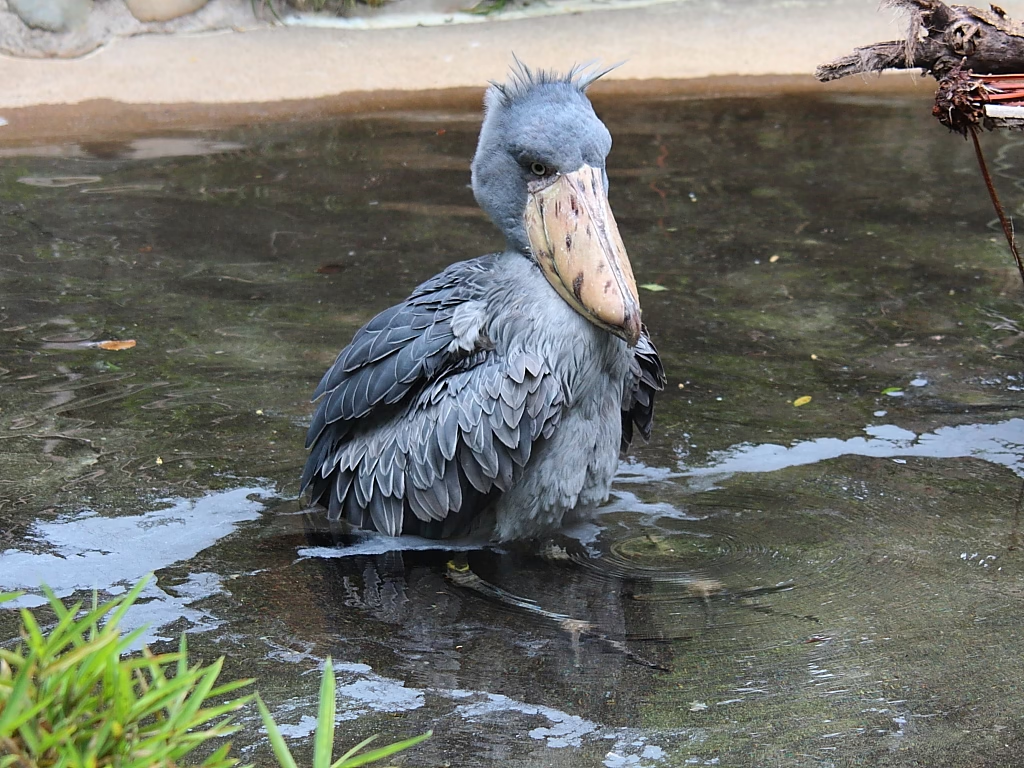
Travel Guide
Discover 5 fascinating facts about the shoebill, from its unique beak and hunting abilities to its solitary lifestyle and endangered status.
The Fascinating Facts About the Shoebill highlighted in the source focus on the bird’s unique beak, hunting abilities, solitary lifestyle, and endangered status. These characteristics help explain why the shoebill can become one of the most memorable birds for travelers interested in African wildlife.
Its appearance alone attracts attention, but understanding behavior and conservation gives a sighting much greater meaning.
Birdwatchers may travel specifically hoping to observe a shoebill, while general safari visitors may encounter the species as part of a broader wetland experience.
In either case, patience and responsible viewing are important.
The most immediately recognizable feature of the shoebill is the beak highlighted in the source.
Its unusual appearance gives the bird a profile that is difficult to confuse with many other species.
For first-time observers, the beak can appear almost disproportionate to the rest of the head.
Rather than treating this feature only as something visually strange, travelers can think about how physical characteristics relate to the bird’s lifestyle.
A knowledgeable guide can explain what visitors are observing without requiring them to approach too closely.
Photography naturally focuses on the head and beak.
A suitable telephoto lens can help capture detail while maintaining responsible distance.
Phone photographers should resist the temptation to move closer merely because their device cannot produce the desired image.
Wildlife welfare is more important than filling the frame.
Wide images can be equally effective.
A photograph showing the shoebill within wetland vegetation communicates habitat as well as appearance.
Hunting ability is another theme included among the source’s Fascinating Facts About the Shoebill.
For travelers, observing hunting behavior may require patience.
Wildlife does not perform on command.
A shoebill may remain relatively still for extended periods, and visitors who expect constant movement can become impatient.
This stillness is itself part of the observation.
Instead of assuming that nothing is happening, travelers can watch posture, head movement, and attention.
Birding often rewards this slower style of viewing.
Binoculars are particularly valuable because they allow visitors to study behavior without disturbing the bird.
If hunting behavior occurs, photographers should remain calm.
Sudden movement or loud conversation can interfere with the experience.
A responsible guide will position visitors according to local rules and conditions rather than trying to provoke action.
The best wildlife observations happen when animals behave naturally.
The source also identifies the shoebill’s solitary lifestyle as one of its fascinating characteristics.
This helps visitors understand why finding one bird can still represent a successful sighting.
Travelers accustomed to seeing large flocks may incorrectly assume that more individuals always create a better birding experience.
A solitary species requires a different expectation.
Finding and observing one individual can provide enough time to study its appearance and behavior closely.
The solitary theme also makes habitat protection important.
Wildlife needs appropriate space, and tourism should not crowd animals simply because a sighting is rare or highly desired.
When several boats, vehicles, or groups are present in a wildlife area, visitors should support responsible viewing practices rather than demanding the closest possible position.
The source specifically highlights endangered status.
This gives the Fascinating Facts About the Shoebill a conservation dimension.
A remarkable appearance can attract tourism interest, but long-term protection depends on more than popularity.
Habitat conservation, responsible tourism, research, and appropriate wildlife management can all matter.
The supplied source does not provide population estimates or detailed threat statistics, so current numerical claims should be verified independently before being used.
Travelers can still contribute through their behavior.
They should choose legitimate wildlife experiences, follow guide instructions, avoid littering, and never pressure operators to disturb birds.
Wetland environments deserve the same respect as forests and savannahs.
Plastic and other waste should never be left behind.
Visitors should not damage vegetation to obtain clearer photographs.
Drones should not be used without confirming applicable regulations and potential wildlife disturbance.
Anyone interested in supporting conservation financially should verify organizations before donating.
Responsible tourism is most useful when money and attention support credible conservation efforts.
The shoebill can be a powerful introduction to birdwatching for travelers who normally concentrate on mammals.
Its distinctive appearance makes identification exciting, while its behavior rewards careful observation.
Families can use a sighting to teach children about wetlands, bird adaptations, hunting, and conservation.
Photographers should prepare equipment before approaching a viewing area.
Camera sounds and movement should be managed according to guide instructions.
Travelers should also remember to spend some time observing without a screen.
A photograph records appearance, but direct observation can reveal behavior that a still image misses.
The source’s major themes—the unique beak, hunting ability, solitary lifestyle, and endangered status—demonstrate why this bird deserves attention.
Together they show that the shoebill is interesting for much more than its unusual appearance.
The Fascinating Facts About the Shoebill encourage travelers to see the bird as part of a wider wetland ecosystem.
Its distinctive physical features attract the eye, but its behavior and conservation status provide the deeper story.
A successful shoebill experience does not require getting extremely close.
Patience, binoculars, appropriate camera equipment, and professional guidance allow visitors to observe responsibly.
When tourism respects the bird’s space and habitat, a shoebill sighting can become both an exciting wildlife moment and an opportunity to understand why wetland conservation matters.

26 African Countries Under Full or Partial U.S. Travel Ban (Post-December Update) Following the December update to U.S.…
Read article →
3 Days Congo Gorilla Safari – Encounter the Gentle Giants of Virunga A 3 Days Congo Gorilla Safari…
Read article →
Children and Kids on Safari – Family-Friendly Adventures in Africa Taking children on an African safari is one…
Read article →
How to Plan a Safari in Uganda—Your Complete Travel Guide Planning a safari in Uganda is the start…
Read article →