

26 African Countries Under Full or Partial U.S. Travel Ban (Post-December Update)
26 African Countries Under Full or Partial U.S. Travel Ban (Post-December Update) Following the December update to U.S.…
Read article →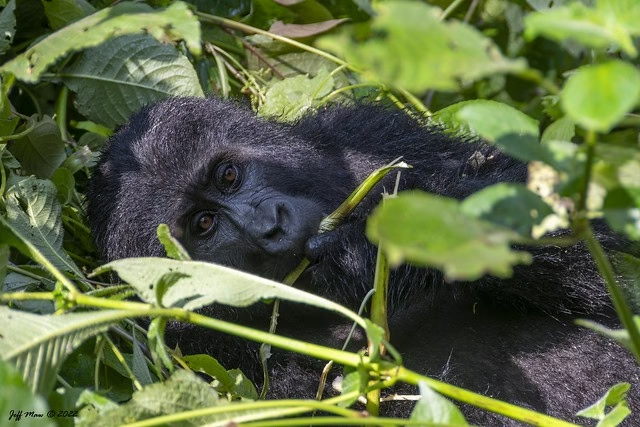
Travel Guide
Explore the key differences between apes and monkeys, from physical traits like tails to intelligence, habitats, and behaviors. Discover their unique characteristics.
Understanding the Difference Between Apes and Monkeys helps explain the remarkable diversity found within the primate order. Although the terms are sometimes used interchangeably in everyday conversation, apes and monkeys differ in several important ways. Their physical characteristics, movement, social behavior, intelligence, tool use, parental care, and geographical distribution all provide useful ways to distinguish them.
The supplied source emphasizes one especially recognizable physical distinction: most monkeys have tails, while apes do not. However, identification should not stop there. Body structure, movement, brain development, communication, and habitat also reveal significant differences.
Apes include gorillas, chimpanzees, orangutans, gibbons, and humans. Monkeys include a much wider variety of primates distributed between the New World species of Central and South America and the Old World species of Africa and Asia.
Examining these characteristics together provides a clearer understanding of how these two broad primate groups differ.
One of the easiest ways to begin distinguishing apes from monkeys is to look for a tail.
According to the supplied source, most monkeys have tails, while apes do not.
Among some New World monkeys, the tail can do considerably more than provide balance. Species such as spider monkeys and howler monkeys may possess prehensile tails capable of helping them grasp branches.
The tail can therefore become an important part of movement through forest habitats.
Apes, by comparison, have no tails. Gorillas, chimpanzees, orangutans, gibbons, and humans all share this characteristic.
However, the absence of a tail should be considered alongside other physical features rather than being used as the only method of identification.
The supplied source describes monkeys as generally smaller and lighter than apes.
Their bodies are often suited to agile movement, particularly among species that spend substantial time in trees.
A smaller body can make movement between branches more efficient. Many monkeys move on all fours and may use their tails for balance as they navigate forest environments.
There is considerable variation among monkey species, but the overall comparison presented in the source is that monkeys tend to have lighter builds than apes.
Apes are described as generally larger and more robust.
Their broad chests and powerful arms support different forms of movement.
Gorillas and chimpanzees, for example, can spend substantial periods on the ground, while gibbons are highly specialized for moving through trees.
The body structure of an ape therefore reflects a combination of strength and flexibility rather than dependence on a tail for balance.
Movement is another useful way to understand the Difference Between Apes and Monkeys.
The source describes many monkeys as primarily arboreal and highly agile.
They may run along branches, climb, and leap through the canopy.
Old World monkeys can divide their time between trees and the ground, depending on species and habitat.
Apes show different movement patterns.
Gibbons are highlighted in the supplied source for their ability to use brachiation.
Brachiation involves swinging from branch to branch using the arms.
Long arms and strong upper bodies make this form of movement highly effective.
Watching a gibbon move through the canopy demonstrates how body structure can become specialized for a particular environment.
Gorillas and chimpanzees spend considerable time on the ground according to the source.
Their powerful limbs support terrestrial movement while retaining the ability to climb.
This combination is one reason ape movement can appear very different from the quick branch-to-branch activity associated with many monkeys.
Humans are also apes.
The supplied source identifies upright walking as the distinctive human form of movement within this broader comparison.
Recognizing humans as part of the ape group helps place the differences between monkeys and apes within an evolutionary rather than purely visual context.
Behavior provides another important distinction.
The source describes monkeys as often living in large hierarchical groups with complex social systems.
These groups can involve dominance relationships, grooming, vocal communication, facial expressions, and other forms of interaction.
A monkey troop is therefore not simply a collection of individuals occupying the same area. Relationships influence access to food, mating opportunities, protection, and social support.
Grooming plays an important role in many primate societies.
Although it removes dirt and parasites, grooming can also reinforce social relationships.
Individuals may use grooming to maintain alliances or strengthen bonds.
Observing which animals groom one another can provide clues about the social structure of a group.
The source also emphasizes vocal communication among monkeys.
Calls may help individuals maintain contact, respond to threats, or communicate within the group.
Different monkey species have different vocal systems.
Visitors observing wild primates should therefore listen as well as watch.
The supplied source describes apes as having smaller, tighter-knit social groups with nuanced and cooperative interactions.
Apes can form alliances and participate in conflict resolution.
Their social intelligence has become an important subject of primate research.
Different ape species have different social systems, so the broad comparison should not be interpreted as meaning every ape lives in exactly the same type of group.
The ability to form alliances illustrates the complexity of ape relationships.
Individuals may cooperate for social or practical reasons.
These relationships can change over time.
Understanding such behavior requires long-term observation because a single encounter rarely reveals the full structure of a primate community.
Both monkeys and apes provide maternal care, but the source emphasizes that apes generally invest more time and resources in raising offspring because of their longer juvenile periods.
Young apes have extended opportunities to learn from adults.
This prolonged development supports the acquisition of complex social and practical skills.
A longer juvenile stage creates time for observation and learning.
Young apes can watch adults feeding, moving, interacting, and using tools.
Skills do not need to be entirely instinctive when offspring have years in which to learn from experienced group members.
This extended development is closely connected with ape intelligence.
The supplied source identifies brain development as another major Difference Between Apes and Monkeys.
Monkeys are described as having smaller brains relative to the comparison made with apes, while apes possess larger and more complex brains.
This increased complexity is associated in the source with advanced problem-solving, tool use, self-awareness, and abstract thinking.
However, describing monkeys as less cognitively complex does not mean they lack intelligence.
Monkey behavior can also involve learning, memory, social awareness, and problem-solving.
Apes are particularly well known for solving practical problems.
They can adapt behavior when confronted with new situations.
Research into chimpanzees and other great apes has demonstrated sophisticated approaches to obtaining food, interacting socially, and manipulating objects.
These abilities are among the reasons primate cognition receives substantial scientific attention.
Tool use is not exclusive to apes.
The supplied source specifically mentions capuchin monkeys using rocks to crack nuts.
This is an important example because it demonstrates that monkeys can also manipulate objects to achieve practical objectives.
The difference presented by the source is therefore one of degree and regularity rather than an absolute division between tool-using apes and non-tool-using monkeys.
Apes are described as using tools more regularly.
The source provides the example of chimpanzees using sticks to fish for termites.
A suitable stick can be modified and inserted into a termite nest, allowing the chimpanzee to obtain food that would otherwise be difficult to reach.
The behavior requires coordination and practical understanding.
The supplied source also emphasizes that apes can teach or transmit tool-use skills to offspring.
Young animals learn by watching more experienced individuals.
This creates behavioral traditions that can persist within groups.
The existence of learned techniques demonstrates the importance of social learning in ape communities.
Communication offers another comparison.
The source describes monkey vocalizations as generally simpler while noting that apes can learn rudimentary communication systems such as sign-based systems under controlled circumstances.
This does not mean apes communicate naturally using human sign language in the wild.
Rather, the source uses these examples to illustrate their capacity for learning symbolic forms of communication.
Both monkeys and apes communicate through more than sound.
Facial expressions, posture, grooming, movement, and gestures can all carry information.
Apes are particularly noted for nuanced gestures and social communication.
Careful observation of wild primates often reveals interactions that are easy to miss when visitors focus only on dramatic vocalizations.
Habitat and geography provide another major distinction.
The supplied source describes New World monkeys as living in Central and South America.
Many inhabit dense forests where climbing ability and, in some species, prehensile tails are particularly useful.
This geographical separation distinguishes them from Old World monkeys.
Old World monkeys occur naturally in Africa and Asia according to the supplied material.
They occupy a broad range of habitats, including forests and savannahs.
Some species spend substantial time in trees, while others are frequently seen on the ground.
This wide ecological range contributes to the considerable diversity among monkeys.
Non-human apes are naturally distributed across parts of Africa and Asia.
The source identifies gorillas and chimpanzees with Africa, while orangutans and gibbons occur in Asia.
Their habitats include tropical forests and mountainous environments.
Because different ape species have specialized ecological requirements, protecting habitat is central to their survival.
Gorillas are among the most recognizable African apes.
Their large size and ground-based movement make them physically distinct from most monkeys.
For travelers in Uganda and Rwanda, gorilla trekking can provide a direct opportunity to observe ape behavior in natural forest environments.
The experience also makes differences in body structure particularly obvious.
Chimpanzees are another African ape identified in the source.
Their tool use, complex social relationships, communication, and problem-solving have made them important subjects of research.
Forest trekking experiences can allow visitors to observe some of these behaviors while following responsible wildlife guidelines.
Orangutans and gibbons demonstrate the diversity found within the ape group.
Although both occur in Asia, they differ considerably in body size and movement.
Gibbons are particularly adapted to brachiation, while orangutans have their own specialized arboreal lifestyle.
This variation demonstrates why “ape” should not be imagined as describing one single body form or behavior.
The supplied source identifies habitat loss as a significant challenge for apes.
Forest destruction can remove feeding areas, nesting sites, and movement routes.
Because some ape species have restricted distributions and slow reproduction, habitat pressure can have serious consequences.
Protecting primates therefore requires protecting the ecosystems in which they live.
Understanding the Difference Between Apes and Monkeys improves wildlife observation.
Instead of referring to every primate as a monkey, travelers can begin recognizing differences in anatomy, movement, social behavior, and habitat.
A tailed primate leaping through branches may belong to a monkey species, while a large tailless primate moving through the forest could belong to one of the ape groups.
Guides can provide further identification based on the specific species present.
The supplied source presents several clear distinctions between monkeys and apes.
Most monkeys have tails, while apes do not. Monkeys are generally smaller and more agile, whereas apes tend to have larger bodies, broader chests, and strong arms.
Monkeys often live in large hierarchical groups and communicate through grooming, calls, and facial expressions. Apes demonstrate complex social relationships, extended parental care, sophisticated problem-solving, and frequent tool use.
Geography also separates the groups. New World monkeys occur in Central and South America, while Old World monkeys inhabit Africa and Asia. Non-human apes occur in Africa and Asia.
The differences become clearest when physical appearance, movement, behavior, intelligence, and habitat are considered together. Both groups remain highly diverse, and understanding that diversity creates a much richer appreciation of primate life.

26 African Countries Under Full or Partial U.S. Travel Ban (Post-December Update) Following the December update to U.S.…
Read article →
3 Days Congo Gorilla Safari – Encounter the Gentle Giants of Virunga A 3 Days Congo Gorilla Safari…
Read article →
Children and Kids on Safari – Family-Friendly Adventures in Africa Taking children on an African safari is one…
Read article →
How to Plan a Safari in Uganda—Your Complete Travel Guide Planning a safari in Uganda is the start…
Read article →