

26 African Countries Under Full or Partial U.S. Travel Ban (Post-December Update)
26 African Countries Under Full or Partial U.S. Travel Ban (Post-December Update) Following the December update to U.S.…
Read article →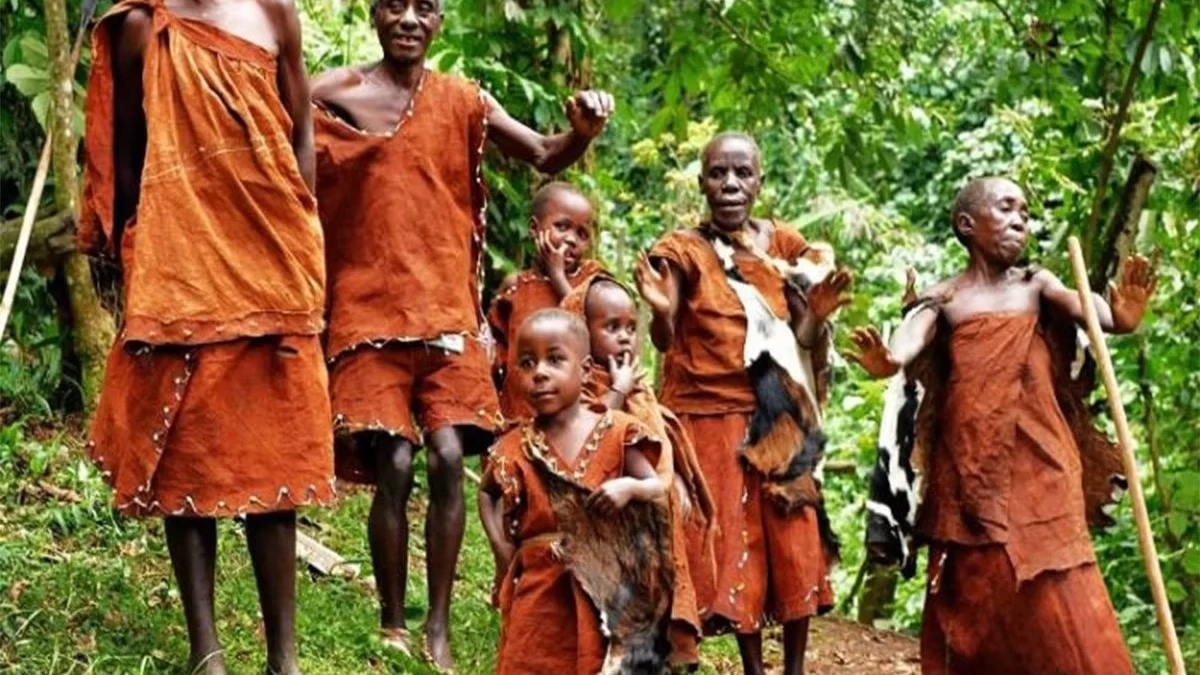
Travel Guide
Explore the Bakiga and Batwa communities around Bwindi National Park. Learn about their roles in conservation and tourism, and how they benefit from the park.
The Communities Around Bwindi National Park form an important part of the wider story of conservation and tourism in southwestern Uganda. The supplied source focuses particularly on the Bakiga and Batwa, two communities with distinct histories, cultural traditions, livelihoods, and relationships with the landscape surrounding Bwindi Impenetrable National Park.
Bwindi is internationally recognized for mountain gorilla trekking, but the protected forest does not exist in isolation from human settlement.
Villages, farms, tourism businesses, schools, community organizations, and cultural initiatives surround the park. People living in these areas are affected by conservation decisions and can also play important roles in protecting the forest.
Understanding the Bakiga and Batwa therefore gives travelers a more complete view of Bwindi.
The supplied source describes the Bakiga people as living in areas surrounding Bwindi, including communities around Buhoma.
Agriculture has historically been central to their livelihoods.
The source specifically mentions crops such as bananas, maize, and beans.
Farming remains highly visible across southwestern Uganda, where cultivated hillsides create a dramatic contrast with the dense protected forest.
The Bakiga’s connection with agriculture demonstrates how strongly community livelihoods depend on land.
Farms provide food and income while supporting families living close to the national park.
This proximity also creates an important relationship between conservation and development.
When land around a protected forest is heavily used, sustainable farming and careful resource management become particularly important.
According to the supplied source, tourism has created additional economic opportunities for Bakiga communities.
These include cultural tours, homestays, and handicraft sales.
Such activities allow visitors to spend money outside conventional safari lodges while learning about life around Bwindi.
The quality of the experience is strongest when local residents participate directly in designing and operating tourism activities.
The source specifically mentions the Buhoma Community Development Association, or BCDA.
It presents this initiative as supporting eco-tourism and community development around Buhoma.
Community organizations can help connect tourism income with local priorities.
They may also create structured ways for visitors to participate in cultural experiences without entering communities uninvited.
A Bakiga cultural tour can introduce visitors to farming, food, crafts, music, and other aspects of community life.
Travelers should approach these activities as opportunities for exchange.
A village is not a museum display.
People are living, working, raising families, and adapting to modern economic conditions.
The supplied source identifies homestays as another tourism opportunity.
A well-managed homestay can provide a closer understanding of daily life than a short village walk.
It can also direct a larger proportion of visitor spending toward participating households.
Travelers should follow the host’s expectations regarding privacy, meals, photography, and household routines.
Handmade products provide another source of tourism income.
Purchasing crafts directly can support artisans while giving travelers a meaningful reminder of their visit.
Visitors should ask about who produced the item and where the money goes rather than assuming every souvenir sold near Bwindi is locally made.
The source describes Bakiga communities as participating in eco-tourism and conservation education.
This involvement matters because local support can strengthen the long-term protection of Bwindi.
Communities living beside wildlife areas experience conservation differently from international visitors who stay for only a few days.
Their needs and concerns are therefore central to sustainable protected-area management.
The supplied source states that tourism-related revenue contributes to projects involving schools, healthcare, and infrastructure.
Such benefits can help create a stronger relationship between tourism and community development.
The precise structure and scale of revenue distribution should be understood through current local information rather than assumed from general descriptions.
The second major community discussed in the supplied source is the Batwa.
The source describes the Batwa as people who historically lived within the Bwindi forest and depended heavily on forest resources through hunting and gathering.
Their relationship with the forest therefore differed substantially from that of surrounding agricultural communities.
Batwa knowledge historically included hunting, gathering, plants, forest movement, and other skills connected with living in a dense tropical environment.
The forest provided food, materials, medicine, and cultural meaning.
This relationship is central to understanding Batwa history around Bwindi.
The supplied source states that the establishment of Bwindi as a national park in 1991 displaced Batwa communities from the forest.
It presents this displacement as creating significant challenges.
People accustomed to forest-based livelihoods suddenly had to adapt to life outside the environment on which they had depended.
This history is an essential part of the conservation story around Bwindi.
According to the source, Batwa communities faced substantial social and economic difficulties after leaving the forest.
Adjusting to new livelihoods was not simple.
Loss of direct access to ancestral landscapes affected not only subsistence but also cultural and spiritual relationships.
Visitors should therefore avoid presenting Batwa history as a romantic story of traditional forest life without acknowledging displacement.
Today, the supplied source says some Batwa work with tourism organizations to offer cultural experiences.
Visitors may learn about historical hunting techniques, forest knowledge, music, dance, and other traditions.
These experiences can generate income while providing a way to preserve and communicate cultural knowledge.
The source also describes Batwa participants sharing knowledge of the forest ecosystem.
This expertise can give visitors a perspective different from that offered by a standard nature walk.
Plants and forest features can be understood not only ecologically but also in relation to traditional use and cultural meaning.
Tourism can provide a platform for maintaining certain traditions, but preservation should remain community-led.
The goal should not be to freeze Batwa identity in the past.
Like all communities, Batwa people have contemporary aspirations involving education, healthcare, livelihoods, land, and social inclusion.
The supplied source refers to initiatives improving education and healthcare access for Batwa communities.
These services are important elements of community development.
Tourism alone cannot address every social challenge, but responsible tourism can contribute resources and visibility to locally directed programs.
Although both communities live around Bwindi, their histories should not be treated as interchangeable.
The Bakiga are described in the source primarily through agricultural livelihoods and community-based tourism.
The Batwa story is closely connected with historical forest residence and displacement following protected-area establishment.
Understanding these differences prevents oversimplification.
The supplied source emphasizes community development projects funded through eco-tourism.
Education, healthcare, roads, and other infrastructure are among the areas mentioned.
The broader principle is that conservation becomes more sustainable when surrounding communities can see meaningful benefits from the protected area.
Living beside a national park can also create challenges.
The source refers to collaboration intended to reduce human-wildlife conflict.
Wild animals do not recognize park boundaries, and interactions with farms or settlements can affect local livelihoods.
Effective conservation therefore requires practical responses to the costs communities may experience.
The source also mentions efforts to encourage sustainable farming practices.
Agriculture around Bwindi must support families while operating beside an ecologically sensitive protected forest.
Improving farming methods can reduce pressure for additional land while supporting local food security and income.
Tourism, crafts, guiding, and other activities can diversify household income.
This is valuable because relying on a single livelihood can leave families vulnerable.
Alternative income can also reduce dependence on extracting resources from protected forest.
The supplied source acknowledges that poverty and limited access to resources remain challenges for both communities.
This is important because tourism success should not be assumed to eliminate underlying inequalities.
Community development is an ongoing process rather than a problem solved simply by the presence of international visitors.
Travelers can contribute by choosing community-led activities, purchasing locally produced goods, respecting photography preferences, and listening carefully to local guides.
Visitors should avoid intrusive questions or behavior that turns hardship into a tourism spectacle.
Respect is as important as financial support.
Bwindi’s mountain gorillas depend on the forest, but the future of that forest is also connected with people living around it.
Conservation strategies that ignore community needs risk creating resentment.
Approaches that integrate local participation, livelihoods, education, and tourism benefits can create stronger incentives for long-term protection.
The Communities Around Bwindi National Park: The Bakiga and Batwa. are essential to understanding the wider landscape surrounding one of Uganda’s most famous protected areas. The supplied source describes Bakiga communities through agriculture, eco-tourism, cultural tours, homestays, handicrafts, and community development, while the Batwa story centers on historical forest life, displacement, cultural preservation, and adaptation to livelihoods outside the park.
Both communities participate in a region transformed by conservation and tourism.
Schools, healthcare, infrastructure, alternative livelihoods, cultural programs, and conservation projects demonstrate some of the ways tourism can connect with community development.
For visitors, learning about these communities adds a human dimension to a Bwindi safari. Gorilla trekking may be the headline attraction, but understanding the people living around the forest provides a fuller picture of what sustainable conservation in Bwindi actually requires.

26 African Countries Under Full or Partial U.S. Travel Ban (Post-December Update) Following the December update to U.S.…
Read article →
3 Days Congo Gorilla Safari – Encounter the Gentle Giants of Virunga A 3 Days Congo Gorilla Safari…
Read article →
Children and Kids on Safari – Family-Friendly Adventures in Africa Taking children on an African safari is one…
Read article →
How to Plan a Safari in Uganda—Your Complete Travel Guide Planning a safari in Uganda is the start…
Read article →