

26 African Countries Under Full or Partial U.S. Travel Ban (Post-December Update)
26 African Countries Under Full or Partial U.S. Travel Ban (Post-December Update) Following the December update to U.S.…
Read article →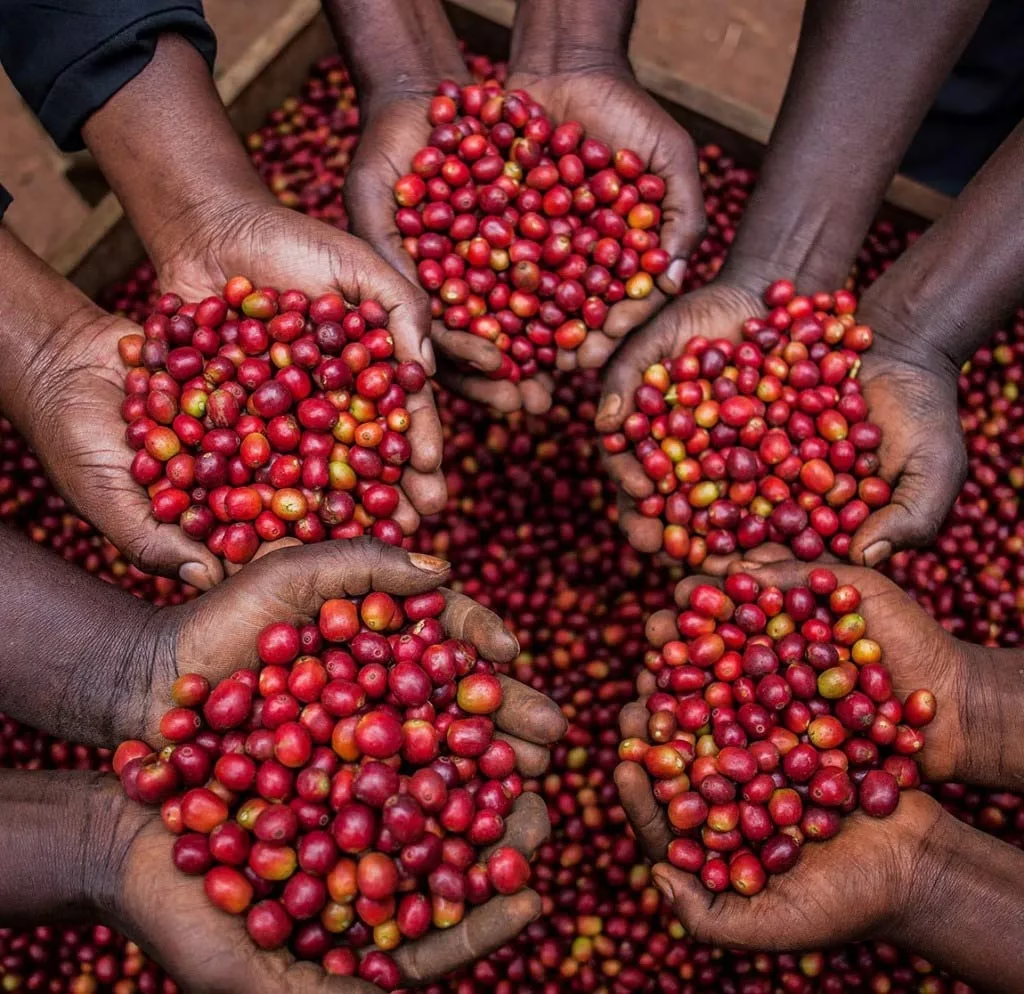
Travel Guide
Join immersive coffee tours in Uganda’s top growing regions. Visit farms, meet farmers, and taste authentic Ugandan Arabica and Robusta at the source.
Coffee Tours in Uganda: Explore the Roots of the Pearl’s Brew introduces travelers to one of the country’s most important agricultural products through direct encounters with coffee farms, farmers, processors and local communities. Instead of experiencing Ugandan coffee only as a finished drink in a café, a coffee tour provides an opportunity to understand the work that happens before roasted beans reach the cup.
Uganda’s varied landscapes support coffee production in different parts of the country. The country’s combination of highlands, fertile soils and tropical conditions creates environments where coffee farming has become closely connected with rural livelihoods. Travelers can encounter both Arabica and Robusta production depending on the region they visit.
A well-organized coffee experience is therefore more than a tasting session. It can explain cultivation, harvesting, processing, drying, roasting and preparation while introducing visitors to the people whose work supports the industry.
For travelers combining wildlife safaris with cultural and agricultural experiences, coffee tours provide a valuable way to see another side of Uganda.
Coffee is closely connected with Uganda’s agricultural economy and rural communities. Visiting a farm allows travelers to understand that the drink served at breakfast begins with a crop requiring careful management long before harvesting.
Farmers must consider the condition of their plants, weather, soil, harvesting and post-harvest handling. Each stage can influence the quality of the final product.
During a guided experience, visitors may learn how coffee plants are grown and how farmers identify cherries that are ready for harvesting. The precise activities available depend on the farm, region and season.
This seasonal element is important. A visitor should not expect every stage of coffee production to be taking place simultaneously throughout the year.
One of the most useful aspects of Coffee Tours in Uganda: Explore the Roots of the Pearl’s Brew is the opportunity to learn about Uganda’s different coffee varieties.
Arabica coffee is commonly associated with higher-altitude growing environments. Travelers visiting mountainous areas may encounter farms where elevation and local conditions influence production.
Robusta coffee has deep connections with Uganda and is cultivated in suitable lower-altitude environments. Its characteristics differ from Arabica, creating opportunities for visitors to compare plants, beans and flavors.
A guided tour can explain these differences more effectively than simply reading the names on a coffee package.
A typical coffee-farm visit begins with an introduction to the plants and the landscape in which they grow. The guide or farmer may explain how seedlings are established and how mature plants are maintained.
Walking through the farm gives visitors an opportunity to see how coffee fits into a wider agricultural system.
Some farms grow other crops nearby. This can help travelers understand how rural households use their land and why agricultural production is rarely as simple as a single crop growing in isolation.
The experience becomes particularly valuable when the farmer has enough time to answer questions about everyday production rather than presenting only a brief demonstration.
Coffee cherries need to reach an appropriate stage before harvesting.
On suitable tours and during the appropriate season, visitors may learn how ripe cherries are identified and collected. This provides an immediate explanation of why careful harvesting matters.
Quality can be influenced by what happens at this stage.
Harvesting coffee is labor-intensive, and seeing the process helps visitors appreciate how much human work lies behind a finished cup.
Travelers should remember that participating briefly for tourism is very different from depending on agricultural labor for a livelihood.
After harvesting, coffee must undergo processing before it becomes the familiar roasted product.
The exact method depends on the coffee and producer.
A tour may demonstrate how the fruit is removed, how beans are handled and how they are dried. Guides can explain why moisture control and careful handling are important.
This stage is particularly useful for visitors who previously imagined that coffee beans simply come directly from the plant in the form seen inside a café.
Understanding processing reveals how many transformations occur between farm and cup.
Drying is an important part of preparing coffee after harvesting and processing.
Visitors may see coffee spread out for drying where conditions and farm practices allow.
Sorting can help separate beans according to quality and remove unsuitable material.
These tasks may appear simple when demonstrated quickly, but consistency matters.
Small differences in post-harvest handling can influence the quality that eventually reaches roasters and consumers.
A good guide explains why each stage is performed instead of merely showing visitors the equipment.
Roasting transforms processed green coffee into the aromatic beans familiar to consumers.
Some community and farm experiences demonstrate roasting using relatively simple methods, while commercial operations may use specialized equipment.
Watching this transformation can be one of the most memorable parts of a coffee tour.
The aroma changes as heat affects the beans, making the process immediately noticeable even to visitors with limited knowledge of coffee.
Travelers can also learn why roasting style influences flavor and why different coffees may be prepared differently.
After roasting, beans need to be ground and brewed before visitors can finally taste the result.
Participating in this stage completes the journey from farm to cup.
Depending on the experience, visitors may grind coffee using traditional or modern methods.
The final tasting becomes more meaningful because the drink is no longer an anonymous product. Travelers have already seen the plants, learned about harvesting and followed the stages that prepared the beans.
That context often changes how people think about coffee long after the tour ends.
The Mount Elgon region is one of Uganda’s important areas for travelers interested in highland coffee experiences.
The combination of mountain landscapes, farming communities and nearby attractions makes coffee tourism relatively easy to incorporate into a broader eastern Uganda itinerary.
Travelers visiting Sipi Falls can often explore the agricultural character of the surrounding region alongside hiking and sightseeing.
A coffee experience adds cultural and economic context to the landscape.
Instead of seeing cultivated hillsides simply as scenery, visitors begin to understand how people use them to support their households.
Sipi Falls is one of the most recognizable attractions in eastern Uganda and can be combined naturally with a coffee-focused visit.
A traveler may spend part of the itinerary hiking around the waterfalls and another part learning about local coffee production.
These experiences complement one another because they reveal both the natural and human sides of the Mount Elgon region.
The waterfalls provide dramatic scenery, while coffee farming demonstrates how communities make use of the surrounding highland environment.
Spending at least one or two nights in the area allows the itinerary to remain relaxed.
Travelers do not necessarily need to travel to Mount Elgon to learn about Ugandan coffee.
Coffee-related experiences can also be found in other parts of the country, depending on available farms and tour programs.
Visitors with limited time may prefer an experience that can be incorporated around Kampala, Entebbe or another point on their existing route.
The quality of the tour should matter more than simply choosing the closest farm.
Look for an experience where knowledgeable hosts explain production in detail and where local participants receive meaningful benefits.
The human interaction is often the most important part of a coffee tour.
Farmers can explain challenges and practices from direct experience.
Travelers may learn how weather affects production, how harvesting requires labor and how coffee fits into household livelihoods.
These conversations should be approached respectfully.
Visitors should not assume that one farmer represents every coffee producer in Uganda. Farming methods, farm size and economic circumstances vary considerably.
A coffee tour provides one local perspective within a much larger industry.
Well-designed coffee tourism can create additional opportunities for communities.
Visitors may pay for guided experiences, purchase locally produced coffee or use other tourism services in the area.
The value of this model depends on how benefits are distributed.
Travelers can support responsible experiences by choosing programs where local people participate meaningfully rather than appearing only as background for photographs.
Buying legitimate coffee products directly from producers or recognized community enterprises can also extend the economic value of the visit.
Coffee farms provide attractive photography opportunities, particularly in mountainous regions.
However, farms are workplaces and often family environments.
Visitors should ask permission before taking close photographs of farmers, workers or children.
Photographing plants, landscapes and processing equipment is generally straightforward when the host permits it, but people deserve the same privacy and respect travelers would expect elsewhere.
Responsible tourism involves interaction rather than simply collecting images.
Coffee tours frequently involve walking on uneven agricultural paths.
Comfortable closed shoes with good grip are preferable to sandals, particularly after rain.
A lightweight waterproof jacket is useful because weather can change quickly in highland regions.
Long trousers may provide additional protection from vegetation.
Sun protection and drinking water are also useful.
Travelers carrying cameras should protect them against rain and dust.
The duration depends on the program.
A short demonstration may take only part of a morning, while a detailed farm-to-cup experience can occupy several hours.
Travelers genuinely interested in coffee should avoid selecting an itinerary that rushes every production stage into a few minutes.
Enough time should be allowed for questions, walking through the farm and tasting the finished coffee.
A slower experience usually provides a clearer understanding of the production process.
Coffee Tours in Uganda: Explore the Roots of the Pearl’s Brew can fit naturally into a wider safari.
Visitors traveling through eastern Uganda can combine coffee experiences with Sipi Falls and Mount Elgon. Travelers following longer routes can incorporate agricultural tourism between wildlife destinations where logistics permit.
Coffee tourism provides an effective contrast with game drives.
On safari, visitors primarily observe wildlife. On a coffee farm, they interact with people and learn how landscapes support livelihoods.
Combining the two creates a more complete understanding of Uganda.
Coffee can also provide a practical souvenir.
Instead of purchasing an object with little connection to the places visited, travelers can take home coffee linked directly with a region or producer they encountered.
Visitors should choose properly packaged products suitable for travel and check any relevant customs requirements for their destination country.
Purchasing directly from legitimate producers can make the souvenir more meaningful because the traveler understands where it came from.
The strongest reason to include Coffee Tours in Uganda: Explore the Roots of the Pearl’s Brew is the opportunity to connect a familiar everyday drink with the people, landscapes and agricultural work behind it.
Travelers can walk among coffee plants, learn how cherries are harvested, understand processing and observe how beans are roasted and prepared.
The experience also adds depth to a Uganda itinerary.
Wildlife remains one of the country’s major attractions, but Uganda is also a place of farms, communities and working landscapes. Coffee tourism makes those landscapes visible.
A cup tasted at the end of the tour therefore represents much more than a refreshing drink. It reflects cultivation, labor, knowledge and the long process that transforms coffee grown in Uganda into a product enjoyed both locally and internationally.

26 African Countries Under Full or Partial U.S. Travel Ban (Post-December Update) Following the December update to U.S.…
Read article →
3 Days Congo Gorilla Safari – Encounter the Gentle Giants of Virunga A 3 Days Congo Gorilla Safari…
Read article →
Children and Kids on Safari – Family-Friendly Adventures in Africa Taking children on an African safari is one…
Read article →
How to Plan a Safari in Uganda—Your Complete Travel Guide Planning a safari in Uganda is the start…
Read article →