
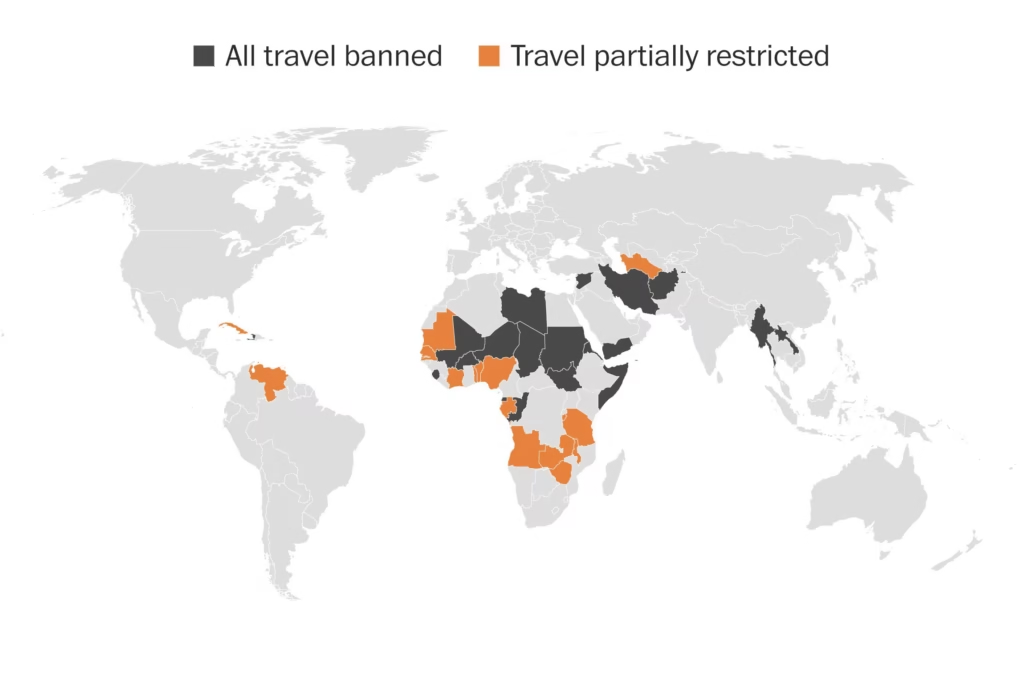
26 African Countries Under Full or Partial U.S. Travel Ban (Post-December Update)
26 African Countries Under Full or Partial U.S. Travel Ban (Post-December Update) Following the December update to U.S.…
Read article →
Travel Guide
Discover the unique selling points of Bwindi Impenetrable National Park, including gorilla trekking, bird watching, cultural experiences, and wildlife conservation.
The main Bwindi Impenetrable National Park Unique Selling Point is its combination of mountain gorilla trekking with exceptional forest biodiversity, birdwatching, cultural experiences, hiking, scenery, and conservation.
Located in southwestern Uganda, Bwindi is described in the supplied source as a UNESCO World Heritage Site and one of Africa’s most important destinations for mountain gorillas.
Gorilla trekking is unquestionably the park’s defining tourism experience.
However, reducing Bwindi to gorillas alone overlooks much of what makes the forest distinctive.
Visitors can also explore a rich birding environment, encounter other primates and mammals, walk through dramatic forest landscapes, participate in cultural experiences, and learn about conservation and community initiatives.
The combination of these attractions is what gives Bwindi its broader appeal.
The supplied source identifies mountain gorillas as the primary reason visitors travel to Bwindi.
Trekkers enter the misty forest with guides and rangers in search of habituated gorilla families.
The encounter takes place within the animals’ natural habitat.
That setting matters.
Visitors do not simply see gorillas; they experience the forest environment in which the animals live.
The trek may involve steep terrain, dense vegetation, and changing weather.
Reaching a gorilla family after walking through this landscape gives the encounter a sense of adventure that cannot be separated from Bwindi itself.
Mountain gorillas move through the forest according to their own routines.
They feed, rest, groom, travel, and interact socially.
Visitors observing a family may see a large silverback, adult females, juveniles, and infants.
Every encounter is different because animal behavior cannot be scripted.
This unpredictability is one of Bwindi’s strengths.
The forest is not a controlled display environment.
Visitors enter a functioning ecosystem and observe gorillas within it under regulated conditions.
That authenticity forms a major part of the Bwindi Impenetrable National Park Unique Selling Point.
The supplied source emphasizes that Bwindi offers considerably more than gorillas.
Its biodiversity includes other primates, mammals, birds, and the complex vegetation of the forest itself.
A visitor who slows down can discover an ecosystem operating at many levels.
Large mammals may attract immediate attention, but smaller animals, birds, insects, plants, and forest sounds contribute to the overall experience.
This makes Bwindi suitable for travelers interested in nature more broadly.
A longer stay allows visitors to appreciate these additional elements rather than arriving only for a gorilla trek and leaving immediately afterward.
Birdlife is one of the strongest secondary attractions identified in the supplied material.
The source describes Bwindi as an important African birding destination and states that the forest supports more than 350 bird species, including 23 Albertine Rift endemics.
For dedicated birdwatchers, this makes the park a destination in its own right.
The source specifically highlights the African Green Broadbill and Shelley’s Crimsonwing.
Locating specialist forest birds can require patience and experienced guiding.
Dense vegetation often means birds are heard before they are seen.
Birdwatching works naturally alongside gorilla trekking because it encourages visitors to spend more time exploring the forest.
A gorilla trek may dominate one day, while another can focus on birding or a guided nature walk.
This produces a more balanced itinerary.
Birding also changes how visitors experience the environment.
Instead of concentrating on reaching one particular animal, travelers begin noticing calls, movement in the canopy, vegetation types, and subtle habitat differences.
Even people who do not consider themselves serious birdwatchers can find this slower form of exploration rewarding.
The supplied source states that Bwindi also contains chimpanzees, colobus monkeys, and red-tailed monkeys.
These species add to the park’s primate diversity.
Gorillas remain the principal attraction, but knowing that the forest supports other primates reinforces the ecological richness of Bwindi.
Visitors may encounter some wildlife opportunistically during walks.
The presence of multiple primate species also reminds travelers that conservation of Bwindi’s forest protects far more than one iconic animal.
The same habitat supports a much wider biological community.
The source also mentions forest elephants, buffalo, and smaller mammals.
Forest wildlife can be difficult to observe because dense vegetation reduces visibility.
This differs greatly from an open savannah safari where animals may be visible from considerable distances.
The challenge is part of the character of Bwindi.
Tracks, sounds, and signs can sometimes reveal wildlife that remains hidden.
Experienced guides can help visitors interpret these clues.
The forest environment rewards attention to details rather than relying only on obvious sightings.
Another major element of the Bwindi Impenetrable National Park Unique Selling Point is cultural heritage.
The supplied source highlights experiences involving the Batwa people, who have a historical relationship with the forest.
Cultural activities provide opportunities to learn about traditional lifestyles and forest knowledge.
The source refers to hunting and medicinal practices as subjects that may be explained during these experiences, alongside music and dance.
This introduces a human dimension to a destination often discussed almost entirely in terms of wildlife.
Cultural tourism should be based on respectful interaction.
Visitors should approach these experiences as opportunities to listen and learn.
The communities surrounding Bwindi have their own histories and contemporary lives.
They should not be treated merely as an attraction attached to gorilla trekking.
When well organized, community experiences can help travelers understand how conservation, tourism, livelihoods, and cultural heritage intersect around the forest.
This broader context can make a Bwindi journey more meaningful.
The supplied source identifies several hiking opportunities through Bwindi’s dense forest.
Trails can lead through landscapes containing waterfalls, swamps, steep ridges, and lush vegetation.
Hiking provides a different experience from gorilla trekking.
During a gorilla trek, the route is influenced by the location of the assigned family.
A general forest walk can instead focus on scenery, plants, birds, and the experience of moving through the ecosystem.
This makes hiking an excellent addition for travelers spending multiple nights near the park.
Bwindi’s terrain is part of its identity.
The source highlights misty valleys, ridges, dense vegetation, and viewpoints associated with areas such as Nkuringo and Ruhija.
These landscapes create strong photography opportunities.
Visitors interested in scenery can photograph more than wildlife.
Morning mist, forest-covered slopes, cultivated hills beyond the protected area, and distant mountain views all help tell the story of southwestern Uganda.
Landscape photography can also be less hurried than wildlife photography, allowing travelers to experiment with composition and changing light.
The source specifically identifies Nkuringo and Ruhija as areas with impressive views toward surrounding valleys and the Virunga landscape.
Different parts of Bwindi provide different perspectives.
This is important because the national park should not be imagined as one small, uniform forest.
Its terrain and tourism areas vary.
Travelers planning accommodation and activities should therefore understand which part of Bwindi they will visit.
Spending time in one region can create a very different experience from rushing between several sectors.
Conservation is another important element of Bwindi’s identity.
The supplied source emphasizes efforts involving gorilla protection, anti-poaching, and community education.
Protecting mountain gorillas requires protecting the forest itself.
This benefits other species that depend on the same habitat.
Tourism becomes connected to conservation because visitors travel specifically to experience wildlife that depends on long-term habitat protection.
The park’s conservation story therefore adds meaning to the trekking experience.
The source also highlights community-based tourism projects supporting villages near Bwindi.
Tourism can create employment and other economic opportunities around protected areas.
Guiding, accommodation, transport, craft production, cultural activities, and hospitality all connect local livelihoods with visitor spending.
The supplied material presents these initiatives as part of sustainable ecotourism.
The principle is important because conservation works within a wider social landscape.
Protected areas do not exist separately from the communities living around them.
Travelers sometimes approach Bwindi as a destination for one activity only.
They arrive, trek gorillas, and leave.
The supplied source suggests a much broader experience.
An additional day can be used for birdwatching, hiking, cultural interaction, photography, or simply appreciating the forest environment.
A longer stay also makes the journey feel less rushed.
Bwindi is reached through the landscapes of southwestern Uganda, and its terrain deserves more than a hurried overnight stop when time allows.
The diversity of experiences makes Bwindi attractive to several types of traveler.
Wildlife enthusiasts come for mountain gorillas and other forest species.
Birders are attracted by the park’s bird diversity and Albertine Rift species.
Photographers can work with wildlife, forest, mist, mountains, and cultural subjects.
Hikers can explore trails and waterfalls.
Travelers interested in conservation can learn about gorilla protection and community involvement.
This ability to satisfy different interests strengthens Bwindi’s position as a major Ugandan destination.
Ultimately, the Bwindi Impenetrable National Park Unique Selling Point is not one isolated feature.
Mountain gorillas provide the park’s most famous experience, but the destination becomes much richer when viewed as a complete forest ecosystem.
The supplied source combines gorilla trekking with more than 350 bird species, Albertine Rift endemics, other primates and mammals, Batwa cultural experiences, hiking, waterfalls, dramatic scenery, conservation programs, and community initiatives.
These elements create a destination where wildlife, landscape, culture, and conservation intersect.
A visitor can arrive because of the gorillas and leave with a much broader appreciation of Bwindi.
That combination is what gives the park its distinctive place within Uganda’s safari landscape.

26 African Countries Under Full or Partial U.S. Travel Ban (Post-December Update) Following the December update to U.S.…
Read article →
3 Days Congo Gorilla Safari – Encounter the Gentle Giants of Virunga A 3 Days Congo Gorilla Safari…
Read article →
Children and Kids on Safari – Family-Friendly Adventures in Africa Taking children on an African safari is one…
Read article →
How to Plan a Safari in Uganda—Your Complete Travel Guide Planning a safari in Uganda is the start…
Read article →