

26 African Countries Under Full or Partial U.S. Travel Ban (Post-December Update)
26 African Countries Under Full or Partial U.S. Travel Ban (Post-December Update) Following the December update to U.S.…
Read article →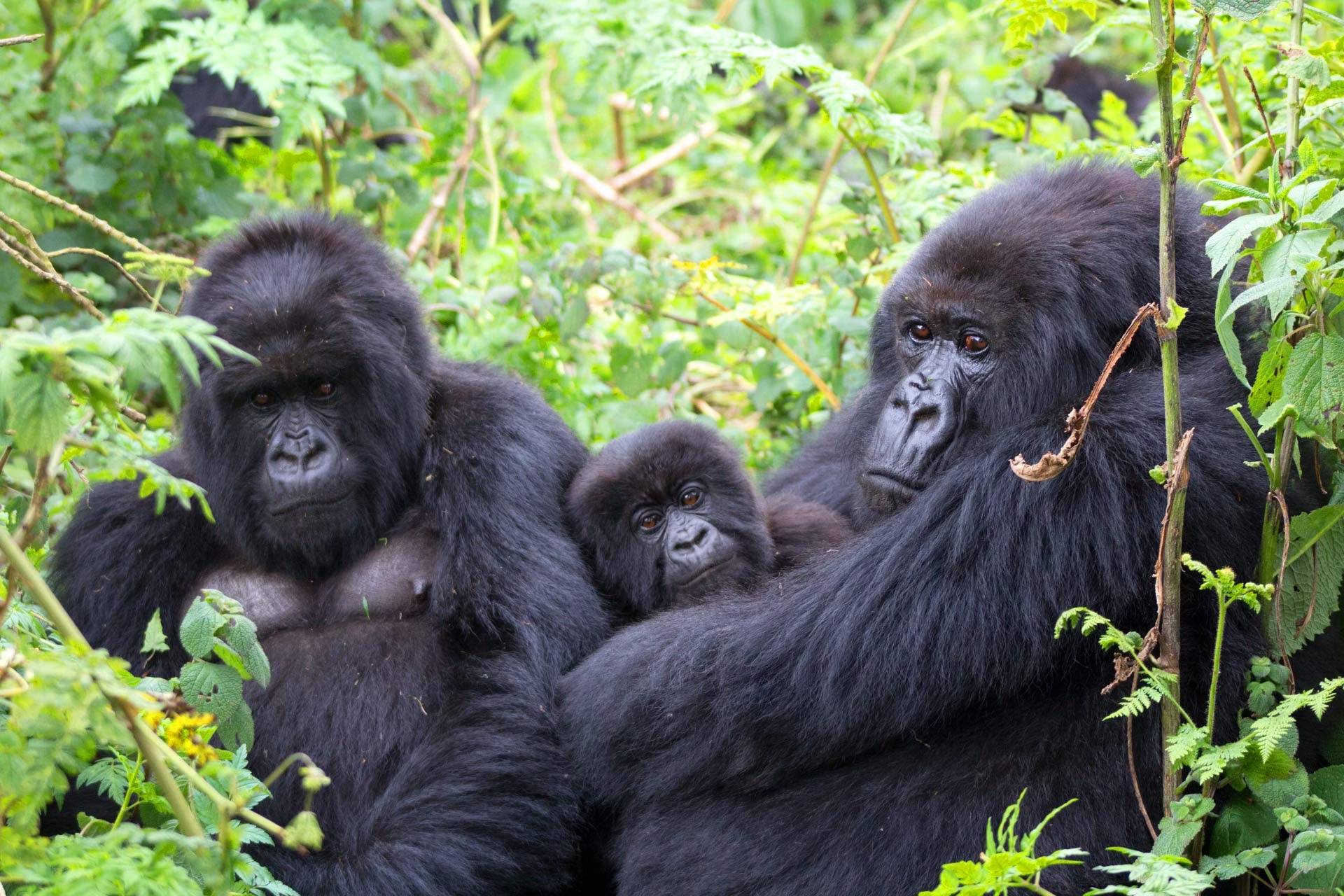
Travel Guide
Explore essential facts about gorilla trekking in Uganda's Bwindi Impenetrable Forest, including permits, gorilla families, trail sectors, and the best time to visit.
The Top Facts About Gorilla Trekking in Bwindi Impenetrable Forest help travelers prepare for one of Uganda’s most important wildlife experiences. Bwindi protects mountain gorillas within a steep, densely vegetated landscape in southwestern Uganda, and trekking here is very different from observing wildlife from a safari vehicle.
Visitors enter the forest on foot with trained guides and trackers.
The length and difficulty of each trek varies because gorillas move naturally within their habitat. Some groups may be located relatively quickly, while others require a much longer hike.
Understanding the practical details before arrival helps travelers prepare physically, pack correctly and approach the gorillas with realistic expectations.
Bwindi Impenetrable National Park is internationally important because it protects mountain gorillas and an exceptionally diverse forest ecosystem.
The gorillas are the main reason many travelers visit, but the park contains much more.
Birds, smaller primates, butterflies, plants and other organisms share the forest.
Protecting gorillas therefore protects habitat that supports a much wider range of biodiversity.
Uganda’s standard gorilla trekking permit costs USD 800 per person.
A permit provides access to an organized trek on the allocated date according to the applicable park regulations.
Permits are limited.
Travelers planning to visit during busy periods should book well in advance, with four to six months providing a sensible planning window for peak travel periods.
The permit should be arranged through legitimate channels.
The minimum age for standard gorilla trekking is 15.
Families traveling with younger children should take this rule into account before designing the itinerary.
Alternative activities can be arranged for younger travelers while eligible family members trek.
Do not assume exceptions will be granted simply because a child is physically fit or accustomed to hiking.
Standard gorilla trekking groups are limited to eight visitors around a habituated gorilla family.
Keeping groups small helps reduce disturbance.
It also makes it easier for guides to manage visitor behavior within dense forest.
Trekkers may be joined by guides, trackers and other authorized personnel involved in the activity.
After the assigned gorilla family is located, standard trekking generally allows approximately one hour of observation.
This limit is important.
Gorillas are wild primates, and tourism must be managed around their welfare rather than visitors’ desire to stay indefinitely.
Use the hour carefully.
Take photographs, but also spend time simply watching behavior directly.
One of the most useful Top Facts About Gorilla Trekking in Bwindi Impenetrable Forest is that Bwindi is not a single trekking entrance.
Different sectors serve different gorilla families and accommodation areas.
Travelers must therefore know where their permit is allocated before booking a lodge.
Choosing accommodation on the wrong side of the forest can create a serious logistical problem because road travel between sectors may take considerable time.
Buhoma is one of Bwindi’s best-known tourism areas.
It has a long history of gorilla tourism and a wide range of accommodation options.
The surrounding area also offers community and forest-related experiences.
A traveler with a Buhoma permit should generally select accommodation that provides practical access to the appropriate briefing point.
Ruhija is another trekking sector.
Its location and highland environment provide a different base for exploring Bwindi.
Accommodation planning remains important.
Travelers should confirm transfer times rather than assuming all Bwindi lodges are interchangeable.
A property described as “near Bwindi” may still be inconvenient for a specific permit sector.
Rushaga serves gorilla trekking in the southern part of Bwindi.
It is also particularly associated with Uganda’s specialized Gorilla Habituation Experience.
That experience differs from standard trekking and requires the appropriate permit.
Travelers should make sure their itinerary clearly states which activity they have booked.
Nkuringo is another southern Bwindi area.
The surrounding terrain can be dramatic and steep.
Travelers trekking from this region should prepare for mountain conditions.
As elsewhere in Bwindi, actual trek difficulty depends heavily on where the assigned gorilla family is located that day.
Nobody can guarantee a short gorilla trek.
Gorillas move while feeding and traveling.
Trackers help locate them, but the forest is not a controlled enclosure.
Trekkers should arrive prepared for several hours of activity.
People with mobility concerns should discuss them before trekking so guides can provide appropriate advice where possible.
Hiring a porter is strongly worth considering.
A small backpack can feel much heavier after several hours on steep trails.
Porters carry bags and can provide practical assistance on difficult sections.
Their work also creates direct local income connected with gorilla tourism.
Using a porter allows the trekker to focus more comfortably on walking and observing the forest.
Bwindi is a rainforest.
Even during generally drier periods, rain remains possible.
Every trekker should carry rain protection.
Waterproofing for cameras and phones is also useful.
During wetter conditions, trails can become muddy and slippery, making footwear especially important.
Strong hiking shoes or boots with reliable grip are among the most important items to pack.
The trail may involve mud, roots, slopes and dense vegetation.
Footwear should be broken in before the trip.
A gorilla trek is not the ideal place to discover that new boots cause blisters.
Long trousers and long sleeves help protect against vegetation and insects.
Some trekkers tuck trousers into socks or use gaiters.
Gardening-style gloves can be useful when moving through vegetation or stabilizing yourself on steep sections.
Clothing should be practical rather than fashionable.
Human health directly affects gorilla conservation.
Visitors must follow current health protocols.
Masks may be required during the encounter.
The standard recommended separation is approximately seven meters where conditions allow.
Visitors should never touch gorillas, even if an animal approaches.
Follow the guide’s instructions carefully.
Travelers should carry the documentation required for permit verification, including their passport when instructed.
The permit is associated with a specific traveler and date.
Check these arrangements before leaving the lodge.
Discovering missing documentation at the briefing point creates unnecessary stress.
Flash photography is not permitted around gorillas.
Forest light can be challenging, so photographers should understand their cameras before the trek.
A fast lens and camera capable of working at higher ISO settings can help.
Avoid spending the entire hour changing equipment.
The best preparation is knowing how to operate the camera quickly.
Uganda also offers a Gorilla Habituation Experience in the Rushaga area.
The permit costs USD 1,500 per person and provides a different, longer experience connected with the habituation process, with up to four hours around the gorillas under the applicable rules.
It should not be confused with the standard one-hour trek.
Travelers interested in the experience should book the correct permit.
Gorilla trekking operates throughout the year, subject to park management and conditions.
Generally drier periods may provide less muddy trails, while wetter months can bring lush vegetation and different photographic conditions.
There is no month in which rain becomes impossible.
Travelers should choose timing according to their wider Uganda itinerary and tolerance for wet conditions.
Permit revenue contributes to the broader protected-area and tourism system supporting gorilla conservation.
Tourism also creates employment for guides, porters, lodge staff, drivers and other service providers.
This economic value gives wildlife and forest protection a practical connection with livelihoods.
Responsible visitors strengthen that model by following regulations and using legitimate tourism services.
The most important Top Facts About Gorilla Trekking in Bwindi Impenetrable Forest concern preparation.
Secure the correct permit, confirm the trekking sector, stay in appropriately located accommodation and bring proper hiking equipment.
Arrive prepared for rain and uneven terrain.
Respect the health and distancing rules once gorillas are located.
The physical effort is part of what makes Bwindi memorable. Travelers do not simply arrive beside mountain gorillas. They enter their forest habitat and experience, for a limited period, the complex environment that makes their survival possible.

26 African Countries Under Full or Partial U.S. Travel Ban (Post-December Update) Following the December update to U.S.…
Read article →
3 Days Congo Gorilla Safari – Encounter the Gentle Giants of Virunga A 3 Days Congo Gorilla Safari…
Read article →
Children and Kids on Safari – Family-Friendly Adventures in Africa Taking children on an African safari is one…
Read article →
How to Plan a Safari in Uganda—Your Complete Travel Guide Planning a safari in Uganda is the start…
Read article →